
Life in the Trenches of World War I
The Brutal Reality and Lasting Impact on Soldiers and Society
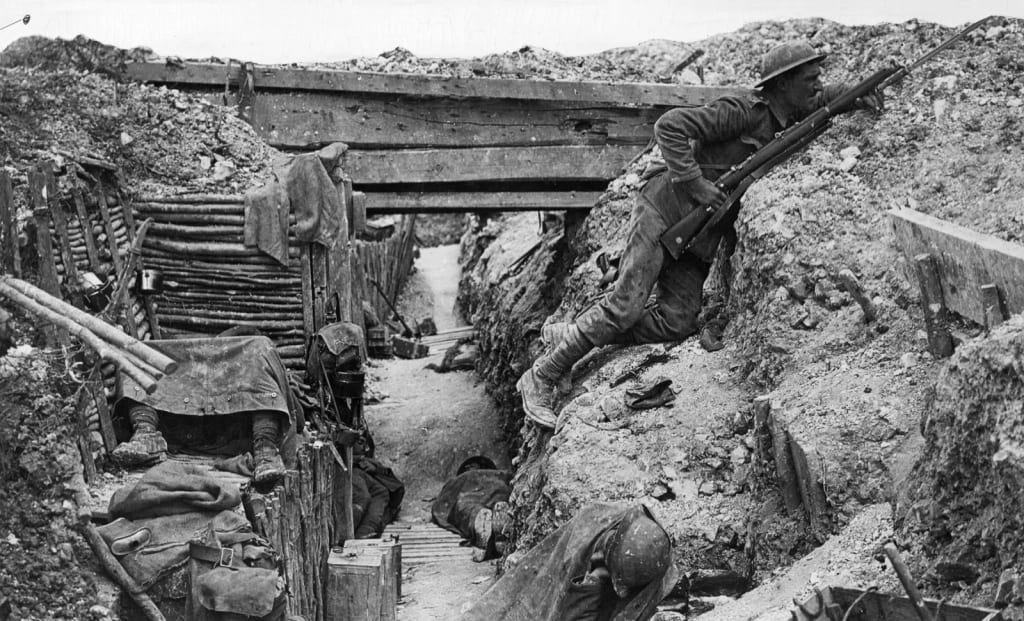
The trenches of World War I were a vast network of fortifications that stretched for hundreds of miles across Europe. These trenches were constructed by soldiers using shovels and pickaxes, often in the dead of night and under heavy enemy fire. The trenches were typically dug in a zigzag pattern to minimize the impact of artillery fire, and they were often reinforced with sandbags, wood planks, and other materials to provide some measure of protection from enemy weapons.
Living conditions in the trenches were notoriously harsh and dangerous. Soldiers were crammed into narrow, muddy ditches that were often filled with water and sewage. The constant exposure to the elements led to widespread illness, with many soldiers suffering from trench foot, a condition caused by prolonged exposure to wet and cold conditions that could result in the loss of toes or even the entire foot.
Private William Bishop of the British Army described the grim living conditions in the trenches, saying, "We live like animals, buried in the mud and filth. We are soaked to the bone and covered in lice. The rats run over us at night, stealing our food and nibbling on our fingers and toes. It's a miracle any of us are still alive."
The psychological toll of life in the trenches was equally devastating. Soldiers faced the constant threat of enemy attack, and the noise and chaos of battle could be overwhelming. Many soldiers suffered from shell shock, a condition now known as post-traumatic stress disorder (PTSD), which could cause symptoms such as anxiety, depression, and nightmares.
Corporal John Johnson of the Canadian Army spoke of the psychological strain of trench warfare, saying, "The constant bombardment and the fear wore us down. We never knew if we were going to live or die from one moment to the next. It was like living in a nightmare that never ended."
Despite the harsh living conditions and constant danger, soldiers in the trenches displayed remarkable resilience and courage. They developed a strong sense of camaraderie with their fellow soldiers, sharing food, water, and stories to help boost morale.
Lieutenant Robert Graves of the British Army recounted a particularly brutal battle, saying, "The Germans sent over a gas attack, and we had no masks. It was like breathing fire. Men were choking and coughing, their faces turning blue. I saw one man clawing at his throat, trying to get air. It was a horrible way to die."
Soldiers slept in dugouts or small shelters made of sandbags and corrugated iron. However, these shelters offered little protection from the cold and damp, which led to many soldiers suffering from trench foot, a condition caused by prolonged exposure to wet and cold conditions.
The soldiers were also plagued by a constant infestation of lice and rats, which added to the already unsanitary conditions. The rats, in particular, grew to enormous sizes and would often gnaw at the bodies of fallen soldiers. The stench of death and decay was overwhelming, and the constant sound of gunfire and explosions was a constant reminder of the danger they faced.
After the war, many soldiers struggled to adjust to civilian life. The trauma of their experiences in the trenches left many emotionally scarred, and they found it difficult to talk about their experiences with family and friends. Some soldiers turned to alcohol or drugs to numb their pain, while others found solace in religion or artistic pursuits. The impact of trench warfare on society as a whole was significant and fundamentally changed the way people viewed war and conflict. The physical and emotional scars of the war were felt for generations, and it was only in later years that the importance of treating soldiers for mental health conditions was recognized.
About the Creator
Titan
Just a college student who needed some motivation so I started writing. Hope the wisdom helps. I won't be creating stories for only one genre so stick around, you'll find a variety of stories.
The Role of NSN Identification in Aerospace Procurement
The aerospace industry relies heavily on precision, organization, and traceability when sourcing parts and equipment. Aircraft are made up of thousands of individual components, each playing a vital role in the safe and efficient operation of the system. Managing these parts across manufacturers, maintenance teams, and procurement networks can be extremely complex. To simplify this process, standardized identification systems are used to classify and track components throughout their lifecycle.
By Beckett Dowhanabout 2 hours ago in FYI


Comments
There are no comments for this story
Be the first to respond and start the conversation.