
Lies that you were told about space
Lies that you were told about space

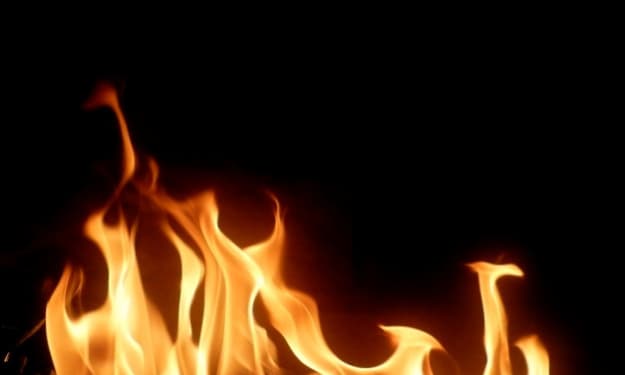
The appearance of our sun is often misunderstood. Contrary to popular belief, it is not a bright yellow ball of fire. In reality, our sun emits a greenish hue, which is determined by scientists based on the color spectrum it emits. The temperature of a star can be determined by the wavelengths of light it emits, with cooler stars appearing red and the hottest stars appearing blue. Our sun emits most of its energy at a wavelength close to green, but due to the combination of various wavelengths, it appears white to the human eye. The yellow color we see from Earth is due to our atmosphere scattering blue light. If our sun were actually yellow, it would be significantly cooler, affecting the habitable zone of our Solar System. Additionally, the sun is not on fire like commonly believed. Instead, it functions as a massive nuclear reactor, fusing hydrogen atoms to create helium.Inside its core, this process releases vast amounts of energy, which is why the sun is incredibly scorching. Speaking of igniting objects, let me enlighten you about space explosions. However, these are not real. A spaceship cannot be engulfed in a violent blast because there is no air in space. The absence of air means no oxygen, and as you already know, no oxygen means no fire. Apologies to Star Wars fans. It may appear that there are an overwhelming number of stars in the night sky, but you can actually count them. Although scientists at Harvard have already accomplished this task for you, according to the Yale Bright Star Catalog, there are 9110 stars visible to the naked eye from Earth. Feel free to attempt counting them all on your own.

Movies often portray navigating the asteroid belt as a task that requires exceptional piloting skills. However, this is far from the truth. The asteroid belt is not a dense and treacherous obstacle course. It consists of trillions of space rocks, ranging in size from tiny specks of dust to objects about a quarter the size of the Moon. While there are over 100,000 asteroids in the belt that are larger than one kilometer, they are widely dispersed. Spanning 225 million kilometers between Mars and Jupiter, the asteroid belt is one and a half times the distance between Earth and the Sun. This vast expanse ensures that the space rocks are millions of kilometers apart, making it highly unlikely for a spacecraft to collide with one.
Contrary to popular belief, if you were to be ejected into the vastness of space, you wouldn't freeze instantly. In order for freezing to occur, heat must transfer from space to your body. However, in the vacuum of space, heat or cold does not travel quickly. While your body would eventually freeze, it would take hours for this to happen. By that time, you would have already succumbed to other causes of death.
Furthermore, contrary to cinematic depictions, you would not explode in space. Instead, you would experience inflation due to the nitrogen in your bloodstream forming bubbles, causing you to double in size. However, this inflation is not what would ultimately lead to your demise. The lack of oxygen would be the true killer. After just 15 seconds in space, your brain would not receive enough oxygen through your blood, resulting in loss of consciousness. Within two minutes, your other organs would begin to shut down, leading to a game over scenario.
Space may appear to be extremely cold, but in reality, it does not have a temperature at all. Temperature is determined by the speed and energy of particles in motion. In the true vacuum of space, there are no particles present to move around, which is why it is devoid of temperature. However, outer space is not a perfect vacuum as it still contains particles and radiation that can generate heat. Certain regions of space, such as those surrounding stars, can actually be quite hot. Nevertheless, as one moves further away from stars, the particles become more dispersed, resulting in colder areas of space. Some dense gas clouds can even reach temperatures as low as -263 degrees Celsius.
While Mercury is the closest planet to the Sun, it is not the hottest. However, it does experience extreme temperature variations. During the day, the surface temperature can reach a scorching 430 degrees, while at night, it plummets to a frigid -180 degrees. On the other hand, Venus holds the title for the most hellish planet in our solar system. Despite its proximity to the Sun, Mercury lacks an atmosphere to retain the Sun's heat. In contrast, Venus has a very thick atmosphere that creates a greenhouse effect, akin to an intensified form of global warming. As a result, Venus boasts a surface temperature of approximately 475 degrees, making it a hot inferno.
Our solar system is not stationary within our galaxy; it is actually moving through space at a speed of 220 kilometers per second, which is seven times faster than the Earth's orbital speed around the Sun. It takes our solar system 230 million years to complete one orbit around the Milky Way. The last time our solar system was in its current position, Earth was a single supercontinent and dinosaurs were just beginning to roam the planet. The planets and moons in our solar system are in a delicate balance. Despite the Sun being the most massive object in our planetary neighborhood, other planets are engaged in a gravitational tug of war. Instead of simply orbiting the Sun, planets and moons actually orbit around a central point between them and our star, known as the Barycenter. The Barycenter for Earth is very close to the Sun's core, while for Jupiter, it is approximately 55,000 kilometers away from the Sun's center. This means that Jupiter and the Sun are actually orbiting each other. Earth may appear round from space, but it is actually an irregularly shaped ellipsoid. The planet bulges at the equator due to the centrifugal force caused by its spin, making it about 43 kilometers wider at the equator than at the poles. This difference in width results in slightly weaker gravity at the bulge, making it easier to launch spaceships from the equatorial regions than from the poles. In the vacuum of space, sound cannot travel because it requires a medium to propagate. Since molecules in space are widely spaced, sound dissipates quickly and cannot travel far. However, in some regions of space where there are abundant particles, such as the hot gas cloud surrounding the black hole at the center of the Perseus Galaxy cluster, sound can travel. In fact, the gas cloud around the black hole emits a sound that can be heard. Thank you for your attention. It is interesting to note that other planets also produce sounds, if only we could hear them, do you know what they should like? Well that's a story for another day.
Than you for reading, and if you enjoyed then feel free to leave a comment down below and also don't forget to subscribe!
About the Creator
Josh
exploring the universe and it's mysteries.. nature, planets, fictions and facts.


Comments
There are no comments for this story
Be the first to respond and start the conversation.