
"Let's Talk Turkey"
Feel free to talk about the turkey you are eating on "Turkey Day."

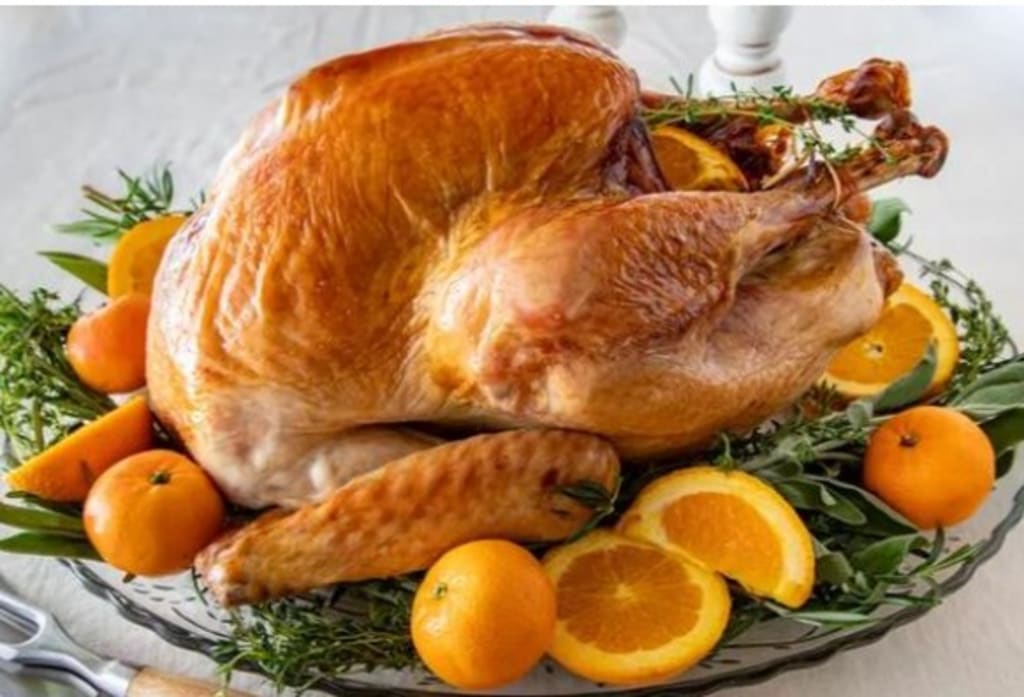
Over the years, I have learned some interesting things about the bird that ends up on many tables on Thanksgiving Day.
Even though the turkey is the centerpiece on most people's dinner tables on Thanksgiving Day, it was not the meat that was eaten on the first Thanksgiving. The 53 pilgrims and 90 Indians ate venison, goose, and duck when they met to celebrate a fruitful harvest.
According to Wikipedia:
"Today, turkey is the most common main dish of a Thanksgiving dinner, to the point that Thanksgiving is sometimes colloquially called "Turkey Day."
There are a lot of things people don't know about turkeys. So, let's talk turkey.
1. Male and female turkeys
Turkey is the general category for the traditional Thanksgiving bird. According to Animal Facts, males are called "toms" and "gobblers." Young male turkeys are called "jakes." Male turkeys are more colorful than female turkeys, which are called "hens." Female turkeys are smaller. Young female turkeys are called "jennies." All young turkeys are called "poults."
2. Sounds of turkeys
Only male turkeys use the gobbling sound. They gobble to find a mate. Female turkeys make a clucking and chirping sound. The male's gobbling sound can be heard up to a mile away, but the female's sound isn't loud enough to be heard that far.
3. Weight of turkeys
Domestic turkeys are bred, and they end up being too heavy to fly. Their weight is twice that of wild turkeys. They are much lighter, and they can fly up to 55 mph.
4. Turkey feathers
An adult turkey has between 5,000 and 6,000 feathers. Male turkeys, like peacocks, use their fancy tail feathers to attract female turkeys to become their mates.
5. Color of turkeys
The bare heads of domestic and wild turkeys change colors from gray to red, blue, or white when they become excited or stressed. When they are calm, their bare heads remain the same color.
6. Eyes of turkeys
Turkeys have eyes on the sides of their head instead of in front of them. They can see three times better than humans because they have a periscopic vision. Their eyesight covers 270 degrees, and they can see in color.
7. Turkeys' sleep pattern
Turkeys are often seen walking around on the ground during the day, but they sleep in trees at night to protect themselves from predators.
8. Mating habits of turkeys
Turkeys use their snoods for mating. A snood is that long, fleshy turkey part hanging over the beak.
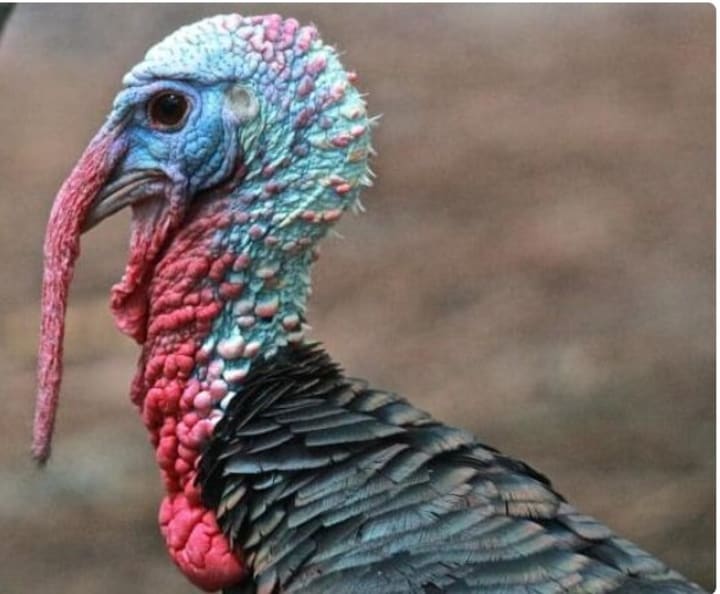
When a male turkey gets excited over a female, the snood gets longer. According to the Journal of Avian Biology, females prefer males with longer snoods, and they often choose a mate with the longest one.
9. Where turkeys are found
Today, turkeys are native to North America. In the early 20th century, turkeys were on the brink of extinction. Since the 1940s, wild turkeys have been found throughout the United States.
10. Origin of presidential pardons
It has been a tradition for every President of the United States to be given a turkey as a gift for his use since 1813. They were not pardoned until 169 years later. See what happened to the turkeys before they were pardoned and sent away.
- President Dwight Eisenhower ate the birds presented to him during his two terms.
- Three days before his assassination, President John F. Kennedy spared his turkey on November 19, 1963.
- During her husband's administration, First Lady Rosalynn Carter sent the turkey they received to petting zoos.
- In 1982, President Ronald Reagan was the first president to pardon his turkeys before sending them to farms and petting zoos.
- George H. W. Bush was the first to have an official pardoning ceremony for the turkey given to him as a gift during his first year in office in 1989.
Since 1989, every president has named two turkeys and released them. After the turkeys are pardoned, they are sent to live on a turkey farm for the rest of their lives. Some turkeys die within a year, but others live up to three additional years.
11. Number of turkeys eaten on Thanksgiving Day
The U.S. Department of Agriculture estimates Americans eat more than 46 million turkeys on Thanksgiving Day. That is about a fifth of all turkeys eaten in the United States during the year.
12. Price of Thanksgiving turkeys
Turkey prices vary depending on the farm and the grocery store. Consumers can expect to pay different prices for turkeys each year. Usually, the price of turkeys drops in the days leading up to the big feast.
That's enough information to keep you talking turkey as well as eating turkey on "Turkey Day."
About the Creator
Margaret Minnicks
Margaret Minnicks has a bachelor's degree in English. She is an ordained minister with two master's degrees in theology and Christian education. She has been an online writer for over 15 years. Thanks for reading and sending TIPS her way.
Keep reading
More stories from Margaret Minnicks and writers in FYI and other communities.
The Pentagon’s Secret Videos: Are UFOs Finally “Official”?
For decades, the idea of Unidentified Flying Objects (UFOs) was relegated to the fringes of late-night talk shows and sci-fi conventions. Believers suspected the military was hiding the truth, while the "powers that be" remained silent.
By Areeba Umair5 days ago in FYI



Comments
There are no comments for this story
Be the first to respond and start the conversation.