
LED Drivers: Designing Efficient Lighting Solutions for Modern Applications
Learn about linear, switching, and digital LED drivers in display technologies.
Introduction to LED Drivers
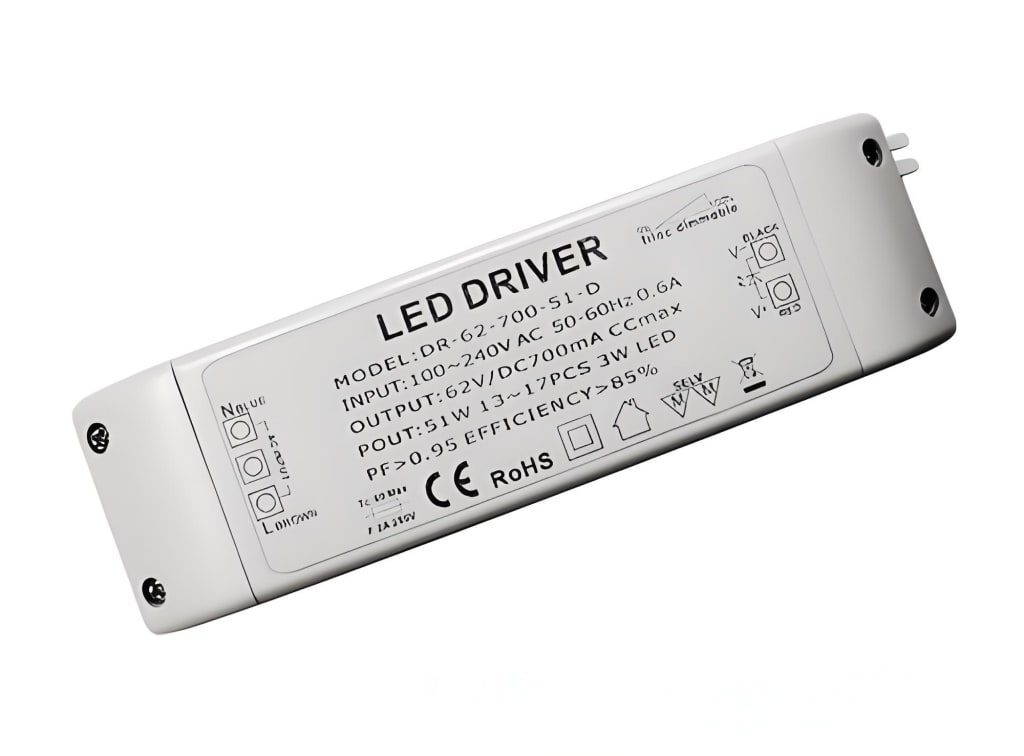
As light-emitting diodes (LEDs) become the dominant technology in lighting, both for consumer and industrial applications, LED drivers have gained critical importance. LED drivers regulate the power supplied to the LEDs, ensuring they operate efficiently and with a long lifespan. LEDs, unlike traditional incandescent or fluorescent lamps, require constant current to function properly, which is why specialized drivers are necessary to manage their performance. Without a suitable LED driver, LEDs may experience flickering, overheating, and reduced longevity.
In this article, we will explore what LED drivers are, the different types available (linear, switching, and digital), key design considerations for enhancing the lifespan and efficiency of LED lighting systems, and the applications where LED drivers play a crucial role.
What Are LED Drivers and Why Are They Critical for LED-Based Lighting?
An LED driver is an electronic component that regulates the power delivered to an LED or group of LEDs. Since LEDs are current-driven devices, they require constant current rather than constant voltage to ensure stable operation. Unlike traditional bulbs, LEDs are sensitive to fluctuations in current and voltage, making the use of a reliable driver essential for consistent performance.
Functions of an LED Driver:
Regulates current: Prevents current fluctuations that could damage the LEDs.
Protects LEDs: Avoids excessive voltage or power, reducing the risk of overheating or failure.
Ensures longevity: Properly managed power delivery extends the operational life of LEDs.
Without an LED driver, LEDs may not only underperform but could also degrade quickly, requiring frequent replacements. LED drivers are critical in applications where stability, efficiency, and lifespan are priorities, such as in general lighting, automotive headlights, and large display screens.
Types of LED Drivers
There are three main types of LED drivers, each suited to different use cases depending on the design requirements and performance goals: linear drivers, switching drivers, and digital drivers.
1. Linear LED Drivers
Linear drivers are the simplest type of LED drivers, designed to regulate current by dissipating excess voltage as heat. They work similarly to linear regulators in power supplies and are ideal for applications where simplicity, cost, and low noise are essential.
Operation: Linear LED drivers control the current by dropping the voltage across a transistor, which operates in its linear region. As the input voltage changes, the driver adjusts the output current to keep it constant.
Advantages: Simple design, low cost, minimal electromagnetic interference (EMI).
Disadvantages: Lower efficiency due to heat dissipation, limited to low-power applications.
Applications: Often used in small-scale or low-power LED systems, such as indicator lights, dashboard LEDs, and household lighting.
2. Switching LED Drivers
Switching LED drivers are much more efficient than their linear counterparts, using pulse-width modulation (PWM) or switching regulators to control the current. Instead of dissipating excess energy as heat, switching drivers convert it into usable power.
Operation: These drivers rapidly switch the power transistor on and off, controlling the current delivered to the LEDs. This switching action converts excess voltage into usable energy, significantly improving efficiency.
Advantages: High efficiency, capable of driving high-power LEDs, better thermal management.
Disadvantages: More complex design, higher cost, potential for EMI.
Applications: Commonly used in high-power LED applications, such as street lighting, automotive headlights, industrial lighting, and large LED displays.
3. Digital LED Drivers
Digital LED drivers provide even more control and flexibility by incorporating digital signal processors (DSPs) or microcontrollers to regulate current. These drivers allow for dynamic control over LED brightness, color, and intensity, making them ideal for advanced lighting systems.
Operation: Digital drivers use digital control loops to adjust the current and voltage levels dynamically, often integrating control protocols like DMX or DALI for precise lighting management.
Advantages: Precise control over brightness and color, programmable settings, high efficiency.
Disadvantages: Higher cost and complexity, requires digital control interfaces.
Applications: Commonly used in smart lighting systems, RGB lighting, architectural lighting, and dynamic display technologies where color control and brightness modulation are critical.
Key Design Considerations for Maximizing LED Lifespan and Efficiency
Designing an LED lighting system involves several key considerations to ensure that the LED driver operates efficiently and the LEDs themselves have a long lifespan. Below are some essential design factors:
Maintaining a constant current is vital for LED performance. Over-driving LEDs with too much current can cause overheating and reduce their lifespan, while under-driving them may result in dim lighting. The LED driver must be capable of delivering a stable current, regardless of fluctuations in input voltage.
Constant current drivers are preferred for LED systems to ensure precise control over brightness and longevity.
2. Thermal Management
LEDs are sensitive to heat, and excessive temperature can degrade their performance over time. Efficient thermal management is crucial, especially in high-power LED applications.
Cooling systems: Heat sinks, thermal pads, or active cooling (fans) should be incorporated into designs for high-power LEDs.
Thermal shutdown protection: Many LED drivers include built-in thermal protection to shut down the system if it reaches unsafe operating temperatures.
3. Efficiency
LED drivers should be designed for maximum efficiency to minimize power loss. High-efficiency drivers reduce heat generation, which in turn extends the lifespan of both the driver and the LEDs.
Switching drivers are ideal for high-power, high-efficiency applications since they minimize energy loss.
Power factor correction (PFC): For LED drivers in commercial and industrial lighting, PFC circuits ensure that the driver uses power more efficiently from the power source, reducing overall energy consumption.
4. Dimming Capability
Dimming capability is increasingly important in LED applications, especially in residential, architectural, and smart lighting systems. Modern LED drivers should support a variety of dimming methods, including PWM, analog dimming, and digital dimming through protocols like DMX or DALI.
Smooth dimming: Drivers should support flicker-free dimming, especially in applications where smooth lighting transitions are critical, such as stage lighting or architectural lighting.
Compatibility: Ensure compatibility with existing dimming infrastructure, particularly in retrofitting projects.
5. Electromagnetic Interference (EMI)
Switching LED drivers can introduce EMI, which may interfere with nearby electronics or affect the performance of the LED system itself. Managing EMI is essential in both design and implementation.
Shielding and filtering: Using EMI filters, ferrite beads, and careful PCB design can help mitigate interference.
Compliance with standards: Ensure the design meets EMI standards, especially in industries with strict regulatory requirements (e.g., automotive and medical).
Applications of LED Drivers
LED drivers are used across a broad range of industries, providing efficient power management and control for various lighting applications.
1. General Lighting
In general lighting applications, such as home and office lighting, LED drivers regulate the current to ensure that LEDs operate efficiently. These drivers also support dimming capabilities for customizable lighting setups in homes, commercial spaces, and outdoor environments.
2. Automotive Lighting
Automotive applications, including headlights, taillights, and interior lighting, require robust LED drivers that can withstand harsh environments, including temperature extremes and voltage fluctuations from the vehicle's power supply. Switching LED drivers with thermal protection and EMI control are commonly used to ensure reliability.
3. Display Technologies
In large-scale display technologies, such as billboards, video walls, and digital signage, precise current regulation and color control are essential for ensuring vibrant and consistent performance. Digital LED drivers are commonly used in these applications to allow for dynamic color changes and brightness modulation.
Conclusion
LED drivers are essential components for ensuring the reliable and efficient operation of LED lighting systems. From simple linear drivers to advanced digital drivers, each type has its place depending on the application's power and control requirements. Key design considerations, including current regulation, thermal management, and EMI control, help maximize both the efficiency and lifespan of LEDs. As LED technology continues to evolve, so will the demand for more sophisticated and efficient LED driver solutions in industries ranging from automotive to general lighting and display technologies.
About the Creator
A Failed Artist, A Disillusioned Poet, An Underpaid Game Show Host
I took my son and niece to Gori, a small town in Georgia where Joseph Stalin was born. They talked me into visiting the Stalin's Museum, the largest in the post-Soviet space. I had resisted going there because I just can't stand the monster and know enough about him, or so I thought.
By Lana V Lynx30 days ago in FYI
How Material Selection Impacts Aircraft Structural Integrity
Aircraft are among the most structurally demanding machines ever built. Every flight subjects an airframe to complex combinations of loads, vibrations, temperature changes, and environmental exposure. At the core of an aircraft’s ability to withstand these stresses lies one critical factor: material selection. Long before aerodynamic shapes or system integrations are finalized, engineers must choose materials that can reliably perform under decades of operational strain.
By Beckett Dowhanabout 15 hours ago in FYI
Cabin Fever Because of Snow, Sleet, and Freezing Rain That Turned to Icy Roads
What Is Cabin Fever? The short answer is that cabin fever is restlessness from being in a confined area. Cabin fever is the distressing irritability or restlessness experienced when a person or group is stuck at an isolated location or in confined quarters for an extended time. Research shows that prolonged cold, gray skies, and being stuck indoors can trigger mood shifts similar to “winter blues.”
By Margaret Minnicks4 days ago in Humans


Comments
There are no comments for this story
Be the first to respond and start the conversation.