
Laser detection, archaeologists uncover Mayan massive architectural ruins
Archaeologists uncover Mayan massive architectural ruins

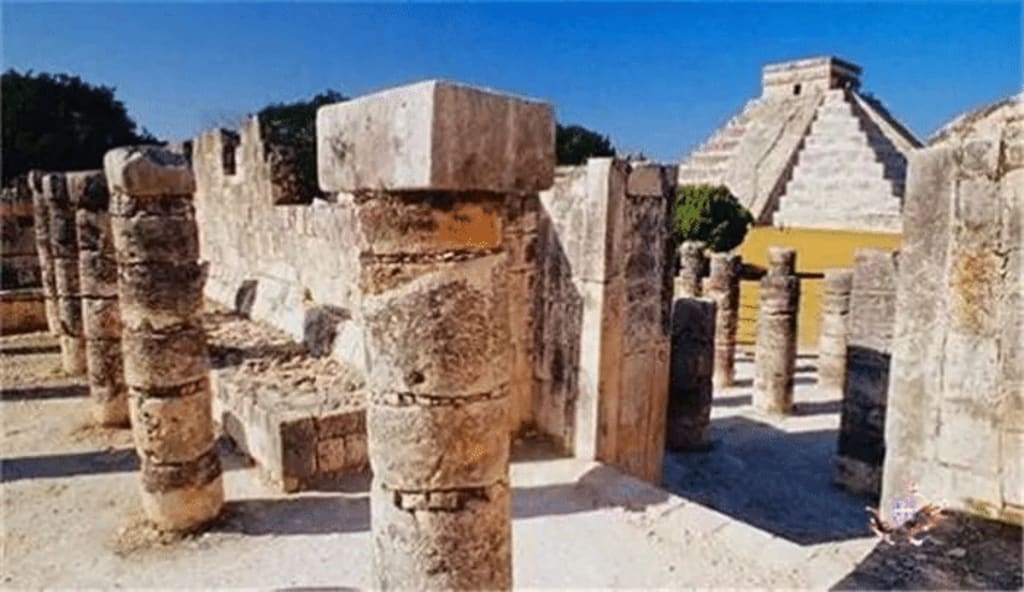
Archaeologists have discovered a Mayan site with a large number of buildings in Mexico, covering an area of about 237 square kilometers, including thousands of houses, municipal buildings, reservoirs, more than a thousand lime furnaces and terraces. The researchers believe that it should have been a very prosperous area at the time.
File photo of ancient Mayan civilization relics. (Fotolia)
The site of the site, Puuc, is located in the hills of Northern Yucatán, Mexico, and was once a Mayan settlement. Puke is also home to Uxmal, one of the most important Mayan sites.
In this archaeology, scientists used Lidar (LIDAR) detection technology instead of manual excavation to map out the details of the ruins in a short time.
densely populated area
A total of 7,900 private houses were detected in the area, each with about two to three rooms, as well as municipal facilities with different types of buildings, dating back to 600-750 AD.
The researchers found unique decorations on municipal and religious buildings, such as mosaics on the walls, friezes on the lintels of columns, and numerous depictions of the Mayan rain god Chac.
These details suggest that the Puk region may have been the most densely populated Mayan settlement in the lowlands, the researchers noted.
And while archaeologists have known since 1940 that there were four large Mayan fortresses in the Puke area, it wasn't until 2017 that researchers, with the help of laser scanning, uncovered more details about the fortresses, which date back to BC 700 years to 450 years ago.
How the Mayans stored water
Since this area is limestone, and there are no rivers and lakes, how did the Mayans solve the drinking water problem? In fact, the Mayans stored water in a way similar to our modern.
researchers found. They would build tanks (Chultunes) and plaster the inside walls to collect rainwater; or build reservoirs (Aguadas), laying channels to bring in water, some of which can be hundreds of meters long.
The stone processing industry is developed
Most of the buildings found this time are masonry structures. "It seems to be a very thriving area because of these masonry," William Ringle, professor emeritus of anthropology at Davidson College in North Carolina, told Live Science. house."
Due to the needs of building houses, the stone processing industry here is quite developed. The researchers found quarries in the area, some so large that they occupy most of the hill; 1,232 circular lime furnaces were also found. These furnaces heat the sandstone to extract lime, one of the essential materials in construction mortars.
"They (lime stoves) are all over the place. It shows that in Puck, it's a pretty big industry," Ringer said.
These lime stoves are very efficient and can keep working with very little firewood. People can find wood for burning stoves from nearby, without too much forest resources. "They didn't burn the entire forest," Ringer noted.
Interestingly, people at that time also used lime to process corn. Corn is not only the main food of the Mayans, in their mythology, the gods created the Mayans with corn, so they call themselves the corn nation.
Having said that, corn processing is one of the daily life of the Mayans. "When people are cooking corn, they usually soak it in lime the night before to soften it a bit and then grind it up," explained Ringer. "So lime is also a must for households. less merchandise."
Discover the first rice terraces in the region
This is the first place to discover terraces in the entire Puke and even the northern Yucatan region. Although there are eight terraces in total, the number is a bit small compared to the hundreds of hills. This suggests that terraces are not widespread in the region, the researchers said.
Researchers question a Mayan assumption
Thomas Garrison, an assistant professor in the Department of Geography and Environment at the University of Texas, said the new study is "very comprehensive" and provides insight into the Maya in general, as well as the customs specific to this part of the Puk.
The Mayan civilization itself has many unsolved mysteries, and the mysterious withdrawal of the Maya from the city is one of them. The highly developed Mayan civilization existed for about 2,500 years. Unexpectedly, from the 8th to the 9th century AD, the Mayans suddenly abandoned the developed cities and moved to the depths of the barren mountains. The Maya civilization in the classical period declined from then on. Why did the Mayans suddenly abandon cities? Scientists have many hypotheses about this, Garrison told Live Science: "The claim that environmental mismanagement led to their demise doesn't hold up here. .” Because from this study, as well as previous studies, it was found that the Mayans in the Puke area “managed forest resources very carefully and water resources carefully.”
Using lasers to detect underground ruins
The laser detection technology used in this archaeology is to attach a lidar to a low-flying aircraft and emit billions of laser beams per minute to detect the ground. Rebound. The computer draws a 3D map of the underground building by collecting the laser bounce time.
Using this technology, scientists can probe thousands of square kilometers of land at a time. Ringer said that through laser detection, the team has more Puck archaeological data this time than they have collected in the past two decades.
About the Creator
crudden elle
Partagez un peu de science chaque jour
Keep reading
More stories from crudden elle and writers in FYI and other communities.
Sanxingdui Cultural Relics Awards, netizens: The more you dig other sites, the more you understand, the more you dig Sanxingdui, the more outrageous
Among the ancient ruins, the most mysterious and unpredictable is the Sanxingdui civilization site. In the words of netizens, the more other sites are dug, the more clear they are, and the more Sanxingdui is dug out, the more outrageous they are. Since the discovery of the Sanxingdui civilization site, archaeologists have excavated the site many times and unearthed many amazing ancient cultural relics. However, as more and more cultural relics are unearthed, the Sanxingdui civilization has become more and more mysterious. .
By crudden elle4 years ago in FYI
The Strange Reddit Post That No One Can Explain — And Why People Still Talk About It
The Strange Reddit Post That No One Can Explain — And Why People Still Talk About It The internet forgets almost everything. Posts disappear. Accounts vanish. Viral trends explode one day and are completely gone the next. What feels massive today often becomes impossible to find just a few weeks later. But every now and then, something strange slips through the cracks of the internet — something that refuses to disappear.
By Stephanie Edwardsa day ago in FYI
Author’s Advice
If you would’ve asked me 20 years ago did I know I’d become a writer and an author, I would’ve said “nope, ain’t happening”. As fate would have it I did become an author and I can honestly say I’m loving it so far. It really does feel good to be a writer. I’ve learned a lot on this journey and I feel like with even me being as new to this world as I am, there’s some wisdom I need to share with every other aspiring author.
By Joe Patterson4 days ago in Journal



Comments
There are no comments for this story
Be the first to respond and start the conversation.