
Kenya Livestock Feed Sector Raises Alarm Over La Nina Threat
AU-IBAR Pushes for Strategic Investment and Awareness to Safeguard Africa’s Livestock Feed Supply
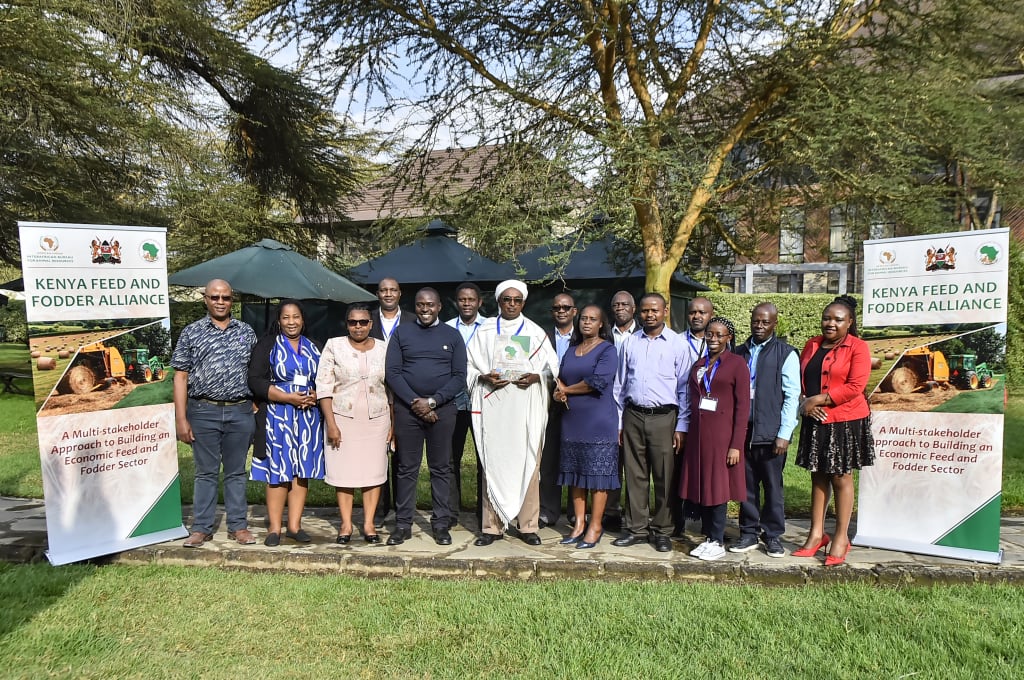
A consortium of animal feed and fodder manufacturers is calling on the government and stakeholders within the livestock value chain to take proactive measures in preparation for a potential drought anticipated later this year.
The Kenya Food Security Steering Group (KFSSG) has issued a warning that the country's food security may deteriorate between October 2024 and January 2025, largely due to the high likelihood of below-average rainfall driven by the La Ninña phenomenon.
La Ninña is caused by cooler-than-average sea surface temperatures in the central and eastern Pacific Ocean, resulting in significant shifts in global weather patterns that can disrupt agricultural productivity. In Kenya, it causes dry conditions during the short rainy season, from October.
The Kenya Feed and Fodder Alliance (KeFFA) has proposed a series of measures aimed at shielding the livestock sector from the anticipated impacts of drought. Among these, the alliance stresses the urgent need to enhance fodder production to ensure adequate feed reserves throughout the dry season.
“Stakeholders must prioritize the proper storage of all available fodder resources,” urged Ms. Scholastica Mang’eng’e, KeFFA Vice-President. “It’s crucial to purchase as much as possible while prices remain favorable.”
Speaking during a consultative meeting in Naivasha, she further advised aggregators and off-takers to secure contracts for feed supplies now, allowing their businesses to remain operational during challenging conditions.
The KeFFA also appealed to financiers, urging them to offer flexible funding terms to support feed producers. This financial backing, she said, would enable producers to increase output and secure the necessary fodder storage capacity.
The request comes amid rising pressure on the livestock sector from climate change, with experts warning that the forthcoming drought may exacerbate existing challenges faced by farmers nationwide.
A 2018 study conducted by the Ministry of Agriculture and Livestock Development revealed a staggering 60 percent deficit in animal feed, with the most severe shortfalls occurring in arid and semi-arid lands (ASALs).
The situation has been worsened by rising instances of drought linked to climate change, with the prolonged drought from 2020 to 2022 being the most severe in four decades. This drought led to livestock losses estimated at Kshs 70 million, not accounting for losses in livestock body condition or ecological balance.
The alliance urged the government to review the feed and fodder storage capacities across the country, to ensure that all the fodder that will be harvested from this season is stored to minimize or eliminate any post-harvest loss.
“Review the funding mechanisms for Kenya Development Corporation (KDC) under the drive project, and Agriculture Financing Corporation (AFC) to ensure that more loan funds are availed to facilitate the expansion of fodder production fields, buying, and stocking of fodder,” she stated.
The alliance stressed and advocated for the government to utilize all avilable channels to disseminate weather forecasts. Ensuring that farmers, pastoralists, and cooperatives receive timely information, she said, will allow for informed decision-making, helping to mitigate the impacts of the dry season.
Approximately 70 percent of the ruminant livestock population is located in arid and semi-arid lands, which constitute about 80 percent of the country’s land mass. These animals are primarily raised under a pastoral production system.
The livestock populations are estimated at 4 million heads of exotic dairy cattle, 16 million heads of indigenous cattle, 24 million heads of hair sheep, 34 million heads of indigenous goats, 4 million heads of camels, and 48 million indigenous poultry.
The African Union – Interafrican Bureau for Animal Resources (AU-IBAR) through the Resilient African Feed and Fodder Systems, aims to address critical challenges related to livestock keeping, specifically focusing on feed and fodder security.
AU-IBAR is a specialized technical office of the African Union Commission (AUC), led by a director, that provides strategic leadership in the development and management of animal resources across Africa.
Dr. Huyam Salih, the AU-IBAR director, has called for a coordinated approach involving resources, investments, and awareness-building to ensure large-scale feed and fodder preparedness in Africa's livestock sector.
About the Creator
Suleiman Mbatiah
A Journalist
Keep reading
More stories from Suleiman Mbatiah and writers in FYI and other communities.
Kenya Turns to Insect Protein to Combat Animal Feed Crisis
The Ministry of Agriculture and Livestock is promoting the adoption of alternative protein sources from various insects to address the shortage of protein feed ingredients for animal feed manufacturing in the country.
By Suleiman Mbatiahabout a year ago in FYI



Comments
There are no comments for this story
Be the first to respond and start the conversation.