
Is Water Actually Alive? The Mind-Bending Experiments That Make You Think Twice
A closer look at Dr. Masaru Emoto’s strange and fascinating research, and what it might mean for us today.

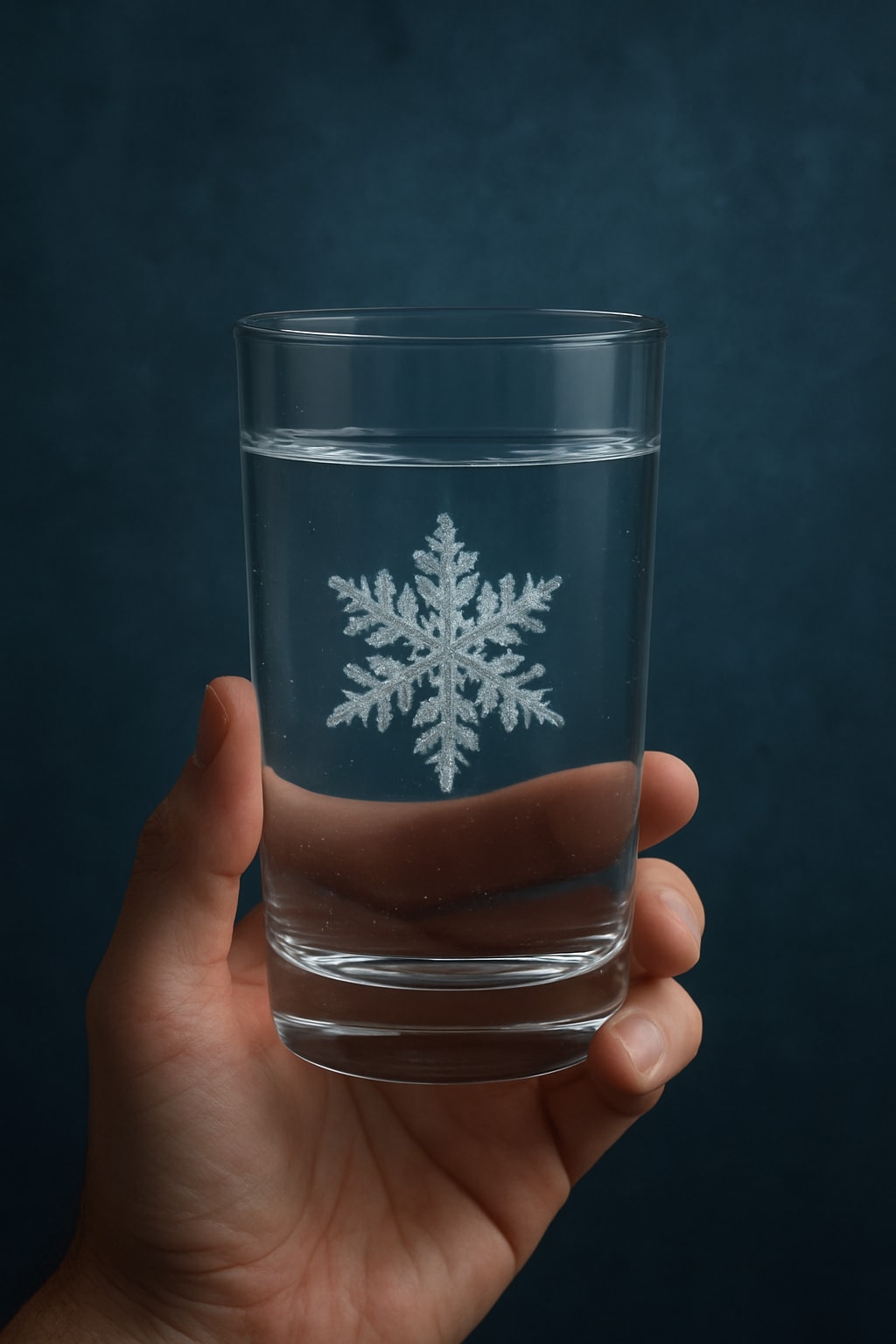
Water is everywhere. We drink it, swim in it, stare at it when we need to clear our minds, and most of us don’t give it a second thought beyond that. But what if water isn’t just a simple liquid? What if it’s something far more responsive… maybe even alive in its own mysterious way?
That’s exactly the question Japanese researcher Dr. Masaru Emoto set out to explore. And the results from his unusual experiments have fascinated (and confused) people around the world ever since.
The Frozen Secret of Water
Dr. Emoto didn’t approach water like a traditional scientist. Instead, he acted more like a curious investigator with a totally open mind. His idea was simple: freeze water, look at it under a microscope, and see if its crystals change based on what the water is exposed to, things like music, words, images, and even human thoughts.
And according to his observations, water didn’t just freeze in random shapes. It reacted.
For example:
- Water exposed to Beethoven’s “Pastoral Symphony” grew into an elegant, intricate crystal.
- After hearing John Lennon’s “Imagine”, it took on a flower-like shape.
- Music from Bach and a traditional Kawachi folk dance created stunning, symmetrical designs.
But when the water was exposed to heavy metals?
No crystals. Just jagged, harsh, broken-looking forms, like the ice had been stressed out.
And here’s a wild one: when water “listened” to Elvis Presley’s Heartbreak Hotel, the resulting crystal looked like a fractured heart.
Coincidence? Dr. Emoto didn’t think so.
Do Words Change Water Too?
After music, Emoto tried using written words. He taped phrases onto bottles of water and froze them to see how they’d respond.
Positive words, “thank you,” “love and appreciation,” “truth,” “eternal”, created beautiful, balanced crystals. The one formed from “eternal” even looked like a crystal within another crystal.
Negative words, however, “you make me sick,” “I will kill you,” and even “Adolf Hitler”, produced distorted, fragmented, or incomplete shapes.
And just so no one could blame it on English, he repeated the experiment in multiple languages. The results stayed the same.
Prayer, Pictures, and… Thoughts?
Emoto didn’t stop there. He examined polluted water from the Fujiwara Dam, and after a Buddhist prayer was performed over it, the water allegedly formed lovely, symmetrical crystals that it couldn’t make before.
Pictures also seemed to affect the frozen crystals. Photos of the sun, Niagara Falls, and dolphins produced shapes that looked just as bright and harmonious as their subjects.
And then came the biggest question of all:
Could human thoughts alone change water?
According to Emoto’s findings, yes.
When people focused positive, loving thoughts toward the water for weeks, the crystals formed beautifully. When they focused on negative or hateful thoughts, the crystals turned out deformed, or didn’t form at all.
If Water Responds… What About Us?
Here’s where things get really interesting.
Water makes up over 70% of Earth’s surface, and somewhere around 50, 70% of the human body. So if water truly responds to words, emotions, and energy… what does that say about us?
Think about it:
- At a cozy family dinner, you feel supported and at peace.
- In the middle of a chaotic rush-hour crowd, you may feel irritated or drained.
Maybe it’s not just circumstances. Maybe the water within our bodies is reacting to the emotional environment we’re in.
If that’s the case, then our thoughts, our music, our words, everything we project, might have a real physical impact on ourselves and others on a microscopic, unseen level.
Whether you believe Emoto’s experiments literally or symbolically, the message hits home:
Positivity doesn’t just feel good. It might actually reshape us.
So if being kind, thoughtful, and hopeful has even the smallest chance of influencing the world on a molecular level… why not try it?
Let’s just say the idea of “good vibes” suddenly feels a lot more scientific.
About the Creator
Areeba Umair
Writing stories that blend fiction and history, exploring the past with a touch of imagination.
Keep reading
More stories from Areeba Umair and writers in FYI and other communities.
The Hidden Woman Beneath the Mona Lisa: Is the World’s Most Famous Smile Actually Someone Else’s?
For more than 500 years, Leonardo da Vinci’s Mona Lisa has mesmerized the world with that strangely calm, almost teasing smile. It’s the painting that launched a million selfies the moment smartphones got front-facing cameras. But what if that iconic smile, and the woman behind it, aren’t who we think they are?
By Areeba Umairabout a month ago in FYI
Downtown Memphis Is Having a Moment — And the City’s Soul Has Never Shined Brighter
Memphis has always been more than a dot on the map. It is a feeling, a rhythm, a lived experience rooted in resilience, creativity, and community. In recent years, downtown Memphis has reemerged as the heartbeat of that spirit—a place where history and progress walk hand in hand, where independent voices are being amplified, and where people are coming together to build something meaningful. For anyone paying attention, downtown Memphis is not just alive; it is thriving.
By The Blacksheepkid Collective by: El Pablo 1xabout 10 hours ago in FYI



Comments
There are no comments for this story
Be the first to respond and start the conversation.