
Is the Titanic truly the most tragic shipwreck in history?
Are there any shipwreck stories out there that can rival the tragedy of the Titanic? Let's take a closer look at one of the most devastating shipwrecks in history and see if it can compare to the infamous sinking of the Titanic.
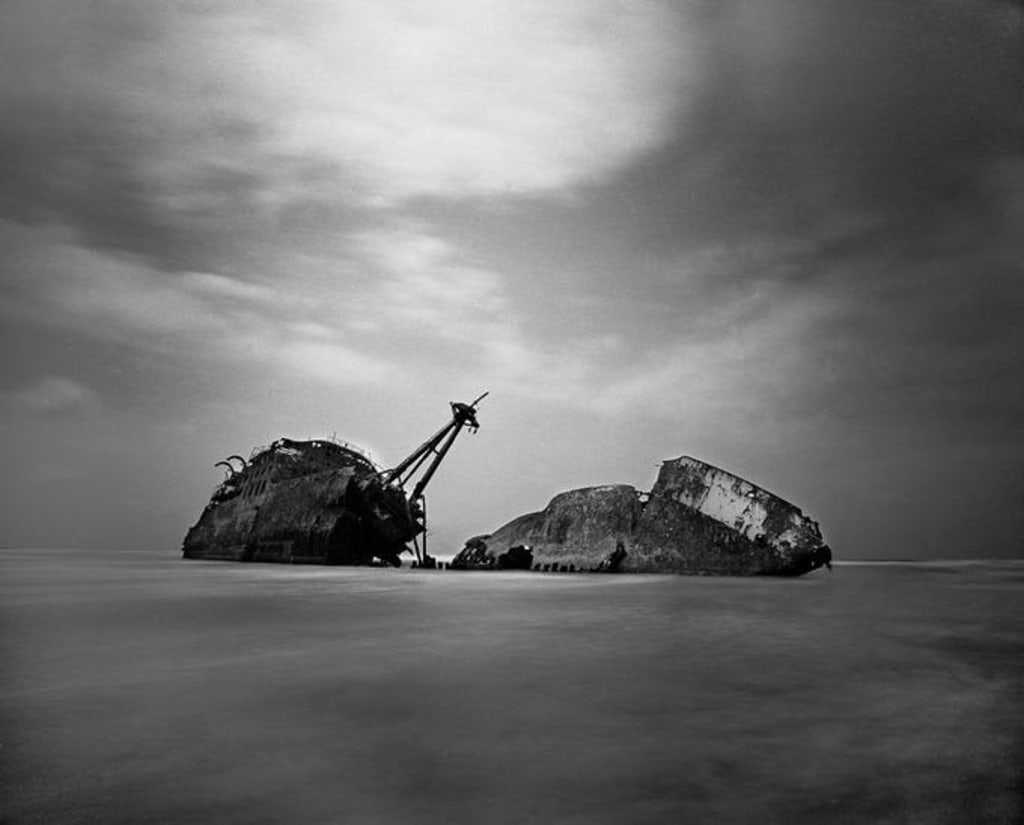
People often consider the Titanic to be the most advanced technological marvel of its day. They said it was unsinkable and when it sank they made a movie about it- this is why the disaster became world famous. Unfortunately, there have been many other large-scale shipwrecks that have occurred which are worse than the Titanic disaster.
On April 27, 1865, an incident took place involving the Sultana Steamboat, which regularly transported passengers and cargo between St. Louis and New Orleans. This vessel was a considerably sizable wooden boat with three decks, measuring 260 feet in length and 70 feet in width. Its dimensions were nearly double that of a standard basketball court.
On the day in question, the vessel had a capacity of approximately 350 passengers, but unfortunately, more than 2,000 individuals were on board. The ship was en route from New Orleans on April 23rd when it experienced a mechanical failure. Specifically, the boiler was malfunctioning, which forced the ship to seek repairs in Vicksburg.
While at the port, Captain James Cass Mason was presented with an excellent opportunity to transport a sizable group of former prisoners to the north. However, the ship's boiler required extensive repairs that would take a significant amount of time. Fearing that he would lose the job to his competitors, the captain decided to set sail with the ship despite its malfunction. Instead of a major overhaul, he made temporary repairs to the boiler and welcomed all ex-prisoners on board.
During the Sultana's voyage, the ship faced several issues such as a malfunctioning boiler, overcrowding, inadequate lifeboats, and unfavorable river conditions. Adding to the problem was the captain's refusal to segregate the ex-prisoners from ordinary passengers. Despite the high risk of shipwreck, the desire for financial gain prevailed. After two days of sailing, the ship encountered one of the biggest floods in Mississippi's history, causing the river to overflow and submerge the trees along the shore.
On the 26th of April, the Sultana arrived in Memphis, Tennessee, and loaded an additional 120 tons of sugar and 200 passengers, making it substantially heavier. Despite sailing against a strong current, the ship continued its journey and stopped at 1 am to load a shipment of coal from barges. Unfortunately, the broken boiler gave out under the strain and exploded soon after departure at 2 am. The Sultana was just seven miles north of Memphis, and a majority of passengers lost their lives while trying to escape the flames by jumping into the cold river that had a strong current.
The Sultana tragedy is widely regarded as the most devastating shipwreck in the annals of the United States. The precise count of fatalities remains uncertain, with estimates ranging from 961 to 1800 individuals, as per multiple sources.
It may come as a surprise that the story of the Sultana tragedy is relatively unknown. The Titanic disaster, which had numerous survivors, was widely publicized; however, the Sultana's sinking occurred amidst a high-profile event. Just 12 days prior, the country was mourning the loss of Abraham Lincoln, and many were still reeling from this news. As a result, the tragedy of the Sultana did not receive the attention it deserved.
Unfortunately, shipwrecks continue to happen in the present era. However, it is reassuring to note that their frequency has reduced compared to earlier times, thanks to the implementation of modern navigation systems and radar. Nevertheless, it is imperative to acknowledge that no technology is foolproof, and unforeseen natural calamities or emergencies can still pose a threat to maritime safety.
About the Creator
Keep reading
More stories from writers in FYI and other communities.




Comments
There are no comments for this story
Be the first to respond and start the conversation.