
India’s flag code
Explained: India’s flag code, and the rules governing display of Tricolour

The Indian flag was adopted in its present form during a meeting of the Constituent Assembly held on July 22, 1947.
The first national flag, which consisted of three horizontal stripes of red, yellow and green, is said to have been hoisted on August 7, 1906, at the Parsee Bagan Square, near Lower Circular Road, in Calcutta (now Kolkata).
Later, in 1921, freedom fighter Pingali Venkayya met Mahatma Gandhi and proposed a basic design of the flag, consisting of two red and green bands.What were the early rules governing the display of the Tricolour?
The earliest rules for the display of the national flag were originally governed by the provisions of The Emblems and Names (Prevention of Improper Use) Act, 1950 and The Prevention of Insults to National Honour Act, 1971.
The Prevention of Insults to National Honour Act, 1971 prohibits the desecration of or insult to the country’s national symbols, including the national flag, the Constitution, the national anthem and the Indian map.
The Section 2 of the Act says, “Whoever in any public place or in any other place within public view burns, mutilates, defaces, defiles, disfigures, destroys, tramples upon or [otherwise shows disrespect to or brings] into contempt (whether by words, either spoken or written, or by acts) the Indian National Flag or the Constitution of India or any part thereof, shall be punished with imprisonment for a term which may extend to three years, or with fine, or with both.”
Among the other acts which are considered to be of disrespect to the national flag are dipping the Tricolour in salute to any person or thing, waving it at half-mast except on specific occasions, or using it as a drapery in any form whatsoever, except in state funerals or for the last rites of armed forces or other paramilitary forces.Further, putting any kind of inscription upon the flag, using it to cover a statue, a monument or platform, and embroidering or printing it on cushions, handkerchiefs, napkins or any dress material is also considered disrespect to the Tricolour, according to the Act.
Moreover, the flag should not be allowed to touch the ground or trail in water, or be put up in an inverted manner.
In 2002, the Flag Code of India came into effect which allowed the unrestricted display of the Tricolour as long as the honour and dignity of the flag were being respected.
The flag code did not replace the pre-existing rules governing the correct display of the flag; it was, however, an effort to bring together all the previous laws, conventions and practices.conventions and practices.
What are the restrictions on the display of the Tricolour according to the flag code?
The Flag Code of 2002 is divided into three parts — a general description of the tricolour, rules on display of the flag by public and private bodies and educational institutions, and rules for display of the flag by governments and government bodies.It states that there will be no restriction on the display of the flag by public and private bodies and educational institutions except to the extent as laid down in the Emblems and Names (Prevention of Improper Use) Act, 1950 and the Prevention of Insults to National Honour Act, 1971.
It mentions that the tricolour cannot be used for commercial purposes, and cannot be dipped in salute to any person or thing.
It further states that whenever the flag is displayed, it should be distinctly placed and should “occupy the position of honour”.tricolour or above it.
Moreover, the flag should not be used as a festoon, or for any kind of decoration purposes. Any tricolour which is damaged should be destroyed in private, “preferably by burning or by any other method consistent with the dignity of the Flag”.
About the Creator
A Failed Artist, A Disillusioned Poet, An Underpaid Game Show Host
I took my son and niece to Gori, a small town in Georgia where Joseph Stalin was born. They talked me into visiting the Stalin's Museum, the largest in the post-Soviet space. I had resisted going there because I just can't stand the monster and know enough about him, or so I thought.
By Lana V Lynx8 days ago in FYI
The Timeless Title: “Olu of Warri” – A Pre-Colonial Legacy Rooted in History, Affirmed by Colonial Recognition Before 1952
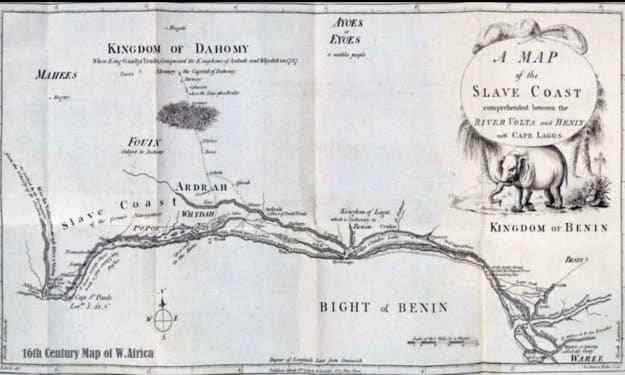
The title “Olu of Warri” stands as an enduring symbol of sovereignty, predating colonial rule by centuries and embodying the unbroken monarchy of the Warri Kingdom. Far from being a modern invention, this title traces its origins to the late 15th century, when Prince Ginuwa, son of the Oba of Benin, founded the kingdom in 1480 as “Iwere” – the ancestral homeland of the Itsekiri people. Historical records, maps, and accounts from European explorers unequivocally demonstrate that the monarch was consistently referred to as the Olu or King of Warri long before British colonial interference. The temporary shift to “Olu of Itsekiri” in the 1930s was a colonial administrative concession tied to the creation of Warri Province, but compelling evidence from colonial documents reveals that the British authorities had already recognized and supported the historical validity of “Olu of Warri” as early as 1936 – well before the formal restoration in 1952. Through persuasive evidence from Portuguese decrees, ancient maps, literary accounts, royal narratives, and declassified colonial dispatches, this article affirms that the “Olu of Warri” has always been the rightful designation, reflecting a kingdom’s sovereignty and its king’s dominion, with pre-1952 colonial endorsements underscoring its legitimacy.
By Omasanjuwa Ogharandukun2 days ago in FYI
Day 4 of Quitting
If this is how sobriety feels, maybe it’s better to go through life a little buzzed… this, along with other hits like, I want to kill myself, I wish I was dead, and I’m going to throw myself off a bridge have been the only thoughts on rotation these past few days. I promise myself that if, in a month, I still feel like this (‘this’ meaning despondent, full of rage, and simultaneously numb) I can go back to smoking. Until mid-February though? Nicotine is off the table.
By sleepy drafts7 days ago in Longevity



Comments
There are no comments for this story
Be the first to respond and start the conversation.