
Hypocrisy Means Nothing
What to do when liars keep lying.


In an era where the volume of information can overwhelm even the most vigilant observers, a disturbing tactic has emerged: the deliberate inundation of the media with falsehoods.
This strategy — epitomized by figures like Donald Trump — is not simply about isolated lies; it is a calculated effort to muddy the waters of public discourse, derail accountability, and distract from substantive policy failures.
By saturating news cycles with a barrage of unverified and misleading claims, leaders can obscure critical issues and deflect scrutiny from their actions.
For instance, the Washington Post Fact Checker documents how this method overwhelms traditional journalistic processes, while a Washington Post analysis counted over 30,000 false or misleading claims during Trump’s tenure.
The Politics of Misinformation
Modern political communication often thrives on conflict, spectacle, and rapid-fire messaging. In this landscape, overwhelming fact-checkers with sheer volume become a potent diversion.
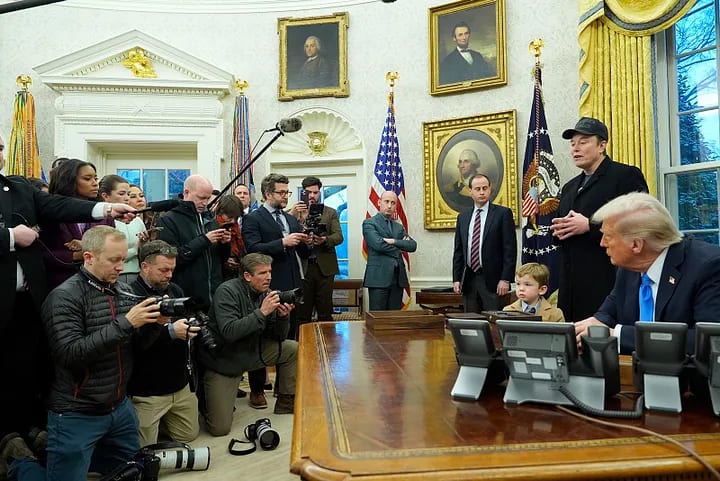
Trump’s record — as detailed by Politifact, FactCheck.org, and the Washington Post Fact Checker — reveals a pattern where repetition and speed outpace the slower, methodical process of verification.
Moreover, a CNN analysis highlights how this “firehose of falsehoods” not only confuses the public but also undermines the credibility of traditional news outlets. This tactic leverages the chaotic nature of today’s media environment.
When every new headline is countered by a deluge of contradictory claims, it becomes increasingly difficult for the public to discern fact from fiction.
As a result, accountability is deferred — or worse, obscured entirely — allowing politicians to evade the consequences of their actions.
While Trump serves as a prominent example, this strategy resonates more broadly in a political climate defined by media fragmentation and partisan echo chambers.
Sociological Underpinnings: Erosion of Trust and Social Cohesion
Beyond the immediate political calculus, this tactic has deep sociological implications. Societies built on shared norms and mutual trust can quickly unravel when leaders manipulate the flow of information.
The deliberate spread of misinformation corrodes the social fabric, fostering environments where skepticism replaces trust in traditional institutions.
Research, such as that discussed in studies available in The Strange Case of Donald J. Trump: A Psychological Reckoning, warns that repeated divergence from the truth creates a culture of cynicism and disengagement.

This erosion of trust isn’t confined to the political arena. It spills over into community life, where citizens become increasingly isolated within self-reinforcing bubbles of information. The consequence is a fragmented public sphere — one where meaningful dialogue is stunted and collective action is undermined.
In such conditions, the ethical costs of political deception become all too clear: a society that loses its shared commitment to truth risks descending into polarization and social disintegration.
Insights from academic analyses, including those referenced in The Lies of Donald Trump: A Taxonomy, further underscore these concerns.
Psychological Dimensions: Cognitive Biases and the Allure of Repetition
At the heart of this strategy lies a profound understanding of human psychology. Repeated exposure to misinformation taps into cognitive biases like the illusory truth effect — the tendency to perceive repeated statements as more credible.
When a false claim is echoed relentlessly, even the skeptical mind may begin to doubt its judgment. This phenomenon is explored in studies such as those presented in the WWU Honors Thesis.
Furthermore, political messages are rarely evaluated in isolation. They are filtered through emotional and ideological lenses that predispose audiences to accept claims that confirm their preexisting beliefs.
In this way, the tactic of overwhelming fact-checkers becomes not only a political maneuver but also a psychological one — exploiting our natural tendencies to seek coherence and avoid cognitive dissonance.
The result is a self-perpetuating cycle in which misinformation reinforces partisan identities, further complicating efforts to restore a shared reality. The Toronto Star Fact Check offers additional perspectives on how these dynamics play out in public discourse.
Ethical and Humanistic Considerations
At its core, the relentless propagation of falsehoods is an affront to the ethical responsibilities inherent in leadership. A democracy functions on the premise that citizens are empowered by accurate, truthful information.
When that foundation is compromised, the very idea of accountability is rendered moot. The long-term consequences extend beyond political loss — they inflict deep wounds on the collective human conscience, eroding the values of honesty and integrity that bind a community together.
The ethical dilemma is clear: when leaders prioritize expediency over truth, they not only betray the public trust but also jeopardize the health of democratic institutions.
The challenge, then, is to forge a counter-strategy — one that bolsters media literacy, supports independent fact-checking and reaffirms a commitment to transparent, accountable governance.
Only by addressing the psychological and sociological roots of misinformation can society hope to reclaim its narrative and restore trust.
The Imperative of Truth in a Fragmented World
In the final analysis, overwhelming the news cycle with nonsense may offer short-term political gains, but it ultimately leaves a legacy of disillusionment and division.
In the realm of public discourse, sustained deception will always erode the foundations of a healthy society. The case of Trump’s relentless misinformation campaign is not an isolated anomaly but a symptom of a broader crisis in political communication and social trust.
Addressing this challenge demands a multi-faceted approach. Political leaders, media institutions, and citizens alike must work collaboratively to promote transparency, encourage critical thinking, and uphold the ethical standards essential to democratic life.
Only then can society hope to mend the fractures wrought by a relentless barrage of falsehoods and chart a course toward a more honest and cohesive future.
About the Creator
Tania T
Hi, I'm Tania! I write sometimes, mostly about psychology, identity, and societal paradoxes. I also write essays on estrangement and mental health.
I was in a Toxic Relationship, with my Workplace
“You got that?” My ex yelled. His hands were balled into fists at his side. At six foot three, he towered over me. A normal person would have been afraid, but I looked up a video of George Lopez repeatedly saying, “I got this,” and showed it to him. I had grown used to this treatment, so much so that I didn’t blink when he ripped the phone from my hand and threw it across the room.
By Jade M.7 days ago in Confessions




Comments
There are no comments for this story
Be the first to respond and start the conversation.