
HUNDREDS Of GIANT Mysterious Tunnels Discovered In Brazil
Mysterious Tunnels Found in Brazil

Mysterious Tunnels Found in Brazil
Brazil is home to many natural wonders, but some of its most mysterious are the underground tunnels that have been found scattered across the country. These tunnels are unlike any other natural caves or burrows, and their origins are still unknown.
The first tunnels were discovered in 2010 by geologist Amilcar Adamy. He found a hole near the Bolivian border that led to a complex underground system. The tunnels are round and smooth, with no sharp edges or jagged rocks. They are also very deep, with some reaching up to 250 feet long.
Geologists have been unable to determine how these tunnels were formed. They are not natural caves, as they do not have the same features as other caves in the area. They are also too deep to have been dug by animals.
One theory is that the tunnels were created by paleoburrows, or tunnels that were excavated by extinct animals. This theory is supported by the fact that similar tunnels have been found in other parts of the world, including Uruguay, Paraguay, Chile, Bolivia, and Argentina.
Another theory is that the tunnels were created by a lost civilization. This theory is supported by the fact that some of the tunnels have been found to contain artifacts, such as pottery shards and stone tools.
However, no definitive answer has been found yet, and the mystery of the Brazilian tunnels remains unsolved.
Possible Origins of the Tunnels
Paleoburrows: These are tunnels that were excavated by extinct animals. This theory is supported by the fact that similar tunnels have been found in other parts of the world. The most likely candidate for the animal that created the Brazilian tunnels is the giant ground sloth, which was a large, lumbering creature that lived in South America until about 10,000 years ago. These sloths had powerful claws that they could use to dig, and they were known to build burrows that were up to 200 feet long.
Lost civilization: This theory is supported by the fact that some of the tunnels have been found to contain artifacts, such as pottery shards and stone tools. However, there is no other evidence to support the existence of a lost civilization in Brazil, and this theory is considered to be less likely.
Natural geological process: This theory is less likely, as there is no known natural process that can create tunnels with the same features as the Brazilian tunnels.
Other Theories
In addition to the three main theories, there are a number of other theories about the origins of the Brazilian tunnels. Some people believe that the tunnels were created by aliens, while others believe that they are the work of a secret society. There is even a theory that the tunnels are a natural phenomenon that was created by the Earth's magnetic field.
The Future of the Mystery
The mystery of the Brazilian tunnels is likely to remain unsolved for many years to come. However, as more research is conducted, scientists may eventually be able to determine the true origins of these fascinating structures.
Some more facts
The Brazilian tunnels are typically found in areas that were once covered by glaciers during the Pleistocene era. This suggests that the tunnels may have been created by the glaciers, which would have caused the ground to shift and create cracks that the animals could then dig out.
The tunnels are often found in clusters, which suggests that the animals that created them may have lived in groups.
The tunnels are sometimes found to contain the remains of extinct animals, such as giant ground sloths and giant armadillos. This suggests that the tunnels may have been used as shelters by these animals.
The Brazilian tunnels are a fascinating mystery that has yet to be solved. The tunnels are unlike any other natural caves or burrows, and their origins are still unknown. However, the research that has been conducted so far has provided some clues that may help scientists solve the mystery in the future.
"I would be grateful if you could like and share this article to help me reach a wider audience."
About the Creator
Keep reading
More stories from Peter Chiron and writers in FYI and other communities.
The Mysterious Dark Watchers
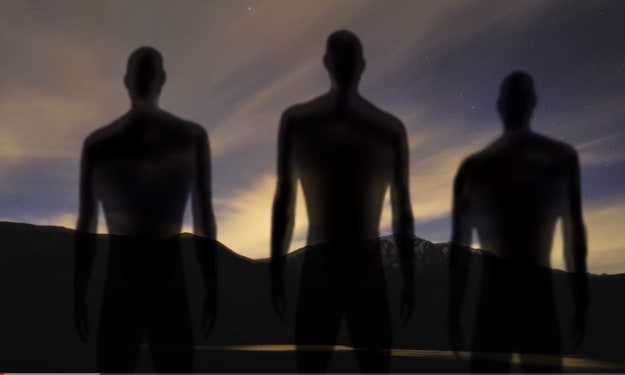
The Dark Watchers of Big Sur The Santa Lucia Mountains are a rugged mountain range located in central California. They are home to a number of mysterious creatures, including the Dark Watchers. These shadowy figures are said to stand motionless at the peaks of the mountains, watching over travelers below.
By Peter Chiron2 years ago in FYI



Comments
There are no comments for this story
Be the first to respond and start the conversation.