
Humor in Politics: From LOL to Polls
The Unexpected Power of Comedy in Shaping Public Opinion and Winning Elections
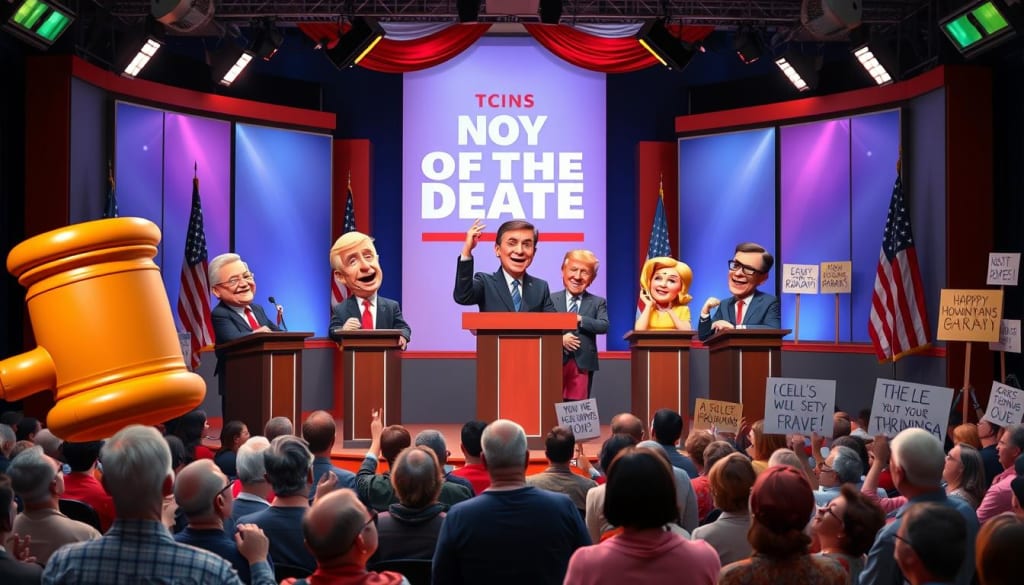
In the world of politics, where debates are serious and public images are carefully managed, a new trend has appeared: using humor. Politicians and candidates now use funny moments and jokes to grab attention and win votes. This shift shows how laughter has become a key part of political campaigns.
This article looks at how humor affects politics. We'll see how politicians use humor to connect with people, seem more relatable, and influence elections. By looking at past campaigns, psychology, and successful uses of humor, we'll learn about humor's role in politics today.
Key Takeaways
- Humor has become a strategic tool for politicians to connect with voters and build relatability.
- The use of humor in political campaigns can have a significant impact on voter perception and turnout.
- Effective use of humor in public appearances and debates can enhance a candidate's likeability and trustworthiness.
- Navigating the fine line between wit and offense is crucial when incorporating humor into political discourse.
- The rise of social media has amplified the reach and impact of humor-based political content.
The Rise if Political Humor
Political humor has a long history, dating back to ancient times. Leaders then used humor to connect with people. From Cicero's witty remarks to 18th-century cartoons, humor has always been part of politics. In recent years, it has become even more important for politicians.
Historical Glimpses of Humor in Politics
Politicians have always used humor to gain an edge. In the 19th century, Abraham Lincoln told stories and made jokes to win over the American people. Winston Churchill also used humor during World War II to boost morale and weaken his enemies.
The Changing Landscape of Political Discourse
- Now, with 24-hour news and social media, humor is key for politicians. It helps them stand out and connect with voters.
- Political experts and comedians have become big players, mixing news, entertainment, and commentary.
- Online, funny moments and memes can change how people see politics and shape stories.
The history of humor in politics keeps changing with the times. As politics move online, using comedic trends in campaigns is crucial for success.
"Humor is a powerful tool in politics, allowing candidates to connect with voters on a more personal level and differentiate themselves from their opponents."
The Psychology of Humor in Politics
Humor in politics is more than just fun. It digs deep into our minds, showing how it can build connections and sway choices. Political humor can make politicians seem more like us, creating a bond with voters.
Building Relatability and Emotional Connection
Laughter breaks down walls and brings people together. When politicians share funny moments with us, they seem more real and friendly. This makes them more trustworthy and likable, which is crucial in politics.
Laughter also deeply affects us emotionally. It reaches our emotional brain, making us feel good and part of a group. This feeling can greatly influence how we see candidates and who we vote for.
"Laughter is the shortest distance between two people." - Victor Borge
Politicians use humor to leave a mark and connect deeply with their supporters. This gives them an edge in political talks.
Humor as a Political Strategy
In politics, humor has become a key strategy for candidates and campaigns. It helps them stand out, dodge criticism, and get their base excited. Humor is a strong tool for smart politicians.
Good humor in politics connects with people on an emotional level. It makes candidates seem more real and relatable. This is great for strategic use of humor in campaigns when candidates seem far away or out of touch.
Humor as a political tool also helps deflect criticism and change the story. A clever joke or witty reply can ease tense situations and move focus away from bad news. In today's social media world, humor is key for handling tough political debates.
The goal of effective humor in politics is more than just telling jokes. It's about using laughter to connect with voters, share a message, and influence opinions. As political campaigns change, humor will keep being a big part of politics.
"Humor is a powerful tool in politics, capable of humanizing candidates, deflecting criticism, and energizing the base. When wielded strategically, it can be a game-changer in the political landscape."
From LOL to Polls: The Unexpected Power of Humor in Political Campaigns
In politics, humor has become a key tool for connecting with voters and changing election results. Successful campaigns show how humor can make a big difference.
Case Studies of Successful Humor-Based Campaigns
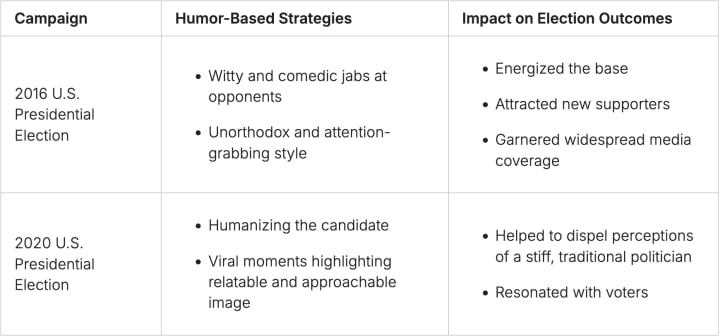
In the 2016 U.S. presidential race, Donald Trump used humor to grab attention and get media coverage. His quick wit and funny attacks on opponents won over supporters and drew in new ones.
Four years later, in 2020, Joe Biden's team used humor to make him seem more relatable. A viral moment where he joked with a heckler during an event showed his human side. This helped him connect with voters.
The Double-Edged Sword of Political Humor
Political humor can engage people and send messages. But, it also has risks. Political figures must walk a thin line between being funny and offending others.
Risks of Political Humor
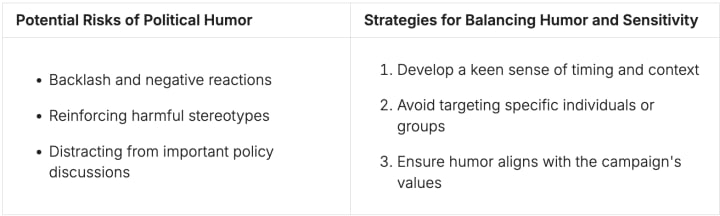
Political humor can lead to backlash. A joke meant to be funny might cause a big controversy. If it seems insensitive, it can hurt a candidate's reputation and credibility.
Another risk is the unintended consequences. Political jokes can make stereotypes worse, widen divisions, or sidetrack policy talks. Politicians must think about how their words affect different people.
Balancing Humor and Sensitivity
Good political humor needs a deep understanding of the audience and the situation. Successful candidates know how to be funny and still be respectful.
- Know when and where to use humor to avoid being seen as insensitive.
- Don't pick on people or groups in a way that feels like bullying.
- Make sure the humor fits with your campaign's message and values.
By being careful with political humor, candidates can use it to their benefit. They keep the trust and respect of their supporters.
"The key is to use humor as a tool to connect with people, not as a weapon to divide them."
Viral Moments: The Impact of Social Media
In today's world, social media has a big role in politics. It lets social media and political humor spread fast. These funny moments can grab people's attention and change political campaigns.
Candidates use viral moments in campaigns to connect with voters. They can share funny moments online to seem more real and relatable. These moments can be big news, overshadowing regular campaign messages.
Social media has changed how we see political humor. It lets people share funny content fast and engage with others. Candidates who use humor well can stand out and connect deeply with voters.
Social media has made humor a key part of politics. As viral moments in campaigns keep shaping politics, candidates must be careful. They need to use humor to connect but avoid mistakes that could harm their campaign.
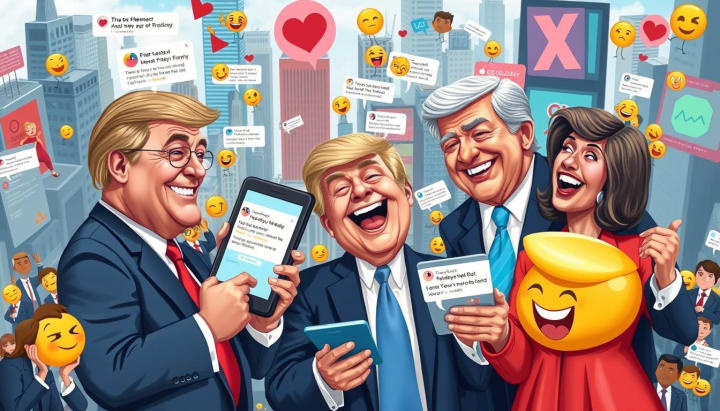
"In the age of social media, humor has become a powerful tool in the political arena, allowing candidates to connect with voters on a more personal level and stand out in a crowded landscape."
Humor in Political Debates and Public Appearances
Using humor in political debates and speeches is a smart move. It helps politicians connect with people on a deeper level. They learn to mix in funny moments that grab attention and make people feel closer to them.
Strategies for Effective Delivery
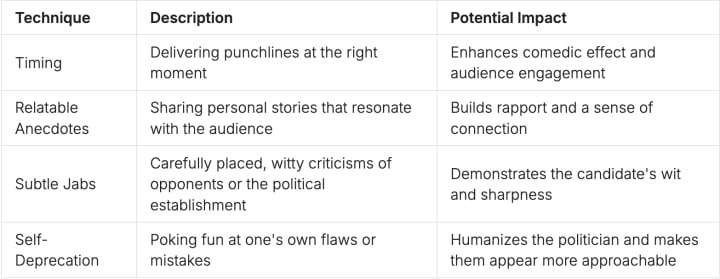
Politicians use many ways to make people laugh in public. They might use quick jokes or funny stories that people can relate to. It's important to keep the humor light and professional to avoid any awkwardness.
- Timing is Everything: Knowing when to make people laugh is key. It makes the humor hit home better.
- Relatable Anecdotes: Sharing stories that people can relate to helps politicians seem more like us. It builds a connection.
- Subtle Jabs: A well-placed joke about an opponent can make people laugh and show off the candidate's quick thinking.
- Self-Deprecation: Making fun of oneself can make a politician seem more real and down-to-earth.
By using these strategies, politicians can really stand out. They can make people laugh, feel closer, and even change their minds.
The Future of Humor in Politics
The role of humor in politics is changing fast. Experts think comedy will become more important in campaigns and political talks. They predict that humor will shape the future of politics in big ways.
Humor is set to have a big impact on politics. Campaigns will use laughter to connect with people and make complex ideas easier to understand. Social media will help spread funny political content far and wide, making it key in politics.
Future trends hint at more clever uses of humor in politics. Politicians will learn how to use humor wisely, balancing fun with respect. Being able to make people laugh in debates and public events will be crucial. People want real and fun interactions with their leaders.
FAQ
What is the role of humor in political campaigns?
Humor helps politicians connect with voters and sway public opinion. It makes candidates relatable and can deflect criticism. It also energizes their supporters.
How has the use of humor in politics evolved over time?
Humor has a long history in politics, from ancient times to today. It has become a key tool for candidates. Now, it's used more strategically to engage with voters.
What are the psychological benefits of using humor in political campaigns?
Humor helps politicians build connections with voters. It makes them relatable and can influence how people think. By using humor, candidates can sway public opinion.
What are some examples of successful humor-based political campaigns?
Many campaigns have used humor to get attention and change how voters see them. These examples show how humor can be a powerful tool in politics.
What are the potential risks and challenges of using humor in politics?
Humor can be risky if it offends people. Politicians must be careful to not cross the line. They aim to make people laugh without losing support.
How has social media impacted the role of humor in political campaigns?
Social media has made humor in politics more powerful. Now, funny moments can spread quickly and reach many people. This helps candidates connect with voters in new ways.
What are some effective strategies for delivering humor in political debates and public appearances?
Politicians use different ways to add humor to debates and speeches. They might use quick jokes or make fun of themselves. This helps them stand out and make a strong impression.
What is the future outlook for the role of humor in politics?
Humor will likely play a bigger role in politics as things change. Candidates will need to keep up with new trends and use humor to shape opinions and engage voters.
About the Creator
Keep reading
More stories from writers in FYI and other communities.
A Failed Artist, A Disillusioned Poet, An Underpaid Game Show Host
I took my son and niece to Gori, a small town in Georgia where Joseph Stalin was born. They talked me into visiting the Stalin's Museum, the largest in the post-Soviet space. I had resisted going there because I just can't stand the monster and know enough about him, or so I thought.
By Lana V Lynx19 days ago in FYI
Does AI give employees more autonomy—or more surveillance?
AI is often introduced into organizations with a promise of empowerment. Leaders talk about faster decisions, smarter tools, reduced manual effort, and employees finally being able to focus on higher-value work. In theory, AI is positioned as a force that frees people from busywork and gives them more control over how they do their jobs.
By Vipul Gupta2 days ago in FYI
The Path to Salvation
The late autumn evening air filled the monk's lungs, but it wasn't the season that chilled his bones. The heavy-handed presence of evil he had sensed upon entering the woods surrounding this mountain village had not bothered to conceal itself from him.
By Made in DNA3 days ago in Fiction



Comments
There are no comments for this story
Be the first to respond and start the conversation.