
How to Start a Frozen Food Business and Make Your Mark in the Global Frozen Food Supply Chain
Start your own frozen food business

Starting a frozen food business is more than just a commercial venture—it’s a response to the ever-growing demand for convenience, quality, and nutrition in today’s fast-paced world. Whether you're a passionate foodie, a chef wanting to scale your recipes, or an entrepreneur looking for a resilient industry, frozen food production offers a powerful opportunity to serve millions while building a scalable brand.
In this guide, we’ll walk you through how to start a frozen food business step by step, explore the behind-the-scenes of frozen foods manufacturing, and show you how to eventually become a part of the global frozen food supply company ecosystem.
Understanding the Rising Demand: Why Now Is the Best Time to Start a Frozen Food Business
It’s not just about frozen pizza anymore. The global appetite for frozen foods has skyrocketed.
According to Statista, the global frozen food market was valued at $265 billion in 2022, and it's projected to reach $366 billion by 2026.
Consumers are increasingly prioritizing foods that are:
Easy to prepare
Have longer shelf lives
Retain nutrients through flash freezing
Cost-effective
That’s why learning how to start a frozen food business now positions you perfectly to ride this wave of demand and innovation.
Step-by-Step Guide: How to Start a Frozen Food Business with Purpose and Profit
Here’s a human-centric yet practical guide to get started:
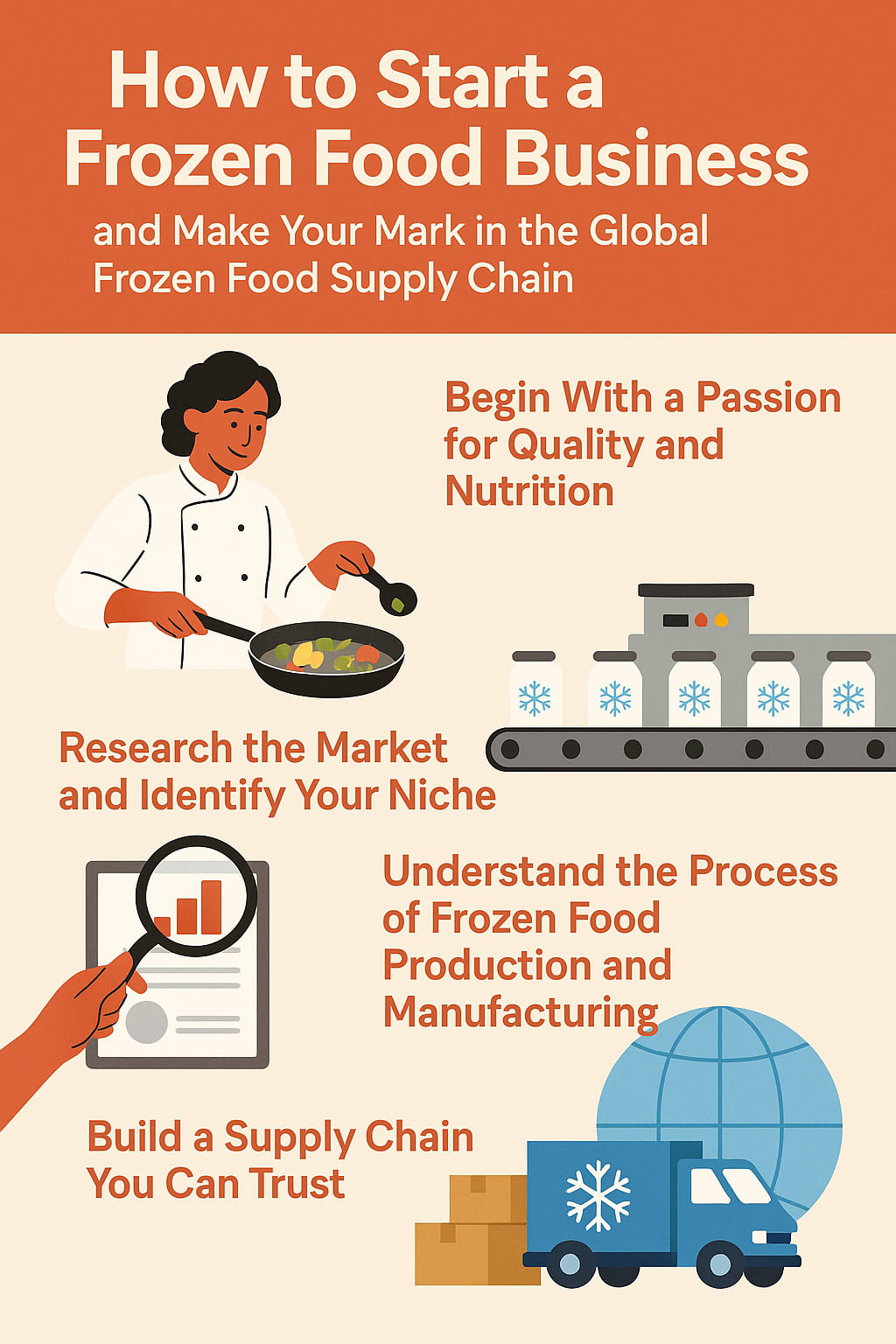
1. Begin With a Passion for Quality and Nutrition
Every great business begins with purpose. Whether it's home-cooked meals from grandma’s kitchen or innovative vegan recipes, your product must connect emotionally with your customers. Frozen food may be cold, but your brand story must be warm.
Tip: Use storytelling in your packaging and marketing. Let customers know the care, heritage, or mission behind your food.
2. Research the Market and Identify Your Niche
Frozen food is vast—ranging from fruits and veggies to gourmet meals and snacks.
Ask yourself:
Are you targeting busy professionals?
Health-conscious families?
Ethnic cuisine lovers?
Defining your niche early will help guide your production and branding strategies.
3. Understand the Process of Frozen Food Production and Manufacturing
This is where your idea becomes a reality. Frozen foods manufacturing includes:
Recipe development and testing
Flash freezing for nutrient retention
Proper packaging and labeling
Cold storage and logistics
You'll need a hygienic space, food-grade machinery, blast freezers, and a team that understands food safety regulations like HACCP.
Emotional Insight: Many small business owners start with just a few recipes, freezing and packaging at home before scaling to a dedicated unit.
4. Legal Compliance and Certifications
To build trust and meet food safety standards:
Register your business and brand
Get food licenses from health authorities
Ensure FDA or equivalent compliance
Train your staff on hygiene protocols
This not only protects your customers—it strengthens your brand as a reliable provider.
5. Build a Supply Chain You Can Trust
Once you’ve cracked production, it's time to think big. Partnering with a global frozen food supply company can give your product access to export markets, major retailers, and food service providers.
The Heart Behind the Business: Emotional Branding and Community Connection
One thing that sets apart successful frozen food startups is their emotional touch.
Imagine a working mom thanking your ready-to-eat dal chawal for saving her evening.
Or a diabetic customer finally finding sugar-free frozen snacks they can trust.
These aren’t just products—they’re solutions, and in many cases, lifelines.
Make customer stories part of your journey. Share testimonials, ask for reviews, and be transparent about your process. That human connection becomes your most powerful marketing tool.
Scaling Smartly: From Local Freezer Shelves to International Aisles
Once you establish a strong local base, explore:
Online frozen food delivery
Subscription boxes
Export opportunities
Co-packing partnerships
Collaboration with a global frozen food supply company can open doors to markets in the Middle East, North America, or Europe, where demand for ethnic, plant-based, and ready-to-cook meals is growing rapidly.
Final Thoughts: Turning Cold Storage into Warm Success
Learning how to start a frozen food business is more than logistics and packaging—it’s about feeding people’s lives with care, convenience, and consistency. From mastering frozen food production to becoming part of a global supply chain, your journey can lead to both personal fulfillment and commercial success.
So whether you're launching your mom’s secret kebab recipe or a line of guilt-free frozen desserts, remember: food is love—and frozen food, when done right, preserves that love for a little longer.
About the Creator
Parker Smith
I’m Parker Smith, a passionate content writer specializing in SEO and digital marketing. I create engaging, well-researched content that drives traffic and connects businesses with their audience.
Keep reading
More stories from Parker Smith and writers in FYI and other communities.
Essential Tips You Should Know Before Starting a Soap Business
The soap-making industry offers a creative, rewarding business opportunity, especially with the increasing demand for organic and handmade skincare products. However, before diving in, it's crucial to understand the key challenges that come with the craft. From technical mistakes to practical concerns, this blog will guide you through some of the most common hurdles that soap-making entrepreneurs face and how to avoid them.
By Parker Smith8 months ago in FYI
A Failed Artist, A Disillusioned Poet, An Underpaid Game Show Host
I took my son and niece to Gori, a small town in Georgia where Joseph Stalin was born. They talked me into visiting the Stalin's Museum, the largest in the post-Soviet space. I had resisted going there because I just can't stand the monster and know enough about him, or so I thought.
By Lana V Lynx30 days ago in FYI
How much would it cost to buy Greenland? Trump's dream of "the biggest real estate deal in history"
For more than a hundred years, American politicians have occasionally cast covetous glances toward Greenland, the world's largest island, which occupies a strategically important position between North America and Europe due to its location. But it was only U.S. President Donald Trump who revived this idea with unprecedented vigor. He first mentioned it in 2019 during his initial term, but after his re-election in 2024, he elevated it to the level of a national security priority. The Trump administration presents it as a necessary step against Russian and Chinese influence in the Arctic, access to critical minerals, and defense of the northern border.
By Elvira Diggory5 days ago in FYI


Comments (1)
The global frozen food market's growth is a great opportunity. Starting with passion for quality and researching the market are key steps, just like I did when launching my own venture.