
How Old Is the Water You Drink?
age of drinking water

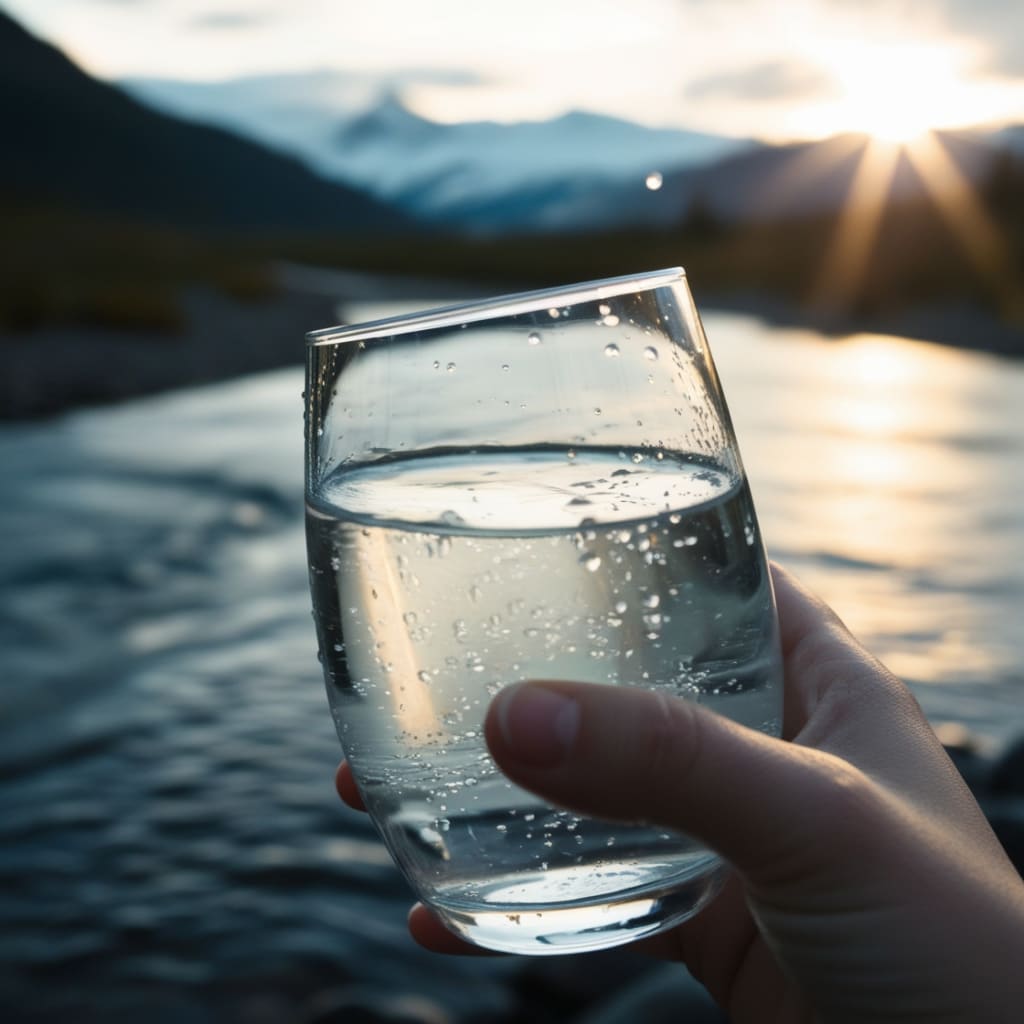
Water is life. It flows through our bodies, sustains every ecosystem, and covers nearly 71% of the Earth’s surface. Yet, despite its vital role, most people rarely pause to wonder about one simple but profound question: how old is the water you drink? The answer is far from straightforward, revealing a fascinating story about Earth’s water cycle, ancient reserves, and the interconnectedness of our planet’s natural systems.
To begin with, it’s important to understand that the water on Earth today is incredibly old—much older than humans or even dinosaurs. Scientific evidence suggests that the majority of Earth's water has existed for over 4 billion years, dating back to the planet’s formation. Water molecules themselves have been cycling through oceans, atmosphere, rivers, glaciers, and underground reservoirs since long before life appeared. Unlike many natural resources that can be depleted, Earth’s water exists in a closed hydrological system, which means that the total amount remains nearly constant, continuously recycled by natural processes.
This continuous recycling is made possible by the water cycle, also called the hydrologic cycle. In this cycle, water evaporates from oceans, lakes, and rivers into the atmosphere, condenses into clouds, falls as rain or snow, and flows back to bodies of water or infiltrates the ground to become groundwater. This process repeats endlessly, moving water through different states—liquid, vapor, and ice—and various reservoirs. Because of this dynamic movement, the exact "age" of the water in your glass can vary widely depending on its source and path.
For example, the water you drink from a tap in a city usually comes from surface water sources such as lakes, rivers, or reservoirs, or from groundwater aquifers. Surface water tends to be relatively “young” in geological terms. It may have fallen as rain within the last few months or years, traveling through watersheds, filtering through soils, and collected in reservoirs. This water is continuously replenished by precipitation, making it more recent in its journey through the cycle.
On the other hand, groundwater—the water stored underground in aquifers—can be much older. Some groundwater is "modern," meaning it was recharged recently by rainfall, but other groundwater may be thousands or even hundreds of thousands of years old. Scientists call this “fossil water,” referring to water trapped underground long ago during wetter climate periods. Fossil water exists deep beneath the surface, often isolated from surface contamination and the current water cycle, making it an invaluable and sometimes non-renewable resource.
Determining the exact age of water requires sophisticated scientific methods. One common approach is analyzing isotopes—different forms of elements within water molecules. For instance, isotopes of hydrogen and oxygen in water can reveal information about its origin, the climate at the time it was formed, and how long it has been underground. By studying these isotopes, researchers have found groundwater in some parts of the world that dates back more than 1 million years, such as in deep aquifers beneath the Sahara Desert or Australia’s Great Artesian Basin.
Even ocean water, which covers more than two-thirds of the planet, has an average molecular age of about 3,000 to 4,000 years. This means that the water molecules have been cycling through the ocean and atmosphere many times during this period. While this may seem ancient, it is relatively young compared to groundwater trapped underground for millennia.
When you drink bottled water, the story is just as complex. Bottled water may come from natural springs, which often tap into groundwater sources, meaning that it could be ancient water filtered naturally through rock layers over centuries. Some bottled waters are sourced from glaciers, where water was locked in ice for thousands of years before melting and entering the bottle. Others use municipal tap water, which itself might be surface or groundwater treated for safety.
The ancient age of water highlights its preciousness and fragility. Although water molecules are endlessly recycled, accessible fresh water suitable for drinking, agriculture, and sanitation is finite and unevenly distributed. With increasing population, climate change, and pollution, water scarcity has become a major global challenge. Many of the world’s most important aquifers are being depleted faster than they can naturally recharge, effectively mining fossil water that took thousands of years to accumulate. This raises critical questions about sustainability and conservation.
Understanding the age of the water we drink also influences water management policies. Regions relying heavily on ancient groundwater must balance current use with long-term preservation, as over-extraction can cause serious problems such as land subsidence, saltwater intrusion, and loss of ecosystems. Protecting recharge zones, reducing contamination, and promoting efficient water use are essential to safeguarding these ancient reservoirs for future generations.
Beyond the scientific and environmental aspects, there is also a deeper philosophical perspective. The water in your glass connects you to the Earth’s deep history and countless forms of life that existed before you. You might be drinking water that once passed through the gills of prehistoric fish, the roots of ancient forests, or the cells of extinct animals. This interconnectedness reminds us that our relationship with water is not just practical but profoundly spiritual and cultural.
Many indigenous cultures honor water as sacred, recognizing its timeless journey and essential role in sustaining life. Their traditional knowledge emphasizes respect and reciprocity, lessons that are increasingly vital in our modern world facing water stress.
In urban areas, the water you drink also has a recent history. It might have traveled miles through pipes, been treated with chemicals to ensure safety, and filtered through modern purification systems. While this modern treatment ensures the water is safe to consume, it also highlights our reliance on infrastructure and technology to access ancient resources.
Climate change adds new complexity to the age of drinking water. Changes in precipitation patterns, melting glaciers, and droughts affect how and when water replenishes surface and groundwater sources. Glacial meltwater, once a reliable supply in many regions, is becoming less predictable as glaciers shrink. This means the water cycle itself is shifting, altering the availability of both young and ancient water sources.
So, next time you fill your glass or bottle, take a moment to think about the incredible journey those water molecules have made. They have traveled through time and space, through ancient storms and calm lakes, through ice ages and warm epochs. You are drinking water that is a living link to Earth’s past and an essential resource for its future.
In conclusion, the age of the water you drink spans a vast spectrum—from mere days in the atmosphere to millions of years underground. Recognizing this not only deepens our appreciation but also underscores the urgency of protecting our water sources. Water’s timeless nature is both a gift and a responsibility, reminding us that what we consume today connects us intimately with the planet’s long and ongoing story.
About the Creator
Muhammad Asim
Welcome to my space. I share engaging stories across topics like lifestyle, science, tech, and motivation—content that informs, inspires, and connects people from around the world. Let’s explore together!
Keep reading
More stories from Muhammad Asim and writers in FYI and other communities.
10 Weird Facts You Won’t Believe Are True
The world is full of strange, surprising, and downright bizarre facts that make you question reality. Just when you think you’ve heard it all, something comes along that stretches the limits of belief. From nature’s oddities to human quirks and mind-boggling science, these weird facts you won’t believe are not only true—they’re utterly fascinating. Ready to have your mind blown? Let’s dive into ten weird facts that sound fake but are 100% real.
By Muhammad Asim8 months ago in FYI


Comments
There are no comments for this story
Be the first to respond and start the conversation.