
How Ketamine Solves Treatment-Resistant Depression
A New Path for Lasting Relief

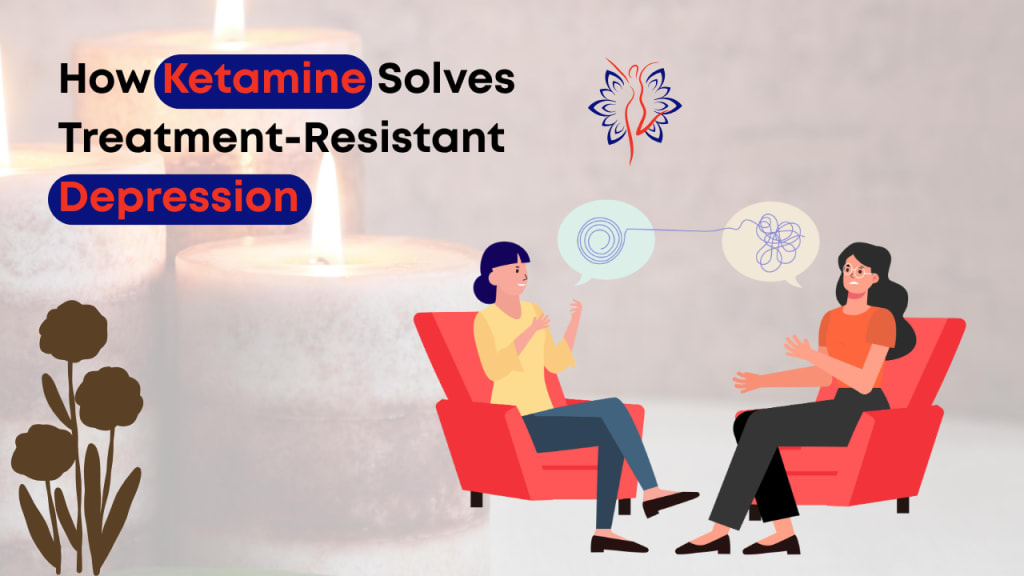
There’s a moment-usually in the quiet hours-when it hits hardest. That heavy, unshakable feeling of “I’ve tried everything.” Meds, therapy, mindfulness apps, support groups, diet changes, exercise. And still… the fog won’t lift. If you’ve been there, or you love someone who has, then you understand the crushing weight of treatment-resistant depression.
I’ve been there too.
A friend of mine, Sarah, battled depression for over a decade. She was one of the strongest people I knew-successful, driven, outwardly composed. But inside, she was exhausted from the revolving door of medications and side effects. Nothing stuck. Nothing worked for long. When she first heard about ketamine therapy, she dismissed it. “Sounds too good to be true,” she told me.
But when the traditional routes felt like dead ends, she gave it a chance. What happened next was... unexpected. And deeply hopeful.
The Reality of Treatment-Resistant Depression
Let’s not sugarcoat. Treatment-resistant depression (TRD) is tough. It affects up to 30% of people with major depressive disorder, according to the National Institute of Mental Health. That’s nearly one-third of people who try standard antidepressants and therapy and don’t experience lasting relief.
TRD isn’t just about feeling sad. It’s about despair that persists despite help. It's waking up after eight hours of sleep and still feeling too heavy to move. It’s smiling through conversations because you’re tired of explaining that no, you're not better yet.
This kind of depression doesn’t just affect emotions. It changes the brain’s wiring-literally. Over time, chronic depression weakens the very neural connections we rely on to feel joy, motivation, or even hope.
So what makes ketamine therapy different?
The Science Behind Ketamine and the Brain
Unlike typical antidepressants, which work by altering levels of serotonin or dopamine, ketamine targets the glutamate system-a completely different pathway in the brain. Glutamate is the most abundant excitatory neurotransmitter, and it's key in brain plasticity (your brain’s ability to change, learn, and grow).
When administered in low, controlled doses, ketamine appears to:
- Block NMDA receptors, reducing excessive glutamate activity
- Stimulate AMPA receptors, enhancing communication between neurons
- Promote synaptogenesis, the formation of new connections in areas damaged by depression
In simpler terms? Ketamine doesn’t just tweak brain chemicals-it helps rebuild the physical connections your brain needs to process emotions and adapt.
Studies have shown that many people with TRD feel significant relief within hours or days after a ketamine session-sometimes after just one dose. A 2023 review in Psychiatric Times noted that over 70% of patients with TRD responded positively to ketamine treatment within a week.
That’s not just fast. That’s life-changing.
Real-Life Impact: What Ketamine Therapy Feels Like
Now, if you’re picturing psychedelic trips or hallucinations, you’re not entirely wrong-but it’s not what you might expect. In a medical setting, ketamine therapy is carefully administered and monitored. You’re in a calm, safe environment. You may feel dissociation, you’re stepping outside of yourself, like you’re floating through thoughts and memories.
Some describe it as dreamlike. Others say it's like watching their pain from a distance, without drowning in it.
Sarah described her first session to me as “the moment I remembered what calm felt like.” Not fake happiness. Not a high. Just... clarity. A break in the storm.
And that’s what so many patients need: a break long enough to breathe, to reflect, and to begin again.
It’s Not a Magic Cure-But It’s a Powerful Catalyst
Let’s be clear: ketamine isn’t a silver bullet. It doesn’t "cure" depression. But for those with TRD, it can create a critical window of relief-a chance to engage in therapy more effectively, reconnect with loved ones, or even just get out of bed.
Ketamine therapy works best when it’s part of a bigger plan:
- Integration therapy to process emotional breakthroughs
- Lifestyle support (like nutrition, exercise, and sleep hygiene)
- Ongoing mental health care to ensure sustainable progress
That’s why choosing the right provider matters. You want a clinic that doesn’t just hand you a treatment and send you home. You want support, expertise, and a genuine care for your journey.
Barriers and Misconceptions
Even with all its promise, ketamine therapy still faces skepticism. Some worry about its past as an anesthetic or its reputation as a party drug. Others hesitate due to cost-insurance coverage is still inconsistent, especially for off-label uses.
But with increasing evidence and FDA-approved options like Spravato (esketamine), the stigma is fading. More clinics across the U.S. are now offering ketamine therapy under strict medical supervision, making it more accessible than ever.
Still, it's important to research carefully. Not every provider follows best practices. Look for clinics with:
- Qualified medical staff
- Thorough screening processes
- Therapeutic integration support
- Transparent pricing and treatment plans
Because when you’re struggling with TRD, the last thing you need is uncertainty in your care.
A Personal Reflection: Hope, After Hopelessness
Watching Sarah improve was like seeing someone come back to life-not all at once, but piece by piece. She started showing up for things again. Laughing at jokes. Making future plans. The fog didn’t disappear completely, but it lifted enough to let the light in.
And for many people, that’s what ketamine therapy offers: a second chance at living. Not just surviving the day, but genuinely engaging with it.
I’ll never forget when she told me, “I feel like I’m finally allowed to be hopeful again.”
If you’ve reached the edge of what traditional treatment can offer, know that you’re not alone. And more importantly, you’re not out of options.
Final Thoughts
Depression is a thief. It takes time, connection, energy-even your sense of self. But breakthroughs in care like ketamine therapy are giving people their lives back. If you or someone you love is struggling with treatment-resistant depression, it might be time to explore this path.
And if you're based in the Northeast, there are several trusted providers offering ketamine therapy in Pennsylvania clinics that understand the weight of what you’re carrying and are ready to help lift it, one session at a time.
Sometimes, the first step toward healing is simply knowing that healing is still possible.
Know More Read This: Guide to Ketamine-Assisted Therapy for Depression
About the Creator
Adrienne D. Mullins
Driven by a deep passion for health and wellness, I specialize in holistic therapies that nurture both the mind and body. My mission is to guide individuals toward balance, healing, and sustainable well-being.
Keep reading
More stories from Adrienne D. Mullins and writers in FYI and other communities.
Which Psychotherapy Treatment in Philadelphia Fits Your Needs?
Choosing the right psychotherapy treatment is not just about finding a therapist it’s about finding the right therapeutic approach that aligns with your mental health goals, personality, and life experiences.
By Adrienne D. Mullins6 months ago in FYI
A Failed Artist, A Disillusioned Poet, An Underpaid Game Show Host
I took my son and niece to Gori, a small town in Georgia where Joseph Stalin was born. They talked me into visiting the Stalin's Museum, the largest in the post-Soviet space. I had resisted going there because I just can't stand the monster and know enough about him, or so I thought.
By Lana V Lynx17 days ago in FYI
AI-Powered Supply Chain Planning Software Market Gains Momentum as Enterprises Embrace Automation
Research Insights According to Market.us, The global AI Powered Supply Chain Planning Software market was valued at USD 11.38 billion in 2025 and is expected to expand rapidly over the forecast period. The market is projected to reach approximately USD 240.96 billion by 2035, growing at a strong CAGR of 35.7% from 2025 to 2035. This growth is driven by increasing supply chain complexity and rising demand for real time forecasting, demand sensing, and inventory optimization. Enterprises are adopting AI driven planning platforms to improve resilience, reduce operational costs, and enhance end to end visibility.
By Roberto Crum3 days ago in FYI
How, Too
Many people wonder how, too. You are not alone, and I am an expert. I will teach you how, too! First, you need to remit a small application fee and fill out an application describing the nature of your financial situation and how often payments will be made, as this will have great bearing on how well I teach you how, too.
By Harper Lewis6 days ago in Fiction



Comments
There are no comments for this story
Be the first to respond and start the conversation.