
How Ketamine Assisted Psychotherapy Heals the Mind
Unlocking Trauma, One Session at a Time

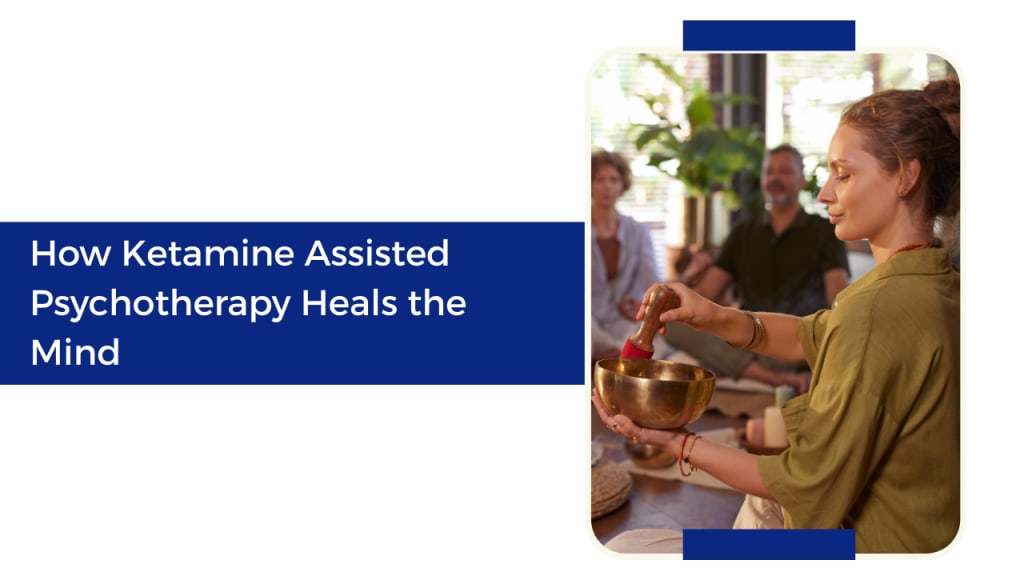
A few years ago, I sat across from a friend- let’s call her Rachel- who had been quietly battling depression for over a decade. She had tried everything. Talk therapy, SSRIs, meditation retreats, and even acupuncture. And yet, her words still came heavy and slow, like each one had to be pulled through a fog. But then, something changed. After just a few sessions of ketamine assisted psychotherapy, she started describing the world in color again. She said she felt like she had finally come back online- like the part of her that had been “offline” for years had suddenly reconnected.
At the time, I didn’t fully understand how that could happen. I mean, how does a medication originally used for anesthesia become one of the most promising tools in modern mental health?
Turns out, the story behind how ketamine assisted psychotherapy heals the mind is both deeply scientific and profoundly human.
What Is Ketamine Assisted Psychotherapy?
Let’s start with the basics. Ketamine assisted psychotherapy (KAP) is a therapeutic model that combines the use of ketamine, a fast-acting, dissociative anesthetic, with guided talk therapy. The ketamine is administered in a clinical setting, often through IV, intramuscular injection, or lozenges, under medical supervision. The patient is then supported before, during, and after the experience by a licensed therapist.
But here’s where it gets interesting: the goal isn’t to simply medicate symptoms. It’s to use ketamine as a bridge- one that helps clients access deeper parts of themselves that are often unreachable in ordinary talk therapy.
How Ketamine Works in the Brain
On a biological level, ketamine operates differently than traditional antidepressants. Instead of targeting serotonin (like most SSRIs), it influences glutamate, a powerful neurotransmitter associated with learning, memory, and mood regulation.
More specifically, ketamine blocks NMDA receptors and enhances neuroplasticity- the brain’s ability to form new neural connections. Think of it like this: if your mind has been stuck in the same painful thought loops for years, ketamine helps carve out new paths. It gives your brain the chance to “reset” and learn new patterns.
And it doesn’t take months to feel something. Many patients report relief within hours or days- a significant difference when you’re in the thick of depression.
Dissociation: The Gift You Didn’t Know You Needed
Here’s a concept that surprised me: ketamine induces a mild dissociative state, which at first sounds alarming. But for many, that sense of detachment is exactly what makes healing possible.
Imagine being able to observe your trauma, your grief, or your self-loathing- without drowning in it. That’s what ketamine can do. It creates space between you and your emotional pain. It’s like watching your life from a quiet distance, where reflection becomes possible.
Rachel once described it as “sitting beside my depression instead of being inside it.” That distance gave her the clarity and courage to look at things she had avoided for years.
The Role of the Therapist: More Than a Guide
Ketamine isn’t a silver bullet. What makes ketamine assisted psychotherapy so effective is the structure around the experience.
Before the session, the therapist helps set an intention- maybe it's to explore unresolved grief, childhood trauma, or simply the numbness that won’t go away. During the session, the therapist holds space, sometimes speaking gently, sometimes sitting in silence.
After the effects wear off, the integration begins. This part is vital. The therapist helps the client unpack what they experienced- what images came up, what feelings emerged, what insights surfaced. This isn’t about tripping and forgetting. It’s about bringing those discoveries back into real life.
Integration is where transformation becomes sustainable.
Who Is It For?
KAP isn’t for everyone, but it’s changing lives for many. Clinical trials and real-world outcomes show it’s particularly effective for:
- Treatment-resistant depression
- PTSD
- Anxiety
- Grief and loss
- Addiction recovery
One study published in The Journal of Affective Disorders in 2023 reported that 68% of participants with chronic depression showed significant improvement after just four KAP sessions.
And yet, it's not just about symptom reduction. Many patients describe it as a spiritual experience- a reconnecting with the self, a reawakening of something forgotten.
A Personal Reflection: The Quiet After the Storm
I haven’t experienced KAP firsthand, but I’ve witnessed its ripple effect. I’ve seen people reenter their lives with a softness in their eyes and a steadiness in their voice that wasn’t there before. And I’ve listened as they describe small miracles- making eye contact with their children again, waking up without dread, feeling love for themselves after decades of self-loathing.
One man told me, “It didn’t fix me. It reminded me I wasn’t broken to begin with.”
I think about that a lot.
What to Expect in a Session
If you're considering ketamine assisted psychotherapy, here’s what a typical experience might look like:
- Consultation – Medical screening and mental health assessment to ensure you're a safe candidate.
- Preparation – A session to clarify your goals and discuss what to expect.
- Administration – Ketamine is administered, and you’re supported throughout by trained professionals.
- Integration – Within 24–48 hours, you meet with your therapist to process the experience.
Sessions often feel dreamlike, symbolic, and emotional. Not every session is profound, and not every one is easy. But over time, many clients describe a softening- a loosening of the inner knots that have held them hostage.
Healing Is Not Linear- And That’s Okay
Here’s the truth: healing with ketamine assisted psychotherapy isn’t always a straight line. Sometimes insights arrive like lightning. Other times, they unfold gently over weeks. Some sessions are full of light. Others bring up the shadow.
But the gift of KAP is that it invites all of it- the joy, the grief, the numbness, the rage- into a space where it can finally be met, held, and transformed.
No judgment. No agenda. Just room to heal.
Final Thoughts
The mind can be a maze- especially when you’re living with depression, trauma, or inner wounds that never seem to close. Ketamine assisted psychotherapy doesn’t promise to erase those wounds. But it can help you see them differently. It can soften the edges. It can offer a new lens- one that’s rooted not just in science, but in deep, compassionate presence.
And sometimes, just sometimes, that’s exactly what we need.
If you're curious about this path, don’t be afraid to ask questions, talk to professionals, and explore if this might be your next step. You’re not alone. And your healing matters.
Read Our Recent Article For More Insights - 7 Benefits of Group Ketamine Assisted Psychotherapy Sessions
About the Creator
Adrienne D. Mullins
Driven by a deep passion for health and wellness, I specialize in holistic therapies that nurture both the mind and body. My mission is to guide individuals toward balance, healing, and sustainable well-being.
Keep reading
More stories from Adrienne D. Mullins and writers in FYI and other communities.
7 Benefits of Group Ketamine Assisted Psychotherapy Sessions
I still remember the first time I sat in a circle of strangers, each of us wrapped in blankets, eyes closed, waiting for the ketamine to begin its quiet work. The room was softly lit, music humming gently in the background, a therapist nearby watching over us. I had come into the session anxious and unsure. But something shifted as the medicine took hold- not just inside me, but around me. We were healing together.
By Adrienne D. Mullins7 months ago in FYI
The Path to Salvation
The late autumn evening air filled the monk's lungs, but it wasn't the season that chilled his bones. The heavy-handed presence of evil he had sensed upon entering the woods surrounding this mountain village had not bothered to conceal itself from him.
By Made in DNAabout 14 hours ago in Fiction


Comments
There are no comments for this story
Be the first to respond and start the conversation.