
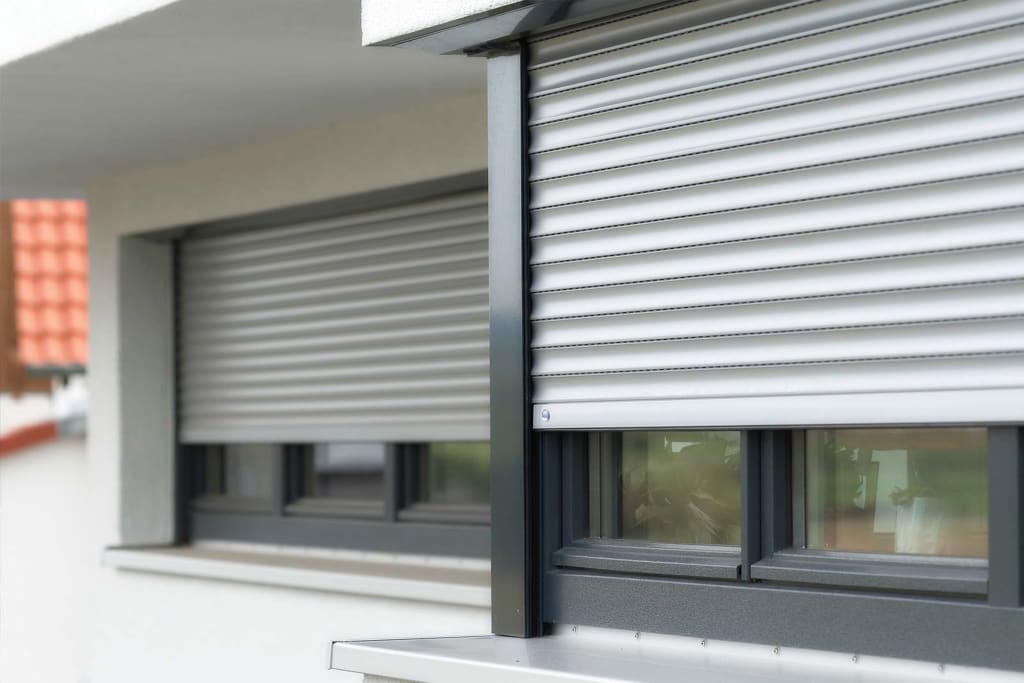
A roller shutter is a type of door or window covering that consists of multiple horizontal slats or panels hinged together. It operates on a mechanism that allows it to roll up or down to open or close the opening it covers. Here's a general overview of how a roller shutter works:
Construction: A roller shutter is typically made of metal, such as aluminum or steel, although other materials like PVC or wood may also be used. The individual slats are joined together with hinges or interlocking profiles, forming a continuous curtain.
Roller mechanism: At the top of the opening, there is a roller drum, which is usually mounted inside a box-like enclosure called a pelmet or hood. The curtain of slats is wound around this roller drum.
Operation: To open or close the roller shutter, a motor or manual mechanism is used. In motorized shutters, an electric motor is attached to the roller drum. When activated, the motor rotates the drum, causing the slats to roll up or down.
Guides and tracks: The roller shutter curtain moves along tracks or guides on the sides of the opening. These tracks keep the slats aligned and prevent them from moving sideways. The guides are usually made of metal and are securely attached to the sides of the opening.
Bottom bar: The bottom of the roller shutter curtain is typically fitted with a weighted bar called the bottom bar. This bar provides stability and helps keep the curtain taut when the shutter is closed. It also acts as a seal against drafts and unauthorized entry.
Locking mechanism: Roller shutters often include a locking system to secure them in the closed position. The locking mechanism may involve a manual lock or an automatic system that engages when the shutter reaches the fully closed position.
Controls: The operation of a roller shutter can be controlled using various methods. For manual shutters, a crank or chain is used to manually roll the shutter up or down. Motorized shutters can be controlled through switches, remote controls, or even integrated into home automation systems.
Overall, the roller shutter's design and operation allow for efficient and secure control over openings, providing benefits such as increased privacy, security, light control, insulation, and noise reduction.
history
- The history of roller shutters can be traced back several centuries, and they have evolved significantly over time. Here's a brief overview of their historical development:
- Ancient and Medieval Times: The concept of covering windows and openings for protection and security dates back to ancient times. In ancient Egypt, for example, window coverings made of reeds or woven mats were used. In medieval Europe, wooden shutters were common, which could be closed from the inside to protect against intruders and the elements.
- 18th and 19th Centuries: The industrial revolution brought advancements in manufacturing and materials, leading to the development of more sophisticated roller shutter systems. In the late 18th century, wooden roller shutters emerged, consisting of wooden slats hinged together and rolled up manually. These shutters were primarily used for commercial and industrial applications.
- 20th Century: The introduction of new materials and technologies in the 20th century further improved roller shutter systems. In the early 1900s, steel roller shutters gained popularity due to their durability and enhanced security. They were widely used in warehouses, factories, and shops. The manual operation was still common, requiring a chain or crank to roll the shutters up or down.
- Motorization and Automation: In the mid-20th century, advancements in motorization and automation technology revolutionized roller shutters. Electric motors were integrated into roller shutter systems, allowing for convenient and effortless operation. This development expanded the application of roller shutters to residential buildings, storefronts, and garages.
- Modern Innovations: In recent decades, roller shutter systems have continued to evolve. New materials, such as aluminum and PVC, have become popular due to their lightweight, corrosion-resistant, and low-maintenance properties. Remote control systems and integration with home automation have become more common, providing even greater convenience and control.
- Today, roller shutters are widely used in various settings, including residential, commercial, and industrial buildings. They offer benefits such as security, privacy, energy efficiency, noise reduction, and protection against the elements. Continuous advancements in technology and design continue to refine roller shutter systems, making them more versatile, durable, and aesthetically appealing
About the Creator
Keep reading
More stories from Alexander Thielens and writers in FYI and other communities.
A Failed Artist, A Disillusioned Poet, An Underpaid Game Show Host
I took my son and niece to Gori, a small town in Georgia where Joseph Stalin was born. They talked me into visiting the Stalin's Museum, the largest in the post-Soviet space. I had resisted going there because I just can't stand the monster and know enough about him, or so I thought.
By Lana V Lynx24 days ago in FYI
Who Is Dajjal?
In the first year, the earth will reduce its production by one-third. Rainfall from the sky will decrease, and as a result, the earth’s ability to yield crops will diminish. After one year passes, the earth will reduce its production by another one-third, and rainfall will decline even further. In the third year, this situation will lead to severe famine across the world, and the demand for water and food will increase everywhere.
By Sudais Zakwan2 days ago in FYI



Comments
There are no comments for this story
Be the first to respond and start the conversation.