
How Digital Transformation is Reshaping the Banking Sector
Digital Transformation in Banking
Introduction
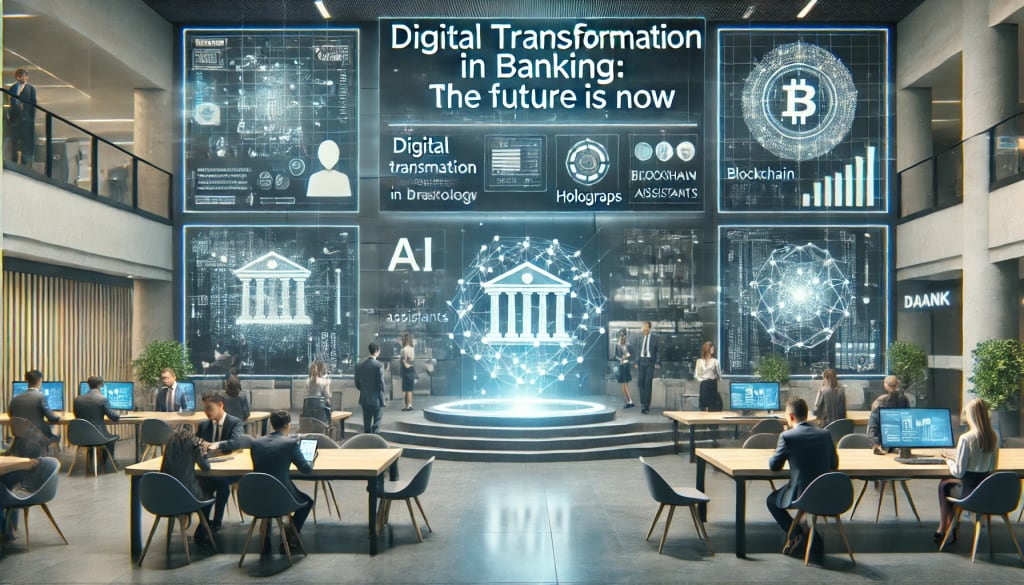
The banking sector has been undergoing a profound transformation, driven by rapid technological advances and shifting customer expectations. Digital transformation is no longer just a buzzword; it represents a core shift in how banks function, interact with customers, and remain competitive in a fast-paced, digital-first world. From the rise of mobile apps and cloud computing to blockchain and artificial intelligence, innovation is shaping the future of banking.
Changing Customer Expectations
One of the key factors behind this shift is evolving customer behavior. Today’s consumers expect services that are fast, personalized, and accessible across digital platforms. This demand has prompted banks to rethink traditional processes and adopt modern technologies to stay relevant. Alongside this, breakthroughs in AI, machine learning, data analytics, and automation are enabling more intelligent and efficient banking operations.
Regulatory and Competitive Pressure
Regulatory changes have also played a role. Frameworks like GDPR, PSD2, and open banking standards encourage more transparent data practices and foster a competitive environment. At the same time, competition from fintech companies is intensifying, compelling traditional banks to innovate and provide better digital experiences.
Enhanced Customer Experience
A noticeable transformation is occurring in how customers experience banking. Through digital platforms, services are becoming more seamless and intuitive. From simple fund transfers to complex loan applications, digital channels now offer convenience, speed, and round-the-clock accessibility. Technologies such as chatbots and AI-powered virtual assistants enhance this experience by offering real-time support and personalization.
Operational Efficiency and Automation
Behind the scenes, banks are also streamlining internal processes. Automation tools and digital workflows are replacing outdated, manual systems, leading to greater efficiency and reduced operational costs. Robotic Process Automation (RPA), for instance, is improving accuracy and speed in routine back-office tasks.
Leveraging Data and Analytics
Data has become a vital resource. By leveraging analytics and AI, banks are gaining valuable insights into customer behavior, risk management, and fraud detection. Decisions that once relied on manual assessment are now data-driven, enabling faster and more accurate outcomes.
Strengthening Security and Compliance
Security and compliance continue to be major concerns, especially as more services move online. Financial institutions are responding with robust cybersecurity measures, including biometric authentication, advanced encryption, and real-time threat monitoring. These technologies help safeguard sensitive customer data and ensure adherence to evolving regulations.
The Impact of Artificial Intelligence
Artificial intelligence, in particular, has emerged as a transformative force. It supports everything from predictive analytics and customer support to personalized financial advice and fraud prevention. For a closer look at its impact on the sector, a detailed blog on AI in banking explores how financial institutions are applying these capabilities in real-world scenarios.
Benefits of Digital Transformation
Digital transformation brings several long-term benefits. It enhances agility, allowing banks to respond quickly to market changes. Customer satisfaction improves through more responsive and personalized service. Automation and cloud solutions contribute to significant cost savings, while new business models—such as open banking and data monetization—unlock additional revenue opportunities.
Challenges Along the Way
Yet, the journey is not without challenges. Many banks still operate on legacy systems that are difficult to upgrade. Organizational change can meet internal resistance, and implementing new technologies often requires upskilling employees. Additionally, as digital offerings expand, ensuring security and regulatory compliance becomes increasingly complex.
Industry Leaders Setting the Pace
Some financial institutions are already making notable progress. JPMorgan Chase, for example, has heavily invested in AI and big data to enhance both customer experience and operational efficiency. BBVA has gained recognition for embracing digital tools and offering an advanced mobile banking experience. DBS Bank, based in Singapore, continues to lead with its digital-first approach and use of AI for personalized services.
What the Future Holds
Looking ahead, digital transformation in banking is expected to accelerate further. Emerging technologies like decentralized finance (DeFi), quantum computing, and the Internet of Things (IoT) are poised to redefine the industry even more dramatically. Institutions that continue to innovate and adapt will be well-positioned to lead the next chapter of digital banking.
Conclusion
Digital transformation is an ongoing process that demands a strategic mindset, the right technological investments, and a culture that embraces innovation. As this evolution continues, banks will need to balance innovation with trust, ensuring secure and user-friendly services for their customers. With technologies such as AI already playing a central role, the path forward points to a smarter, more connected, and more efficient banking ecosystem.
About the Creator
Keep reading
More stories from writers in FYI and other communities.
A Failed Artist, A Disillusioned Poet, An Underpaid Game Show Host
I took my son and niece to Gori, a small town in Georgia where Joseph Stalin was born. They talked me into visiting the Stalin's Museum, the largest in the post-Soviet space. I had resisted going there because I just can't stand the monster and know enough about him, or so I thought.
By Lana V Lynxabout a month ago in FYI
Men Who Go To War
This morning started a fire within me about how our military in the US is being run. They have taken the LGBTQ+ out of the military, while using the phrase "REAL MEN GO TO WAR". This morning I woke and started my doom scrolling on TikTok, when a TikToker by the name of The Infernum Asylum (warning: it is a man dressed up as a demon per se, however, his words are true) gave the story, THE TRUE STORY behind the phrase, behind the movie 300. I remember when I was heavily involved in Greek History and Mythology when I was in High School, and vaguely remembered as I listened to his video.
By Jessie Lynn Nelson6 days ago in FYI
Choose Your Own Adventure: St Helena Station
*****Preface***** I have been obsessed with Choose Your Own Adventure stories since I was a kid. I credit them with my love of reading and writing. I've been struggling to get my own kids to embrace words the same way I have but they love video games and our occasional Dungeon's and Dragon's game... which gave me an idea. I'll write an interactive story. So far its working; my middle son loves it and can't wait for the next section to come out.
By Sandor Szaboa day ago in Fiction
📢 Raise Your Voice Thread: 02/05/2026
Our “Raise Your Voice Threads” are hosted most alternating Thursdays at 12PM ET to offer creators more avenues to uncover exceptional stories on Vocal. As we are continuously searching for fresh creators and inspiring stories, this thread provides an opportunity to exchange and discuss the stories that have moved and motivated us on Vocal.
By Raise Your Voice by Vocalabout 12 hours ago in Resources



Comments
There are no comments for this story
Be the first to respond and start the conversation.