
Historic Long Island
Part I: More than just the Hamptons

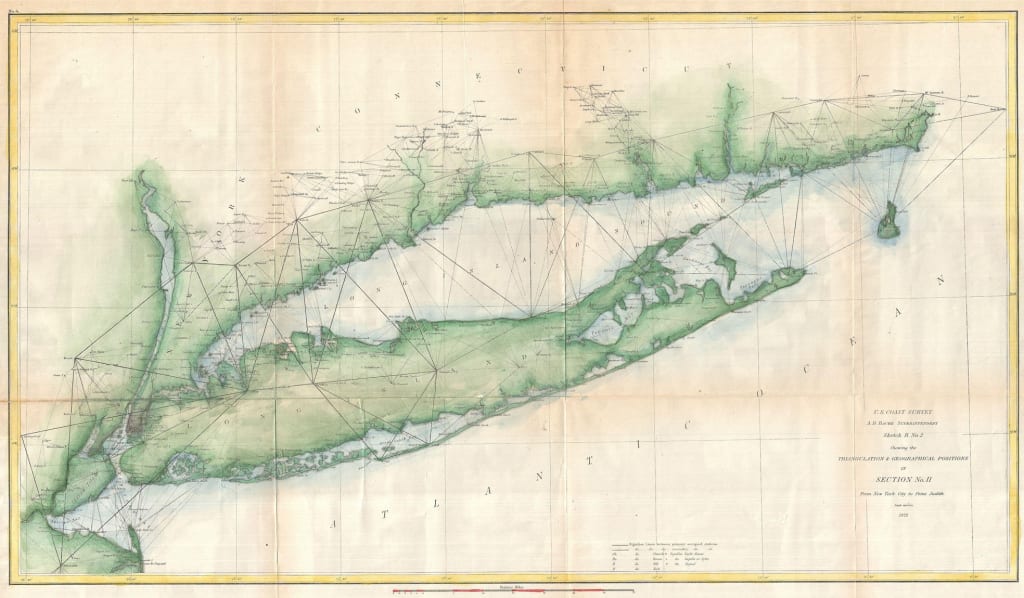
Montauk. The Hamptons. Even casual consumers of pop culture are familiar with these iconic Long Island locales.
Film fans will recall passing references in blockbuster movies like Jaws as well as important scenes in Something's Gotta Give and Eternal Sunshine of the Spotless Mind. Sitcom audiences will remember celebrated episodes of Seinfeld and Friends. Those who prefer their TV soapy and dramatic may be more familiar with Revenge and The Affair. Celebrity watchers know that actors, musicians, athletes, and media personalities including Robert Downey Jr., Gwyneth Paltrow, Beyonce, Paul Simon, Eli Manning, and Martha Stewart are frequent visitors and part-time residents of towns in the area.
There's much more to Long Island than the East End beaches, oceanfront mansions, quaint nautical-themed main streets, and VIP sightings. From the birth of the Republic to the Space Race, Long Island has played a pivotal part in the American story.
History buffs may be most familiar with the Battle of Long Island in which the British gained control of New York Harbor in August 1776. They may be less aware of General George Washington's spy ring and its instrumental role in conveying information about the British during the American Revolution. In 1790, President Washington toured the North Shore of Long Island, traveling through the communities that were home to Benjamin Tallmadge, Abraham Woodhull, Robert Townsend, and Caleb Brewster, key members of the Culper Spy Ring that supplied his army with valuable intelligence gathered at great risk.
Long Island was home to the twenty-sixth President of the United States, Theodore Roosevelt. Though he was born in Manhattan, Roosevelt spent significant time on Long Island throughout his youth, particularly in Oyster Bay during summer vacations with his family. In his twenties, he acquired land in this area and commissioned the building of a 22-room home that he would name Sagamore Hill after its completion. The estate is currently maintained by the National Park Service as a Historic Site.
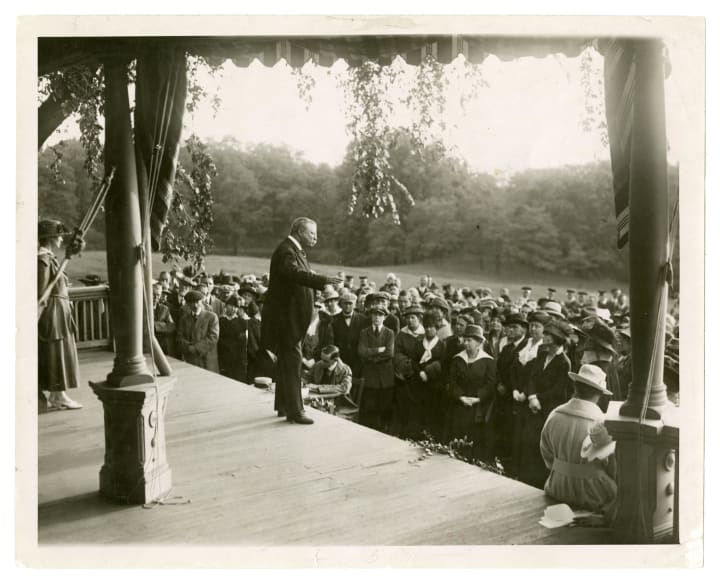
During Roosevelt's time as President, the estate was known as the Summer White House as it was his vacation spot of choice. During his working vacations, Roosevelt entertained foreign leaders and dignitaries and hosted early talks that helped conclude the Russo-Japanese War, though the final treaty negotiations were conducted in Portsmouth, New Hampshire. Roosevelt won the Nobel Peace Prize for his mediation efforts.
Roosevelt Field, named in honor of President Roosevelt's son Quentin who was killed while serving in World War I, was the starting point for Charles Lindbergh's historic non-stop trans-Atlantic flight from New York to Paris in 1927. The airfield was also used by other pioneering aviators like Amelia Earhart and Wiley Post as part of their daring and trailblazing adventures.
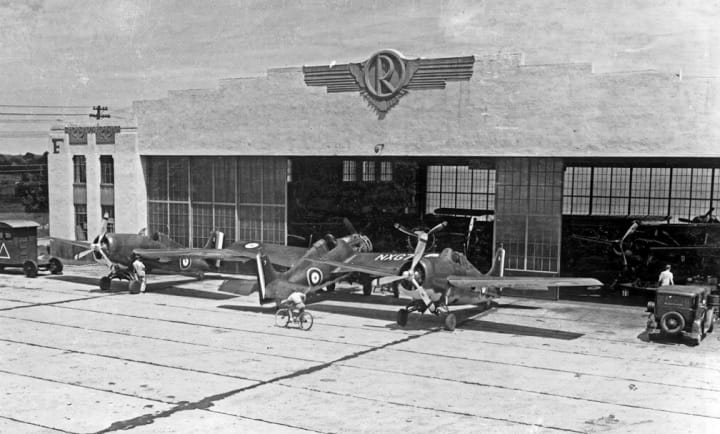
In the 1930s, Roosevelt Field was the busiest civilian airport in the country. During World War II, it was used extensively by both the Army and the Navy before reverting to civilian and commercial use after the war. By 1950, the airport was in decline as larger, more modern airports in the area gained prominence. Operations at Roosevelt Field ceased in 1951 after the property was purchased by a real estate developer.
Long Island's aviation history doesn't end there, as the region was also home to the Grumman Aircraft Engineering Corporation (later Grumman Aerospace). Founded in 1929, the company quickly became a contractor for the US Navy. During World War II, Grumman produced a series of fighter planes, most notably the F6F Hellcat, as well as the TBF Avenger torpedo bomber. After the war, Grumman continued to produce aircraft for the Navy but ithttps://www.thoughtco.com/grumman-f6f-hellcat-2361521s most enduring and impactful achievement was producing thirteen lunar modules as the main contractor for the Apollo space program. In 1986, Grumman's F-14 Tomcat was featured in the Tom Cruise film Top Gun. At the height of its size and influence, the Grumman Corporation employed over 23,000 Long Islanders.

Revolutionary War spies, Theodore Roosevelt's presidency, and the region's role in aviation history only scratch the surface of the depth of Long Island's influence on American history and culture. They do, however, illustrate the depth and value of the island as more than a playground for the rich and famous.
About the Creator
Sean Johnson
Writer of short stories, poetry, and articles in the pop culture and lifestyle categories.
Keep reading
More stories from Sean Johnson and writers in FYI and other communities.
On Parenting and the Loss of a Pet
Two days before Thanksgiving we had to euthanize Jerry, our twelve-year-old gray tabby. He was diagnosed with lung cancer last March, so we were both lucky and happy to have him with us for as long as we did. That said, I'd been struggling with his absence in ways that I haven't with other losses, both human and animal.
By Sean Johnson5 years ago in Petlife




Comments
There are no comments for this story
Be the first to respond and start the conversation.