
Fun Facts about Peisen: Undersea Quest, the mysterious world you don't know!
Undersea exploration

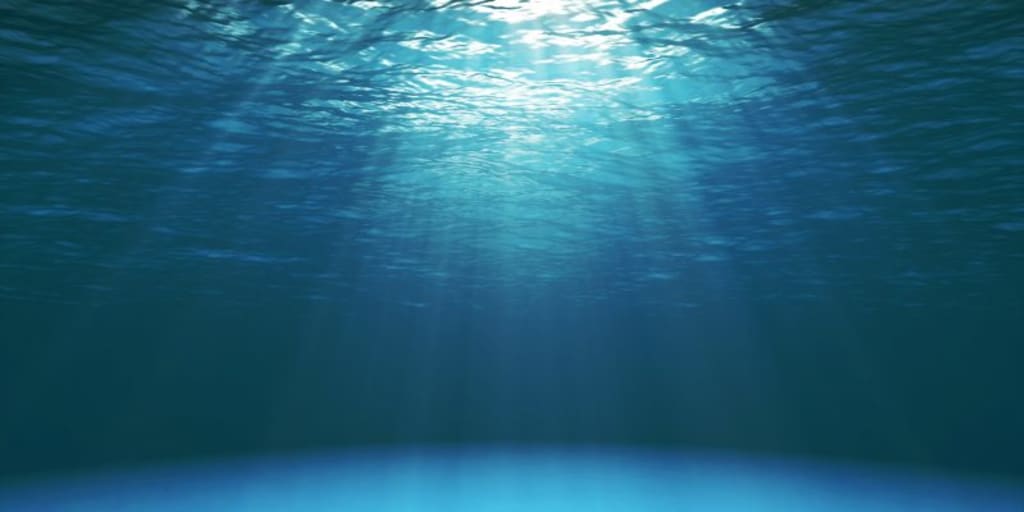
On the blue planet Earth, the ocean accounts for 70% of the area, while the land area for human growth is about 30%. Humans don't even know as much about the exploration of the ocean as Mars. Facing the vast and boundless sea, we can't help but wonder: what kind of scenery will it be in the depths of this vast ocean?
With the continuous penetration of high-tech forces in the development of society, we can follow underwater photographers, intelligent equipment, and advanced equipment to watch more and more deep-sea secrets, wonderful marine life, beautiful underwater scenery and magnificent ocean phenomena. Thanks to the maturing of science and technology, human beings can explore and learn to their heart's content.
What kind of marine creatures live and swim in the 200-meter deep sea? Like a pyrethroid worm with a cylindrical body, its whole body exudes a bluish fluorescent light, which is eye-catching in the dim ocean. Another example is a peculiar looking squid, which is called the slant-eyed squid. It has a special ability, the right eye can look down, and the left eye is much larger than the right eye and can look up in order to explore a wider range. the surrounding environment. There are even more bizarre animals, which are named after the anal fish, and have a transparent head and are filled with gelatinous substances. As a result, its eyes can see creatures above its body, a skill that undoubtedly increases its chances of survival in dimly lit seas.
There is a place called "Midnight Zone" 1000 meters from the sea. It is shrouded in huge darkness, breaking the time pattern of day and night. There grow tube jellyfish larger than a whale, self-replicating and almost immortal, jellyfish that communicate with light, bizarre-looking fangtooth fish and deep layers of silt.
These silt layers consist of organic debris floating in the water, which can reach depths of up to 1,000 meters after prolonged settling. Stones near the silt layer provide a permanent place for the coral to grow. There are a wide variety of corals here, and they shelter a variety of creatures. This very beautiful sponge grows in the coral clumps--Ashi's Kailaotong cave, and there is also an animal-shrimp. There are many predators in the corals, and the sponges Become a natural refuge for shrimp.
Females and males are washed into sponges by seawater at a very young age. Today, females are ovipositing juveniles. In the near future, juveniles will leave them and seek other shelters. The parents of juveniles, Will live here forever, the intricate sponges hinder their space to go out, and another important reason is that their lifespan will be shortened after going out. But what is amazing is that this simple sponge structure can naturally create such a complex structure, making the shrimp immune to harm, although it is an unsolved mystery, it is even more a miracle.
There are also bottomless deep trenches in the deep sea. The deepest trench on earth is nearly 11,000 meters deep. It is the Mariana Trench in the Pacific Ocean, and it can even hold the entire Mount Everest. People once thought that these deep trenches would not There are any creatures, but a remote-controlled detector equipped with a camera found that there is a kind of sea cucumber commonly known as "sea pig", a sea slug and a breathing starfish, and a strange lionfish was also found. The fish lives 8,000 meters underwater, deeper than all fish found so far.
Humans now believe that the deep sea may be the birthplace of life on Earth. The submarine mountains that run through the four oceans of the earth, the mid-ocean ridge. We found that more than three-quarters of the volcanic activity on the earth occurs in the deep sea, and almost all volcanic activity occurs along the mid-ocean ridge, which produces abundant nutrients in the violent crustal movement. Here, there are 30 meters high The hydrothermal vent is called "Godzilla". Incredibly, underwater hot springs support as many organisms as tropical rainforests, where bacteria-feeding shrimp and crabs live.
In the past decade, the number of underwater hot springs discovered has more than doubled, the most important of which is located on the bottom of the Atlantic Ocean, which is known as the "lost city". In the 60-meter-high tower, a strange scene is taking place. In the environment of extremely high water pressure and extremely high temperature, the basic particles of hydrocarbons that make up all life are naturally formed. Today, many scientists believe that 4 billion years ago, Life on Earth may have been born around such ocean hot springs. It is even more speculated that there are oceans in Jupiter and Mars, and if these creatures can survive in such a harsh environment in the deep sea, they must also thrive on some alien world.
The mystery of the underwater world is fascinating, and it also inspires the unstoppable desire of human beings to explore. Before exploring, we thought it was barren and barren, but when the scene of the bottom of the sea was really presented to us, we were deeply shocked. The health of the ocean means the health of the earth. Human beings should be in awe of nature and jointly protect our common earth home!
About the Creator
witty lukas
The doubts held by human beings are the germs of science
Keep reading
More stories from witty lukas and writers in FYI and other communities.
The most polite mating? Meerkat mongoose mates on a tree, males wait in line, no one dares to cut the line
On the island of Madagascar, the largest carnivore is the mongoose. It looks like a cougar, but has a dog-like mouth. Its weight is much smaller than that of cougars and dogs. The adult body weight is only 5-10 kg. However, due to the lack of local carnivores, and the larger ones have smaller heads, so It is the largest carnivore in the area.
By witty lukas3 years ago in FYI
Rachel Reviews: The Spiral Archive by Pieter Hendrik
It's difficult for me to know where to start with a review of this book as it was, for me, an entirely unique experience and one that I'll probably never have again. I don't want that to be interpreted as unenjoyable but it has left me scratching my head a little and ruminating on its content, its themes and its characters.
By Rachel Deeming3 days ago in BookClub



Comments
There are no comments for this story
Be the first to respond and start the conversation.