
From Prototypes to Miniatures: Paving the Future of Innovation
Exploring How Functional Models and Scaled-Down Visualizations Drive Technological Advancements
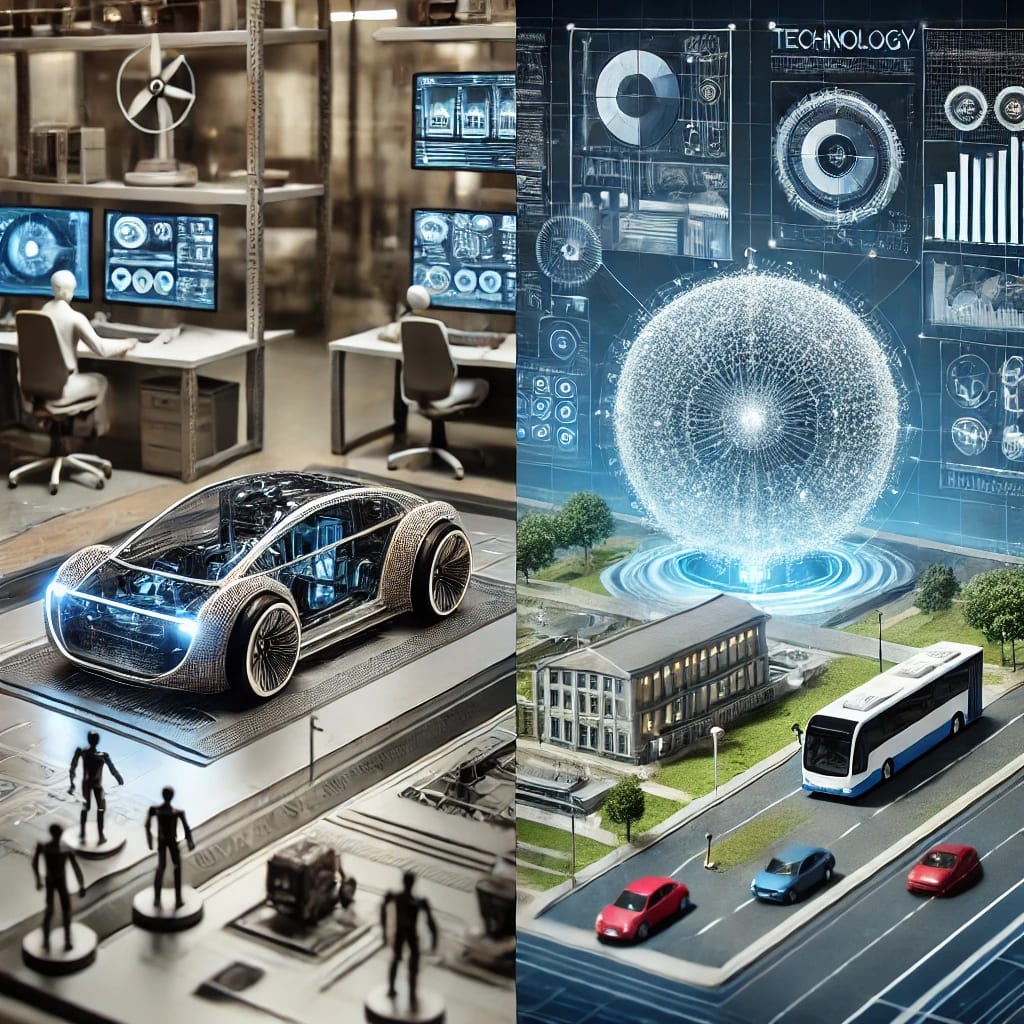
The rapid evolution of technology has transformed the way new products are designed, tested, and brought to market. In this fast-paced landscape, two critical tools often play a key role in the development process: prototypes and miniatures. While both serve as essential steps toward the final product, they differ in purpose, application, and impact. In this article, we will explore the comparison between prototypes and miniatures in the context of the latest technology, and examine how they contribute to innovation.
Understanding Prototypes in Technology Development
A prototype is an early model or sample of a product that is created to test specific features, functionality, or performance. It represents a working version of the technology and is often built to explore whether the concept works in a real-world scenario. Prototypes can vary in complexity and are used at different stages of development, from conceptual designs to near-final products.
Purpose of Prototypes:
• Testing Feasibility: The primary purpose of a prototype is to test the feasibility of a new concept or technology. It allows developers to see if the idea can function as intended and to identify potential issues early in the development cycle.
• User Feedback: Prototypes are often used to gather feedback from stakeholders, users, or clients. This feedback helps designers refine the product and improve usability.
• Demonstrating Proof of Concept: For investors or other stakeholders, a prototype serves as a tangible demonstration of the technology’s potential. It is a powerful tool to secure funding, partnerships, or approval for further development.
• Iteration and Refinement: Prototypes are often part of an iterative process where the product is refined and improved through multiple versions based on testing results.
Types of Prototypes:
• Low-Fidelity Prototypes: These are simple, often non-functional models that focus on the basic concept. They might be made of inexpensive materials like paper, foam, or 3D-printed components.
• High-Fidelity Prototypes: These closely resemble the final product, both in appearance and function. High-fidelity prototypes are used in later stages of development to test specific features and performance under real-world conditions.
• Functional Prototypes: These focus on testing the technology’s core functions. While they may not look like the final product, they are built to ensure that key features work as expected.
What Are Miniatures in Technology Development?
Miniatures, in contrast, are scaled-down versions of a product or system. Unlike prototypes, which are often full-scale and functional, miniatures are typically used to represent larger objects or complex systems in a smaller, more manageable form. Miniatures may or may not be functional, depending on their purpose.
Purpose of Miniatures:
• Visualization of Larger Systems: Miniatures are commonly used to visualize and simulate large or complex technologies. For example, in architecture or urban planning, miniatures help stakeholders see how a building or city infrastructure will look once completed.
• Testing and Simulation: In certain cases, miniatures are used for testing purposes, especially when working with full-scale models would be impractical or expensive. For example, engineers may use miniatures to simulate the aerodynamics of a vehicle or the structural integrity of a building.
• Demonstration and Marketing: Miniatures are often used in marketing and demonstrations to provide potential customers or stakeholders with a tangible representation of the final product. They are particularly useful when the final product is too large to be easily shown or transported.
Types of Miniatures:
• Scale Models: These are miniatures created to a specific scale, typically used in fields like architecture, automotive design, and aerospace engineering.
• Functional Miniatures: Some miniatures are built to function just like the final product but on a smaller scale. This is often the case in industries like robotics, where developers create functional miniature robots to test movement and behavior.
• Non-Functional Display Models: These are purely aesthetic models used for presentation purposes, giving an accurate representation of the product’s appearance without any functional elements.
Comparing Prototypes and Miniatures
While both prototypes and miniatures play a role in the development of technology, they differ in several key areas:
1. Scale and Functionality:
- Prototypes: Prototypes are typically full-scale models designed to test the actual functionality of the product. They focus on verifying how the technology works and often include working components.
- Miniatures: Miniatures, by contrast, are scaled-down representations of a larger system or product. They are not always functional but are used to visualize the overall design or simulate behavior in a more controlled environment.
2. Purpose:
- Prototypes: The primary purpose of a prototype is to test functionality, identify design flaws, and gather user feedback. Prototypes are built to function as close to the final product as possible, serving as a proof of concept.
- Miniatures: Miniatures are used primarily for visualization, demonstration, or simulation. While they may provide insights into the design or system behavior, they are not typically used to test full functionality.
3. Cost and Complexity:
- Prototypes: Developing a prototype, especially a high-fidelity or functional one, can be expensive and time-consuming. It requires significant resources to ensure that the product works as intended and to make iterative improvements.
- Miniatures: Miniatures are often less expensive to produce, especially when they are non-functional. They can be created relatively quickly to visualize complex systems without the need for expensive materials or full-scale development.
4. Application in Modern Technology:
- Prototypes: In cutting-edge fields like artificial intelligence, robotics, and consumer electronics, prototypes are indispensable for testing new technologies. For example, a prototype of a self-driving car would allow engineers to test the vehicle’s sensors, software, and driving behavior in real-world conditions.
- Miniatures: In industries like aerospace or civil engineering, miniatures are used to simulate and study large-scale systems. For example, wind tunnel tests on a miniature aircraft model help engineers understand aerodynamic performance before building the full-size version.
5. Feedback and Iteration:
- Prototypes: Prototypes are designed to gather detailed feedback on the product’s performance, usability, and overall functionality. This feedback drives further iteration and refinement, helping developers improve the design and fix any issues.
- Miniatures: Miniatures, especially non-functional ones, are less focused on feedback related to performance. Instead, they provide visual feedback on design and help stakeholders understand the overall concept.
Real-world examples of Prototypes and Miniatures in Technology
1. Prototypes:
- Tesla Cybertruck: Before the full-scale production of Tesla’s futuristic Cybertruck, a prototype was unveiled to demonstrate its design, functionality, and features. The prototype allowed Tesla to gather feedback and make adjustments before the final production model.
- iPhone: Early prototypes of the iPhone were essential in refining the user interface, touchscreen functionality, and overall design before the product was ready for mass production.
2. Miniatures:
- NASA Mars Rovers: NASA uses miniature models of Mars rovers to simulate the terrain and test movement strategies before deploying full-size rovers to the Martian surface.
- Architectural Models: Miniature scale models are often used in architecture to visualize how a building or urban area will look once completed. These models help architects and clients better understand the space and design.
Conclusion
Both prototypes and miniatures are indispensable tools in the development of the latest technology, each serving different purposes but contributing to the overall success of a project. Prototypes are essential for testing functionality, gathering feedback, and refining the final product, while miniatures provide valuable insights into design, behavior, and system interactions at a reduced scale. Together, these tools help bridge the gap between concept and reality, enabling technological innovation to thrive.
About the Creator
PETER J
Driven by a passion to inspire and uplift, Peter. J is a motivational story writer who weaves tales of resilience, personal growth, and triumph over adversity.
Hottest in the Office
Dear Rafi, You’re very distracting to work around. For the first second I saw you the other day, I thought you were some type of executive. It took a moment to realize no, you were just the new guy, dressed up for the job he wants. Be still, my heart.
By Gabriel Shames4 days ago in Pride




Comments
There are no comments for this story
Be the first to respond and start the conversation.