
From Giants to Angels: Decoding the Enigmatic Book of Enoch
Discovering the Forbidden Book of Enoch: Unveiling Astonishing Revelations about Angels, Giants, and the Untold Secrets of Human History

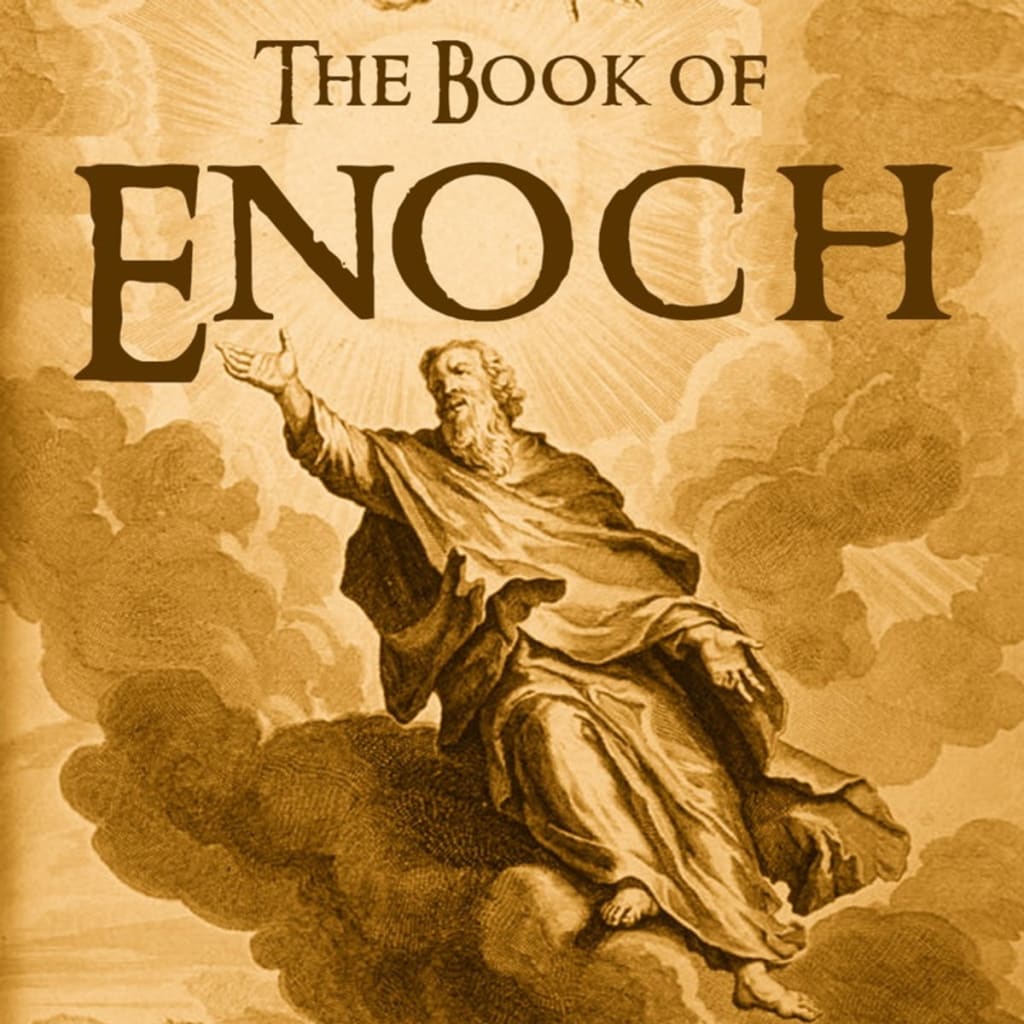
Human history is filled with numerous mythical tales about gods, angels, giants, and disasters. While these tales seem fascinating and mysterious at first, a closer look reveals that they show an alternative human history that most have failed to notice. The ancient Hebrew apocalyptic religious work known as the Book of Enoch is credited to Enoch, Noah's great-grandfather. It contains astonishing revelations about the origins of evil, the fallen angels, the Nephilim, the flood, the Messiah, and the end times. However, the book has been excluded from the Bible and hidden from public consumption because it contains information about shocking mysteries of our origins that have been deemed too controversial.
So, why was this book excluded from the Bible, and what secrets does it hold? Let's explore the Book of Enoch and the shocking mysteries it reveals.
But first, who was Enoch from the Bible? We know from the Bible that Enoch was Adam's great-great-great-great-grandson and Noah's great-grandfather. He lived a holy and faithful life to the Lord and became the father of Methuselah, the longest living man. Enoch walked with God and was taken to heaven without experiencing death after 365 years on Earth. God loved Enoch so much that He spared him from death. Enoch is venerated as a saint in various Christian denominations.
Enoch was a famous preacher, delivering a message of God's judgment against humanity. His ministry was a precursor to Noah's ministry, who was also a preacher of righteousness and the builder of the Ark. With the extent of unrighteousness and ungodliness in the world, it was remarkable for a man like Enoch to stand up and proclaim judgment on his neighbors.
To delve deeper into the background of this mythical figure and his supernatural experiences, we need to turn our attention to the apocryphal books attributed to Enoch. The discovery of the Book of Enoch is quite intriguing. In the late 1940s, Bedouin teenagers discovered a collection of large clay jars containing leather and papyrus scrolls near the Dead Sea. These scrolls, known as the Dead Sea Scrolls, included fragments of the Book of Enoch, written between 300 BC and 100 BC.
The Book of Enoch is divided into five main sections, each with its own theme and style. These sections include the Book of Watchers, the Book of Parables, the Astronomical Book, the Dream Visions, and the Epistle of Enoch. The book offers revelations about the origins of evil, the fallen angels, the Nephilim, and the end times.
In the Book of Watchers, the Nephilim, a race of giants, are described as the offspring of fallen angels mating with human women. The book also describes the judgment of the fallen angels and their progeny by God and His angels. The Book of Parables contains prophecies about the arrival of the Messiah, the Son of Man, who will judge the evil and reward the good. It also alludes to the resurrection of the dead and the end times judgment.
The Book of Heavenly Luminaries serves as a guide to understanding the movements and operations of celestial bodies and their impact on Earth. It explains how to use the celestial calendar to determine the dates of festivals and other significant events. The Book of Dream Visions presents two extraordinary visions experienced by Enoch, spanning from the creation of the world to the final judgment.
The Book of the Epistle of Enoch contains letters that Enoch wrote, offering counsel, warnings, and prophecies to his sons and future generations. It discusses the emergence of the Antichrist, the tribulation, and the resurrection of the dead.
While the Book of Enoch shares some themes and stories with other ancient texts found among the Dead Sea Scrolls, it has been excluded from the Jewish and Christian scriptural books. The reasons for its exclusion are varied, but one possible explanation is that it contradicts the Bible in many ways. The book presents different versions of events, introduces additional characters, and offers alternative explanations for cosmic and theological matters.
For example, the Book of Enoch contradicts the Bible in its accounts of Noah and the flood. It mentions Noah even though the Bible indicates that Enoch was taken to heaven before Noah was born. Additionally, the book attributes the corruption on Earth to a demon named Azazel, whereas the Bible assigns ultimate responsibility to Satan. The Book of Enoch also contains astronomical and meteorological descriptions that contradict both the Bible and scientific facts.
Due to these contradictions and the questionable authorship of the book, it is not considered scripture or inspired by God. It falls into the category of pseudepigraph works, where the author falsely claims to be someone else. While the Book of Enoch may contain some inspirational and thought-provoking passages, it is not a reliable source for gospel truths.
In conclusion, the Book of Enoch is a fascinating and mysterious text, but it is not included in the Bible due to its contradictions with biblical accounts and its dubious authorship. While it may offer some insights, it should be approached with caution and not considered scripture.
About the Creator
Erik Velazco
passionate about storytelling and eager to share unique perspectives, ideas, and imagination with the world.
Keep reading
More stories from Erik Velazco and writers in FYI and other communities.
Journey to the Light: The Neurological Wonders of Near-Death Experiences
Near-death experiences (NDEs) have long intrigued humanity, offering a glimpse into the mysterious realm between life and death. These remarkable encounters with the unknown have left scientists and spiritualists alike captivated by the profound and life-altering nature of these events. As we embark on a journey to explore the science behind near-death experiences, we find ourselves traversing a landscape of wonder, where the enigmatic intertwines with the empirical. So, fasten your seatbelts as we delve into this fascinating realm where science meets the metaphysical.
By Erik Velazco3 years ago in FYI
TUS NUA - ch 53
TUS NUA – ch 53 New Beginnings – Mia and Midnight (*)(*)(*) Finola knew Ali’s brother-in-law needed to put his mind at rest. She fed her arm through his and led him outside. “We’ll sit here. If you like, I can put a block around us so our conversation will be private.”
By Margaret Brennan6 days ago in Fiction



Comments
There are no comments for this story
Be the first to respond and start the conversation.