
Fredericksburg Fire Today: The Crabapple Fire’s Devastating Surge and Community Resilience
The Crabapple Fire: A Comprehensive Overview of the Fredericksburg Wildfire

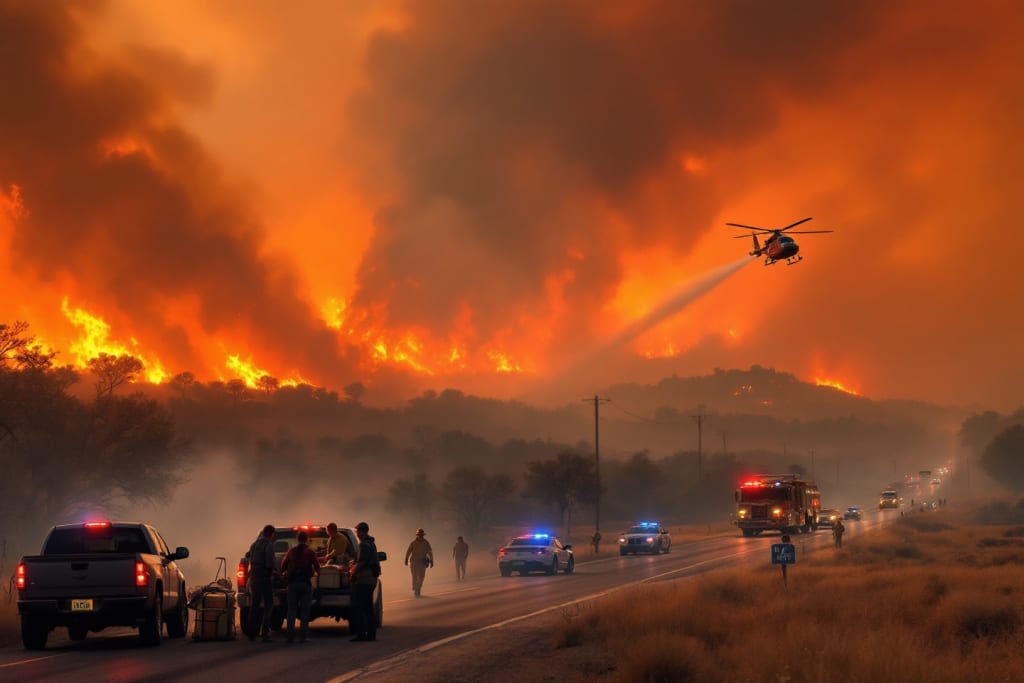
On March 15, 2025, a significant wildfire, now known as the Crabapple Fire, ignited near Fredericksburg, Texas. This rapidly expanding blaze has posed severe challenges to local communities and emergency responders. This article provides an in-depth analysis of the fire's origin, progression, and the multifaceted response efforts underway.
Origin and Initial Spread
The Crabapple Fire began around 1:00 PM on March 15, 2025, in the 8700 block of Lower Crabapple Road, situated northeast of Fredericksburg. Initially reported at 400 acres, the fire's rapid expansion was fueled by dry vegetation and strong winds, conditions that were anticipated due to a Red Flag Warning in effect for the area.
By late afternoon, the fire had grown exponentially, crossing Highway 16 and advancing toward Farm-to-Market Road 1631. The Texas A&M Forest Service reported that the fire had reached 8,640 acres with 0% containment as of 6:12 PM.
Evacuation Orders and Community Impact
In response to the escalating threat, authorities issued evacuation orders for residents between Highway 16 North and FM 1631, as well as those between Ranch Roads 1323 and 2721. Evacuation shelters were established at Zion Lutheran Church and Faith Baptist Church in Fredericksburg to accommodate displaced individuals.
The fire's proximity to residential areas prompted urgent evacuations, with law enforcement assisting in the process. Residents were advised to remain vigilant and prepared for potential evacuation as the situation evolved.
Firefighting Efforts and Challenges
Local fire departments, supported by resources from Gillespie and Kendall counties, mobilized to combat the blaze. Firefighters focused on halting the fire's progression and safeguarding structures at risk. Aerial support from the Texas Department of Emergency Management and the Texas A&M Forest Service played a crucial role in these efforts.
The Red Flag Warning, indicating high fire danger due to gusty winds and low humidity, exacerbated the situation. Wind gusts reaching up to 45 mph not only propelled the fire but also carried embers over half a mile, igniting spot fires and complicating containment efforts.
Environmental Conditions and Fire Behavior
ditions and Fire BehaviorThe Texas Hill Country's dry vegetation and the day's weather conditions created an environment conducive to rapid fire spread. The National Weather Service had issued a Red Flag Warning for Central Texas, including Gillespie County, due to anticipated gusty winds and low humidity.
These conditions contributed to the fire's erratic behavior, making it challenging for firefighters to predict its path and implement effective containment strategies. The combination of dry fuels and strong winds resulted in rapid fire growth and the potential for new ignitions from wind-carried embers.
Impact on Surrounding Areas
The effects of the Crabapple Fire extended beyond Gillespie County. Smoke from the wildfire drifted eastward, leading to hazy skies and the smell of smoke in the Austin area, approximately 80 miles away. The Austin Fire Department received multiple calls from residents concerned about the smoke, which was attributed to the Crabapple Fire.
The widespread smoke prompted health advisories, especially for individuals with respiratory conditions, to limit outdoor activities and stay informed about air quality updates.
Community Response and Support
In the face of adversity, the Fredericksburg community demonstrated resilience and solidarity. Local organizations and volunteers mobilized to support evacuees, providing shelter, food, and essential supplies. Donations of water and electrolyte beverages were collected to support firefighters battling the blaze.
The community's swift response highlighted the importance of preparedness and mutual aid during emergencies. Local businesses and residents alike contributed resources and assistance to those affected by the fire.
Ongoing Efforts and Future Outlook
As of the latest reports, the Crabapple Fire remains uncontained, with firefighting efforts ongoing. Firefighters continue to work tirelessly to protect lives and property, utilizing both ground and aerial strategies. The focus remains on halting the fire's forward progress and preventing further spread.
Residents are urged to stay informed through official channels and adhere to evacuation orders and safety advisories. The situation remains dynamic, and authorities are closely monitoring weather conditions that could influence fire behavior.
Conclusion
The Crabapple Fire near Fredericksburg, Texas, serves as a stark reminder of the challenges posed by wildfires, particularly under adverse environmental conditions. The rapid escalation of the fire underscores the need for preparedness, community support, and effective emergency response strategies.
As firefighting efforts continue, the resilience and cooperation of the Fredericksburg community stand as a testament to the strength and solidarity that emerge in times of crisis.
About the Creator
Keep reading
More stories from Aneeq Zaheer and writers in FYI and other communities.
Angie Stone: A Soul Icon’s Tragic Farewell and Timeless Legacy
The music world was shaken on March 1, 2025, when Grammy-nominated R&B legend Angie Stone tragically passed away in a car accident at age 63. Known for her velvety vocals and neo-soul anthems, Stone’s untimely death in Montgomery, Alabama, silenced a voice that had resonated with millions. This article explores her groundbreaking career, personal triumphs, and the heartbreaking accident that cut her journey short, while addressing lingering questions about her legacy, net worth, and family.
By Aneeq Zaheer11 months ago in FYI
Freezing the War, Not Ending It. Why Trump’s Russo-Ukraine Peace Deal Will Break Down
Wars don’t end just because someone in a suit decides they should. The war in Ukraine is nearing its fourth year, and while diplomacy is accelerating, the battlefield is unmoved. Missiles still strike cities. The front line still grinds forward inch by inch. The war keeps its own tempo, no matter how fast envoys fly between Mar-a-Lago, Moscow, Paris, and Kyiv with draft agreements in hand.
By Lawrence Lease4 days ago in FYI




Comments
There are no comments for this story
Be the first to respond and start the conversation.