
fasting girls of 15th-19th century
the strange phenomenon that became common in the 19th century
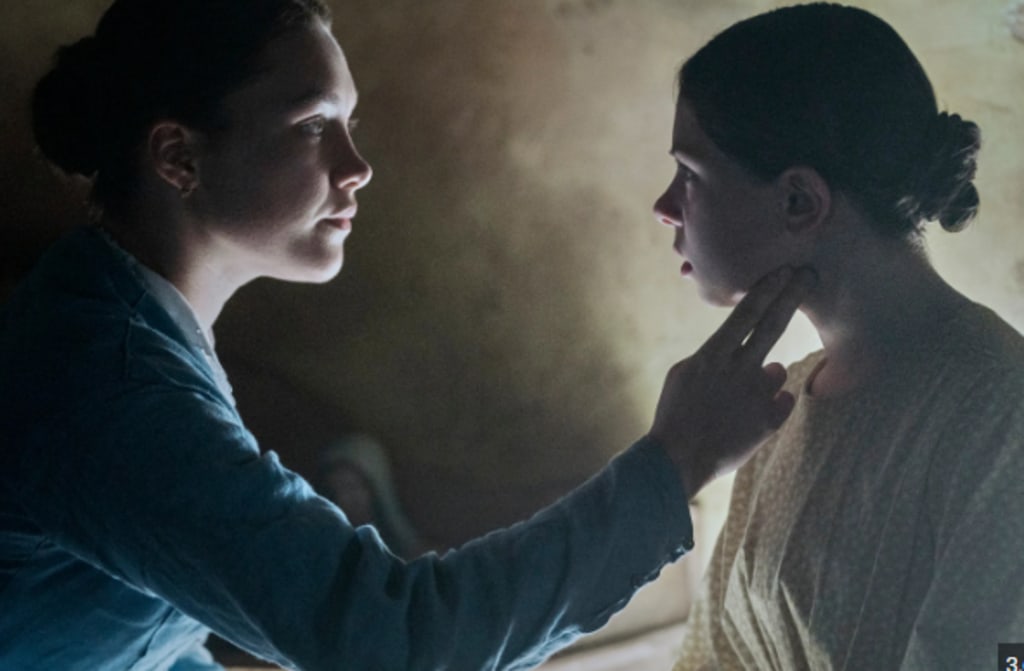
during the 15th-19th century there were young woman who claimed to starve themselves. It often included a religious element and many claimed to have psychic powers. Most extreme cases ended with the girls dying, and the girls exhibited the appearance of stigmata. Historian Joan Jacobs Brumberg believes the phenomenon is an early example of anorexia and Dr William A. Hammond believed the phenomenon to be fraud and hysteria on the part of the girl. These young woman become local celebrities due to the belief that they were mystics and were praised for their faith. In the 19th century, they become more and more common. ‘The Welsh Fasting Girl', Sarah Jacob is one of the most famous examples of this, who lived in the 1860s. At the age of nine, she fell ill and was told to take bed rest. She started to refuse to eat, therefore keeping herself weak and preventing her from taking part in the farm work. Her parents soon realised what she was doing and played into it, claiming she hadn't eaten or had water for two years. The story spread and she quickly become a national phenomenon. However, six nurses were sent to test the theory, after five days of watching her, Sarah died and her parents were convicted of manslaughter and sentenced to hard labour. The doctors and nurses, were not convicted of any crimes. Mary J. "Mollie" Fancher, also known as the ''Brooklyn Enigma'' was known for her claims of not eating or eating very little for extended periods of time. She went to a reputable school and was considered an excellent student. At 16 she was diagnosed with dyspepsia. At the age of 19, it was reported that she hadn't eaten for seven weeks. After two accidents, in 1864 and 1965, that she had become famous for her ability to abstain from eating food. She became blind as a result from the accidents and lost her ability to taste, smell and touch. She claimed to be able to predict events and to read without her sight. Her claim lasted 14 years and by the 1870s, she was claiming to eat nothing or very little for many months. This lead to doctors and the public to begin to question her abilities and want tests to be performed to test them. However, no tests were done and she died in February 1916 at age 68. Many companies and people rushed to exploit the fasting girls and put them on display, in the popular freak shows and human zoos at the time. Two companies, the Nickelodeon and Stone and Shaw's museum, fought in court for the right to ''exhibit'' one of the fasting girls, Josephine Marie Bedard. She also was accused of being a fraud by Dr. Mary Edwards Walker. Dr. Mary Edwards Walker also claimed that Josephine had a donut in her pocket with a bite taken out of it and that Josephine had stolen a fried potato from her plate. When she confronted Josephine and accused her, Josephine broke down and cried. While she was exploited for commercial gain, there was also an element of scientific inquiry in regards to her as a medical phenomenon. Some of the fasting girls were pre-adolescent while others were young woman. There's a chance the young woman lied for their family, becoming a national phenomenon could allow their families to charge people money when coming to see them and because they heard about stories of fasting girls and wanted to copy it. ''The Wonder'' is a movie about this phenomenon, it is directed by Sebastián Lelio and is on Netflix.
About the Creator
Keep reading
More stories from writers in FYI and other communities.




Comments
There are no comments for this story
Be the first to respond and start the conversation.