
Exploring the Blue Moon
History, Science, and Folklore of the Second Full Moon


The term "Blue Moon" has been around for quite some time and has sparked many questions, misconceptions, and even a few popular songs. Despite what many may think, a blue moon is not actually blue in colour. In fact, a blue moon is simply the second full moon to occur in a calendar month, which happens about once every 2.7 years. In this article, we'll explore the history, science, and folklore behind this celestial phenomenon.
History of the Blue Moon
The term "Blue Moon" has been in use since the early 16th century. It was originally used to describe an event that was impossible or rare, as in the phrase "once in a blue moon." This phrase referred to a rare occurrence, but over time, the phrase evolved to describe a different kind of rarity. In the 19th century, the Maine Farmers' Almanac began using the term "Blue Moon" to describe the third full moon in a season that had four full moons, instead of the usual three. This definition was widely used until the 1940s, when Sky & Telescope magazine mistakenly published an article that defined a Blue Moon as the second full moon in a calendar month. This definition caught on and is the one that is most commonly used today.
Science of the Blue Moon
The reason why a Blue Moon occurs is relatively simple. A full moon occurs roughly every 29.5 days, which means that there are usually 12 full moons in a calendar year. However, since a calendar month is typically 30 or 31 days long, it's possible for two full moons to occur in the same month. This is what we refer to as a Blue Moon.
Despite its name, a Blue Moon is not actually blue in colour. The moon typically appears white or yellow, but it can sometimes appear red or orange during a lunar eclipse. The term "Blue Moon" is more of a calendar quirk than a scientific phenomenon.
Folklore of the Blue Moon
The Blue Moon has been the subject of many myths and legends over the years. In many cultures, the moon is associated with femininity, fertility, and the cycles of life. It's no surprise then that the Blue Moon has been associated with a variety of legends related to love and romance.
In some Native American cultures, the Blue Moon is said to be a time of powerful spiritual energy. It's believed that this energy can be used to manifest your deepest desires and achieve your dreams. This is a time for prayer, meditation, and reflection.
In other cultures, the Blue Moon is seen as a time of great change and transformation. It's believed that the powerful energy of the Blue Moon can help you break old patterns and habits, and make way for new beginnings. This is a time to let go of the past and embrace the future.
The Blue Moon has also been associated with superstitions and omens. In some cultures, it's believed that a Blue Moon is a sign of impending disaster, while in others it's seen as a sign of good luck and prosperity. Some people even believe that the Blue Moon is a time when the veil between the living and the dead is thinnest, making it a good time for communication with the spirit world.
In popular culture, the Blue Moon has been the subject of countless songs, books, and movies. The song "Blue Moon" was first recorded in 1934 and has been covered by countless artists over the years. It has also been featured in movies and TV shows, including "An American Werewolf in London" and "Grease."
Conclusion
Despite its name, a Blue Moon is not actually blue in colour, nor is it a particularly rare event. Instead, it's simply the second full moon to occur in a calendar.
About the Creator
Keep reading
More stories from Harshit Verma and writers in FYI and other communities.
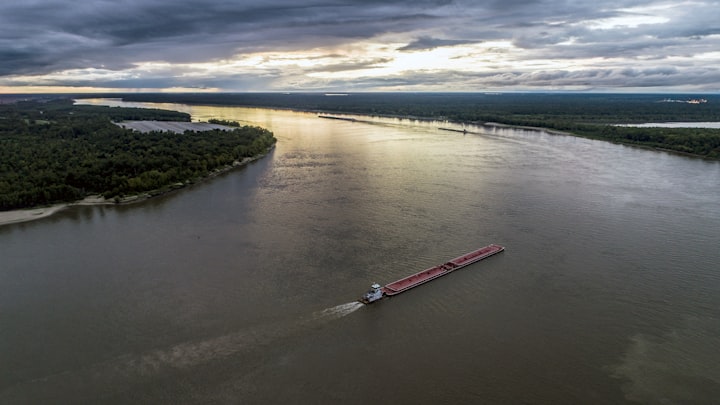
"Discovering the Importance of the Mississippi River System in the United States"
The United States of America is home to one of the largest river systems in the world. The Mississippi River system, which includes the Mississippi River and its tributaries, is approximately 3,710 miles long and covers approximately 41% of the contiguous United States. The Mississippi River is the fourth longest river in the world, behind only the Nile River in Egypt, the Amazon River in South America, and the Yangtze River in China. The Mississippi River is also the largest river in North America in terms of discharge, or the amount of water that flows through it. The Mississippi River system has been instrumental in the development and growth of the United States, as it has provided transportation, water, and power to communities along its banks for centuries.
By Harshit Verma3 years ago in FYI


Comments
There are no comments for this story
Be the first to respond and start the conversation.