
Explore the Best from F-15 Eagle to F-15EX Eagle II
By AirPra

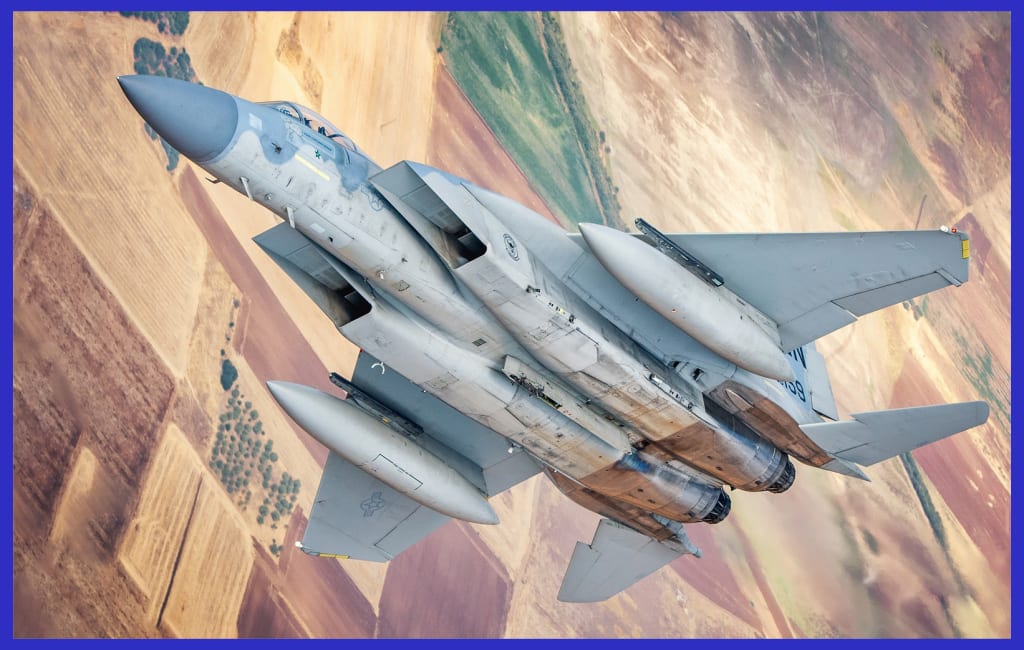
During air-to-air combat, with a remarkable record of 104 ‘Splash‘ and zero losses as of 2023, let us Explore the Best from F-15 Eagle to F-15EX Eagle II. These formidable fighter jets not only uphold the successful legacy of the F-15 but also maintain its long-standing reputation as a dominant air superiority fighter!
In this description, it is imperative to acknowledge that this legendary military jet, known as the Eagle, was meticulously designed and developed by McDonnell Douglas in 1969 to fulfil the service’s specific requirement for an exceptional air superiority fighter. The Eagle took its inaugural flight in July 1972 and was officially commissioned in 1976. Regarded as one of the most triumphant contemporary fighters, this American twin-engine, all-weather tactical aircraft continues to dominate. Currently, since 2021, the manufacturing responsibility of this formidable fighter jet rests with Boeing Defense, Space & Security (BDS).
The Eagle, with its illustrious lineage, has undergone continuous evolution, resulting in a multitude of variants ranging from F-15A/B/C/D/J/DJ/E to the current EX model. Its exceptional reputation has led to exports to various nations, including Israel, Japan, and Saudi Arabia. Notably, Israel stands out with an outstanding record, boasting over 50 air-to-air kills without any losses.
While the F-15 was originally conceived as a pure air-superiority aircraft, its adaptable design allowed for the development of an enhanced all-weather strike variant known as the F-15E Strike Eagle. This formidable variant entered service in 1989 and has been embraced by multiple nations. Moreover, the constant pursuit of technological supremacy has resulted in the production of several additional F-15 iterations, culminating in the state-of-the-art EX model.
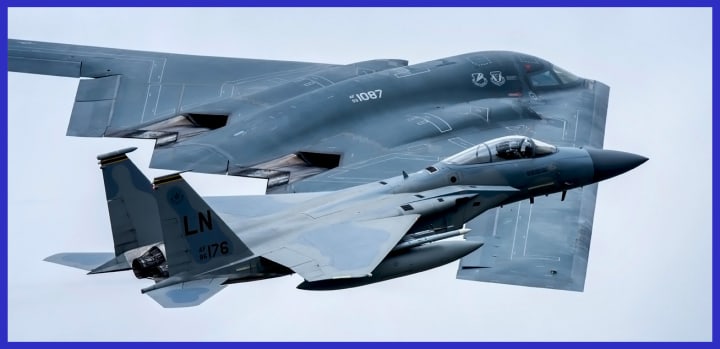
Development story of the McDonnell Douglas F-15 Eagle
The F-15 Eagle, designed to succeed the legendary F-4 Phantom, is an all-weather, highly manoeuvrable fighter originally intended to establish and maintain air superiority for the US Air Force in aerial combat. It stands as one of the most capable multi-role fighters in service today. Between its introduction into service in 1974 and 2000, the F-15 achieved an unprecedented air combat record.
The inaugural flight of the first F-15A took place in July 1972, while the two-seat F-15B trainer followed suit in July 1973. The initial delivery of an Eagle to the US Air Force occurred in November 1974. By January 1976, the first Eagle destined for a front-line combat squadron was delivered, and by the end of that year, several squadrons had achieved combat readiness.
The year 1978 marked the introduction of the single-seat F-15C and two-seat F-15D variants, both of which conducted their inaugural flights in February and June respectively. These aircraft were equipped with the Production Eagle Package (PEP 2000), which facilitated an increase in the maximum takeoff weight to 68,000 pounds (31,000 kg). This package also allowed for the inclusion of external conformal fuel tanks, resulting in an additional 2,000 pounds (910 kg) of internal fuel capacity. The increased takeoff weight enables the aircraft to carry internal fuel, a complete weapons load, conformal fuel tanks, and three external fuel tanks simultaneously.
Notably, the APG-63 radar incorporates a programmable signal processor (PSP), which enables reprogramming for diverse applications such as integrating new armaments and equipment. The modified APG-63 radar with the PSP stands as the world’s first radar of its kind. Other enhancements encompass reinforced landing gear, a new digital central computer, and an overload warning system that permits the pilot to sustain up to 9 g forces across all weight ranges.
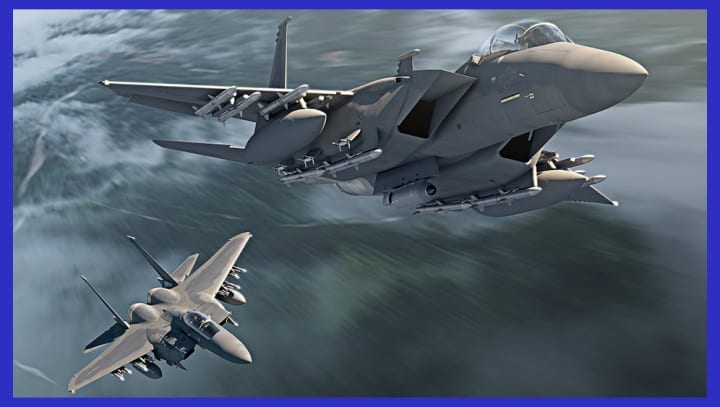
The Eagle’s unmatched air superiority is achieved through an exceptional combination of incredible manoeuvrability, acceleration, range, advanced weaponry, and cutting-edge avionics. This formidable fighter jet possesses the capability to penetrate enemy defences and outperform any current adversary aircraft in both combat manoeuvring and combat effectiveness. Equipped with sophisticated electronic systems and weaponry, the F-15 can detect, acquire, track, and engage enemy aircraft seamlessly, even while operating in airspace under friendly or enemy control. Furthermore, the weapons and flight control systems are thoughtfully designed to enable a single pilot to execute air-to-air combat missions with utmost safety and efficiency.
About the Creator
Prajesh Majumdar
Hi there, I'm Prajesh, the creator of airpra.com
The site is dedicated to nurturing a community of individuals with a keen interest in exploring the intricate aspects of defence equipment and related news.
Keep reading
More stories from Prajesh Majumdar and writers in FYI and other communities.
The Dominance of AGM-158C LRASM: A Game-Changer in Modern Warfare
Designed by DARPA to empower the Air Force and Navy in eliminating high-value targets, here we delve into the Best Analysis of the AGM-158C LRASM Stealth Cruise Missile. With its distinctive shape, the missile harnesses cutting-edge radar-evading technologies, rendering it elusive to enemy radar systems. This formidable characteristic drastically minimizes interception possibilities, bolstering its survivability in critical engagements.
By Prajesh Majumdar3 years ago in FYI


Comments
There are no comments for this story
Be the first to respond and start the conversation.