
Digital Twin Solutions for Optimizing Blast Furnace Performance
Implementing Industry 4.0 Solutions in Heavy Industrial Settings


With the continuous evolution of industrial internet and intelligent manufacturing technology, the steel industry is undergoing a deep transformation towards digitalization and intelligence. As a key link in steel production, the blast furnace involves complex technological processes, strict equipment coordination requirements, and multiple safety risk control points. To address this, enterprises need to achieve precise management and scientific optimization of the entire production process through advanced digital technology.
Final Product
Using the “HT for Web” graphics engine, by integrating advanced 2D and 3D rendering technologies, we have built a complete digital mapping system for blast furnace ironmaking, providing in-depth data analysis support for management and effectively improving operational efficiency across all stages of smart blast furnace iron production.
System Analysis
Precise Burden Distribution Optimization
As the initial key step in blast furnace ironmaking, the uniformity and rationality of the top burden distribution have a decisive impact on the gas flow distribution and reaction efficiency within the blast furnace.
3D Visualization Modeling
Using 3D rendering technology, we created a highly realistic digital twin scene of the blast furnace top burden distribution. Through 3D modeling and real-time data driving, it completely reproduces the blast furnace top structure and internal operation details, dynamically presents the material distribution status and flow trajectory, and supports multi-angle interactive operations, achieving comprehensive visualization modeling and real-time monitoring of the burden distribution process.
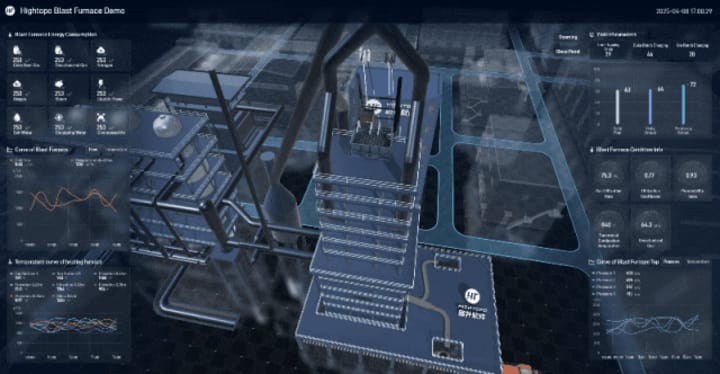
Real-time Monitoring of Burden Distribution Process
Through the virtual environment built with digital twin technology, operators can monitor in real-time the precise delivery process of raw materials from the distributor to the blast furnace interior, effectively tracking the landing distribution and accumulation state of various raw materials such as ore and coke. The system continuously collects and analyzes sensor data, professionally displays core indicators such as burden thickness and uniformity, and is equipped with an intelligent early warning system that can promptly identify and locate abnormal situations, ensuring precise control of the burden distribution process.
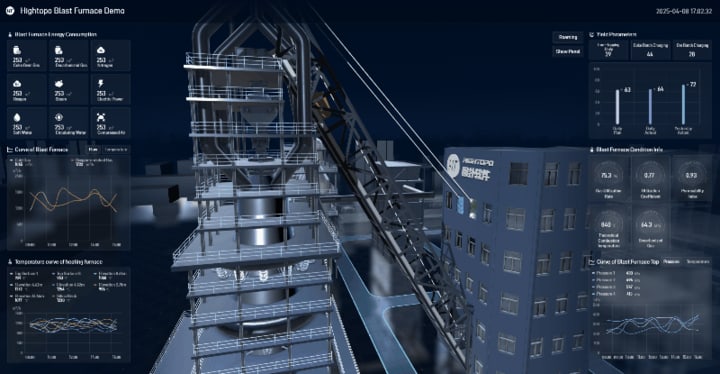
With the help of visualization technology, production personnel can make precise burden distribution adjustments based on real-time blast furnace data, achieving optimal gas flow conditions inside the furnace. This lays a solid foundation for subsequent smelting reactions inside the furnace, while effectively preventing furnace instability caused by uneven burden distribution, thereby ensuring that molten iron output and quality consistently remain at ideal levels.
Hot Blast Temperature Monitoring
As a key equipment providing high-temperature hot blast to the blast furnace, the internal gas flow and temperature conditions of the hot blast stove are crucial factors affecting iron-making energy consumption and efficiency.
Dynamic Gas Flow Simulation
This platform uses precision modeling technology to achieve professional simulation of gas dynamics inside the hot blast stove. Through advanced streamline visualization technology, the system comprehensively displays the operational status of gas in core components such as the combustor, regenerative chamber, and flue, while monitoring airflow parameter changes in real-time. This functionality enables the operations team to effectively monitor material transport conditions in the pipeline system, rapidly identify potential system anomalies, and implement preventive maintenance measures, ensuring continuous stable system operation and significantly reducing the possibility of production interruptions.
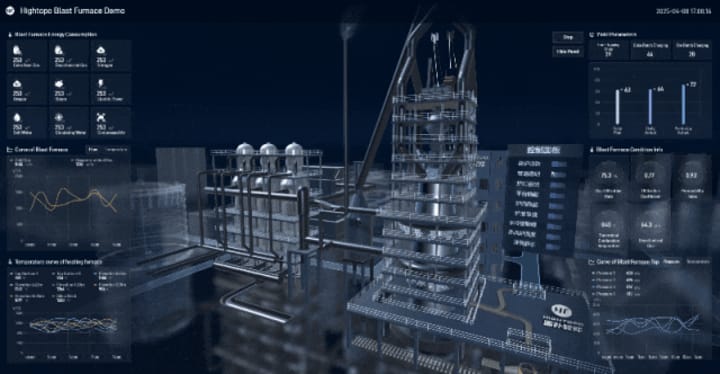
2D Data Monitoring
"HT for Web" products feature a comprehensive library of chart components and UI elements, enabling quick chart selection, comparison, and assembly through a low-code platform to create animated, data-driven visualizations.
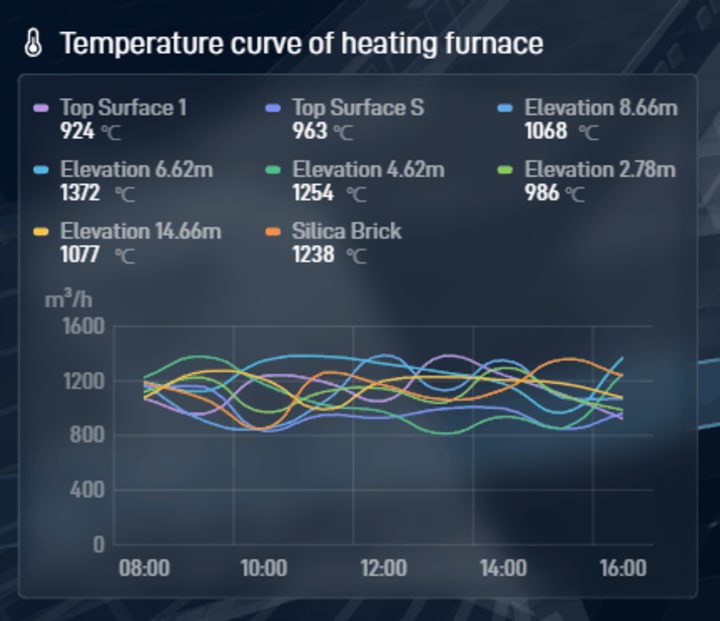
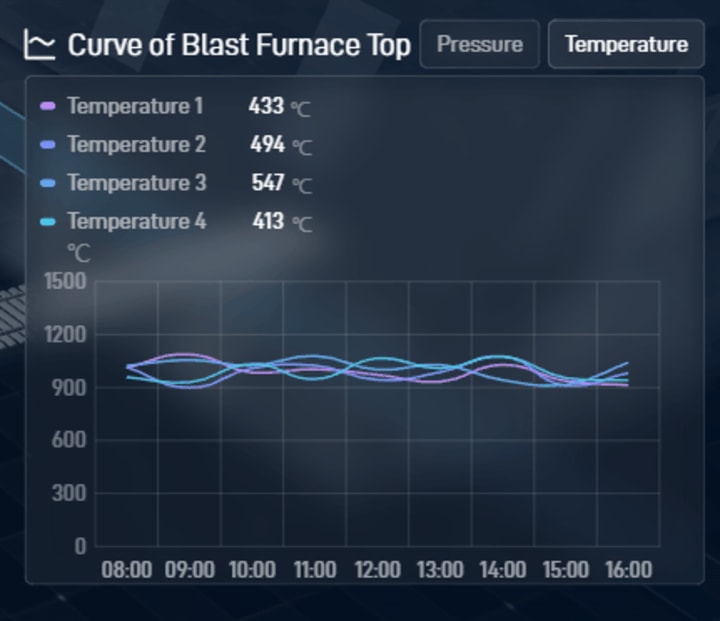
Through carefully positioned temperature monitoring points at key locations, the system displays collected temperature data in real-time on the monitoring interface, combining numerical values with intuitive heat maps. Through this visualization approach, the system immediately triggers intelligent alarm mechanisms when abnormal temperature fluctuations or gas flow disturbances occur.
Operators can quickly respond and precisely adjust critical settings such as hot blast stove combustion parameters and reversal cycles. This ensures that hot blast temperatures remain within ideal ranges, not only improving the hot blast stove’s thermal efficiency and reducing energy consumption, but also strongly guaranteeing continuous stable operation of the blast furnace ironmaking process, greatly reducing the risk of production interruptions caused by hot blast system failures.
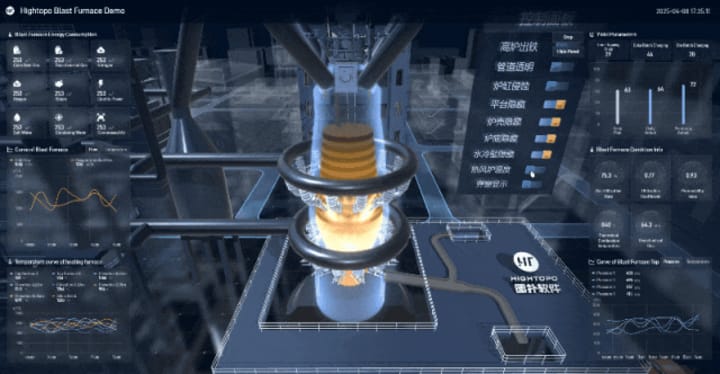
Hearth Erosion Heat Map
As the core critical component of the blast furnace, the hearth endures long-term exposure to high temperature, high pressure, and molten iron erosion. Its health status directly affects the blast furnace’s service life and safe production.
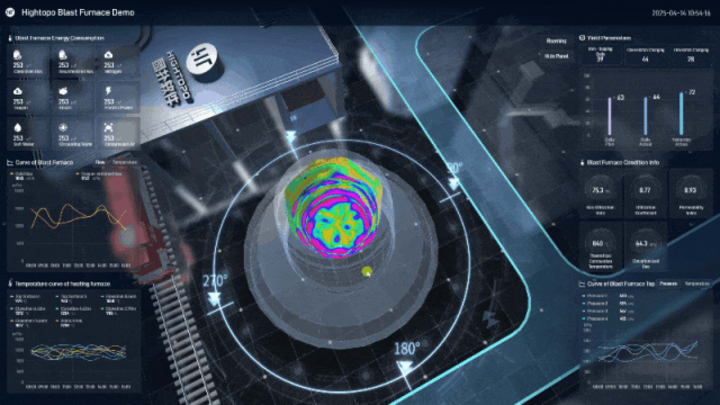
Heat Map Analysis
The system employs advanced heat map technology to visually display the hearth erosion level through striking color gradients. By integrating multiple monitoring data points including temperature distribution and lining thickness, the heat map marks severely eroded areas in red, while yellow or green indicates areas of minor erosion.
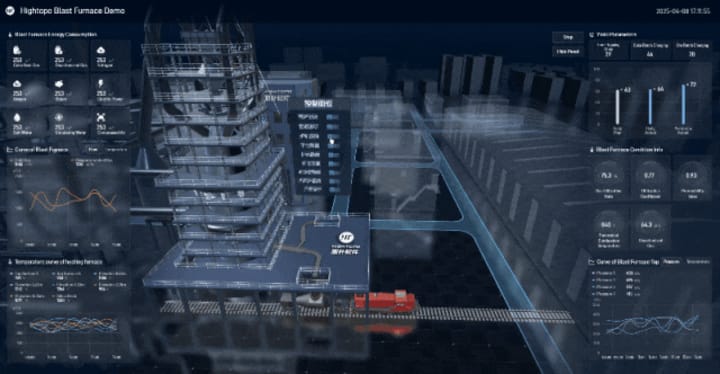
Through continuous dynamic monitoring and historical data analysis systems, our team can accurately predict hearth erosion conditions and develop scientific preventive maintenance plans. This enables us to optimize the timing of lining material replacement, significantly extend blast furnace service life, and effectively avoid economic losses and safety risks caused by hearth accidents, thereby ensuring the sustainability and stability of steel production.
Panel Customization
Hightopo Products provides interactive visibility control for components such as data interfaces, furnace shell, hearth, and water cooling walls. Operators can flexibly choose to show or hide specific equipment components based on actual needs, focus on key production steps, avoid interference from irrelevant information, and thereby gain a clearer, more targeted operational perspective while improving operational convenience and accuracy.
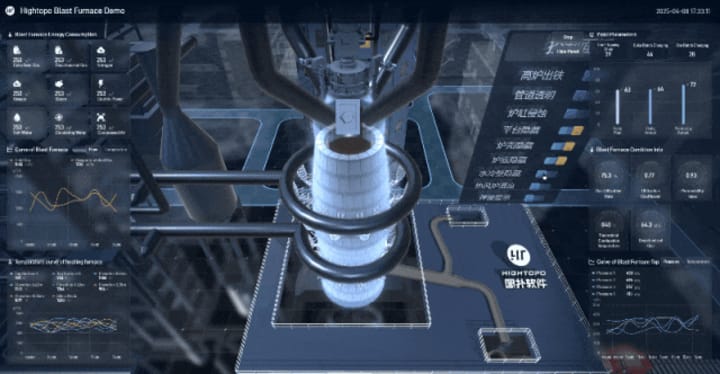
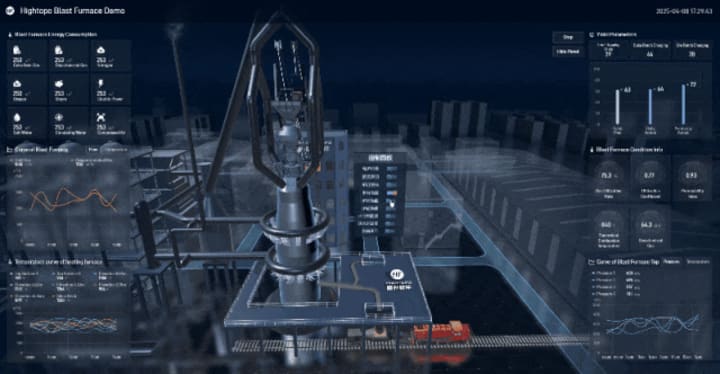
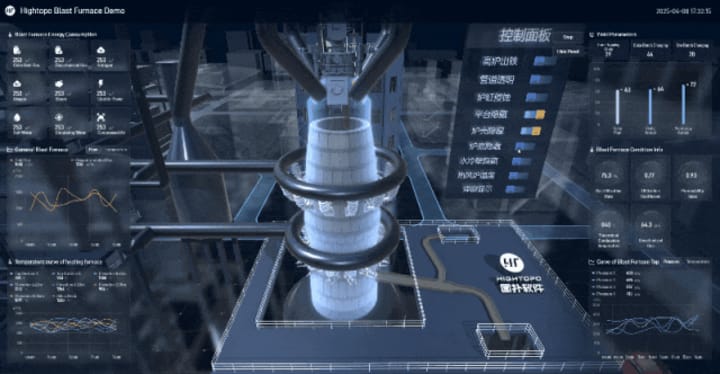
In terms of 3D modeling and rendering, the platform uses sophisticated technology to accurately reproduce the complex structures and dynamic operations of blast furnaces and auxiliary equipment, with rich model details and smooth, natural visuals, creating an immersive monitoring and control experience for operators.
Blast Furnace Tapping
The blast furnace tapping process involves complex operational steps such as molten iron discharge and slag-iron separation. Efficient and precise monitoring is crucial for ensuring smooth tapping and improving molten iron recovery rate.
Molten Iron Control Visualization
The platform performs detailed 3D modeling and visualization of key components such as the blast furnace taphole, main trough, and slag skimmer, displaying core parameters in real-time including molten iron flow speed, flow rate, temperature, and slag-iron ratio.
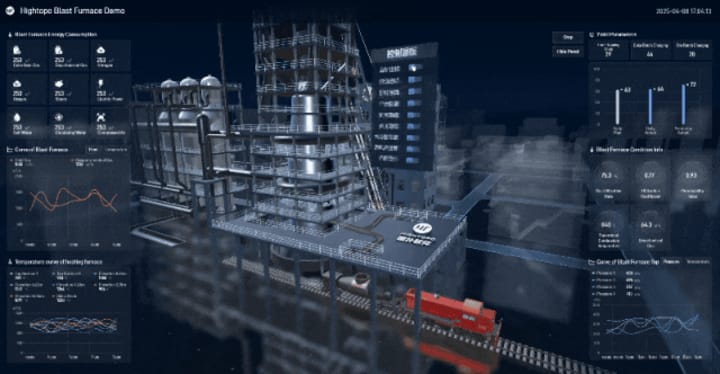
During the tapping operation, operators can achieve precise control based on visualization information, accurately control tapping timing and flow rates, ensure efficient and stable slag-iron separation by the slag skimmer, and effectively prevent excessive slag in molten iron from affecting subsequent steelmaking processes.
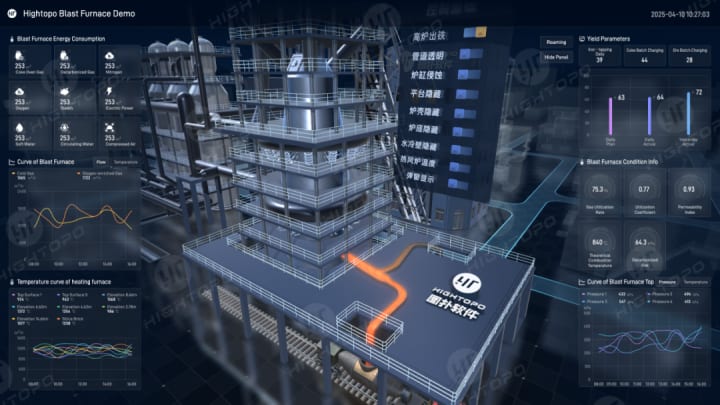
Meanwhile, real-time online monitoring of tapping equipment operating status covers key information such as the execution status of mud guns, taphole drills, and other equipment, as well as critical component temperatures. This enables timely detection of potential equipment faults and prompt arrangement of maintenance, significantly improving tapping operation efficiency and quality while effectively reducing production costs.
Key Information Pop-up
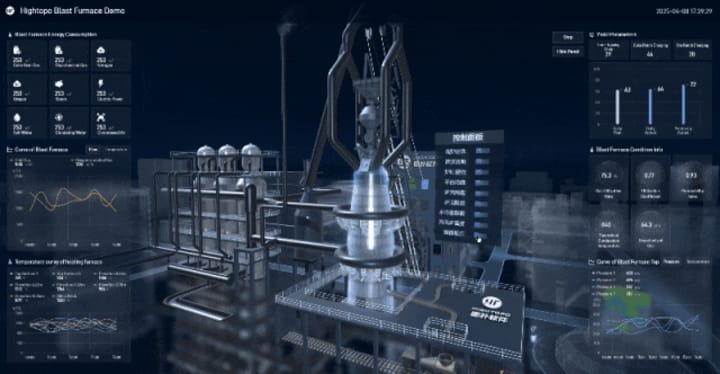
Additionally, during the operation of the smart blast furnace, when abnormal conditions or important notifications arise, the system’s pop-up display feature immediately pushes these critical messages to operators. Whether it’s equipment fault warnings, process parameter exceedances, or maintenance reminders, the pop-ups present the information in a prominent way, ensuring operators can respond quickly, prevent incidents from escalating, and maintain safe and stable production.
Summary
Furthermore, the system also supports multi-platform access, whether through large display terminals in the central control room or mobile devices, enabling easy real-time monitoring and remote management of blast furnace operations. This greatly enhances the flexibility and timeliness of production management, effectively promotes efficiency improvement, cost reduction, and safety assurance in steel enterprises’ blast furnace steelmaking, and accelerates the pace of intelligent upgrading in the steel industry.
About the Creator
Hightopo
Everything you need to create cutting-edge 2D & 3D visulization.
https://www.hightopo.com/demos/en-index.html


Comments
There are no comments for this story
Be the first to respond and start the conversation.