
Did you know jaywalking is an urban design principle?
Cross the street. It was built for you.

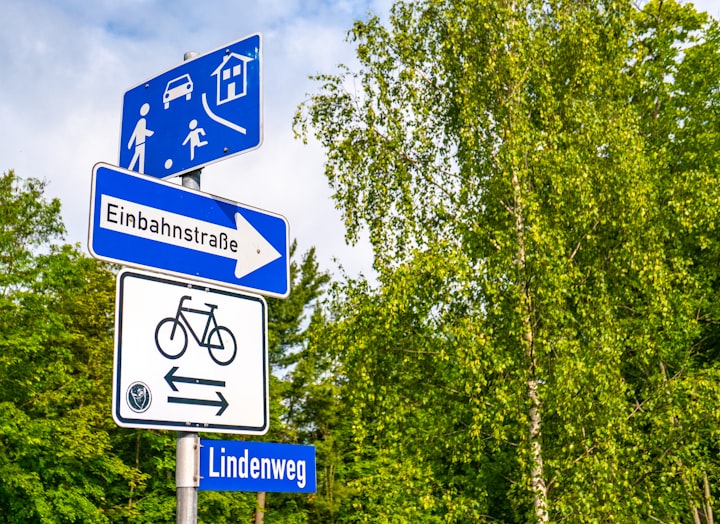
As my friend and I walked to his car from Cousins Deli and Lounge in Winnipeg, Man., the conversation turned to the act of jaywalking. For the uninformed, jaywalking means to cross or walk in the street or road unlawfully or without regard for approaching traffic—a favourite practice of mine.
What precipitated this conversation was exactly that—we had crossed the street at Sherbrooke as the light turned green for vehicles, seemingly indifferent to the possible danger we had put ourselves in that moment. Even though no cars appeared, it still elicited the thrill of broken rules for a young city slicker like me.
In Canada, police can ticket jaywalkers, ranging in fines from $15 to $700—a steeply-priced lesson, but a necessary one. Every adult ingrains in you to act smart and safe while crossing the road to look both ways and wait for the light or the crosswalk sign to avoid being hit by a car. So, a $700 fine make sense, it's in the best interest of the pedestrian right?
No. I recently learned that jaywalking is an urban design principle—a signifier of success in many European cities. This fact blew my mind. I assumed jaywalking was a product of laziness or impatience on behalf of the pedestrian. However, jaywalking is a lost relic from when we prioritized people over vehicles in public spaces.
I enjoy jaywalking in cities where walkability scores low. Winnipeg is one of those places, often catering to vehicles and the driver's experience over pedestrians. A recent and controversial example of this mentality surrounded the opening of Portage and Main, an infamous intersection that often sees jaywalking used as a form of protest. When it first closed in the 70s, civil rights activists jaywalked to support those with disabilities who would now have to travel extra blocks around Portage and Main just to get across the street. Of course, while it remains closed, it has encouraged many people to look at and use these streets and public spaces differently.
According to Vox's Joseph Stromberg, jaywalking didn’t exist a hundred years ago—you merely walked across the street. However, in the 1920s, auto groups and manufacturers ran an “aggressive” campaign to redefine “who owned the city streets.”
This campaign centred on encouraging fellow citizens and even law enforcement to publicly shame transgressors by “whistling or shouting at them—and even carrying women back to the sidewalk—instead of quietly reprimanding or fining them.” Moreover, the auto industry used the media to shift the blame for accidents onto pedestrians, effectively absolving vehicles from any real culpability in pedestrians' deaths.
Around this time, Stromberg writes, the term jaywalking finally entered the public lexicon. Previously, “the word "jay" meant something like "rube" or "hick"—a person from the sticks, who didn't know how to behave in a city. So pro-auto groups promoted the use of the word "jaywalker" as someone who didn't know how to walk in a city, threatening public safety.”
Before the 1920s campaign, city streets were “considered to be a public space: a place for pedestrians, pushcart vendors, horse-drawn vehicles, streetcars, and children at play." People dismissed vehicles as “frivolous playthings, akin to the way we think of yachts today (often called "pleasure cars"). And on the streets, they were considered violent intruders.” And often, while walking, I feel the same way.
However, I don't feel like a hick or rube, unable to understand the subtle nuances of city streets. In fact, when I cross "unlawfully" (safety in mind, of course), I feel a sense of place and identity. That this is my city to live, work and play in. It's a rush of exhileration and feeling of intense freedom to cross where it makes sense rather than find yourself confined to crosswalks stretched miles apart.
Jaywalking is a fascinating case in the evolution of urban design and planning. Much like fashion, what is old will eventually become trendy again, and I hope public spaces where streets and people interact will find a careful balance in the future. Just the act of a street giving equal weight to pedestrians and vehicles would be innovative enough!
However, until then, live a little and jaywalk.
About the Creator
Rebecca Henderson
Rebecca takes inspiration from her favourite writers like Helen Anne Petersen to challenge and hone her skills as a professional writer and editor.
Keep reading
More stories from Rebecca Henderson and writers in FYI and other communities.
The Take Back
According to the estate sale’s brochure, the now-deceased Susan Delorme had built the house in 1973, inspired by the romantic French Provincial style. Grace studied the home’s rich but chipped night-blue brick, which outlined the home’s symmetrical round-topped windows with sunburst detailing. The house must have been beautiful at one time, she imagined, but now the sun only illuminated its wear.
By Rebecca Henderson5 years ago in Horror


Comments
There are no comments for this story
Be the first to respond and start the conversation.