
Data Center Services Demystified: The Backbone of Modern Digital Infrastructure
Data centers are of vital importance when it comes to the modern digital economy.
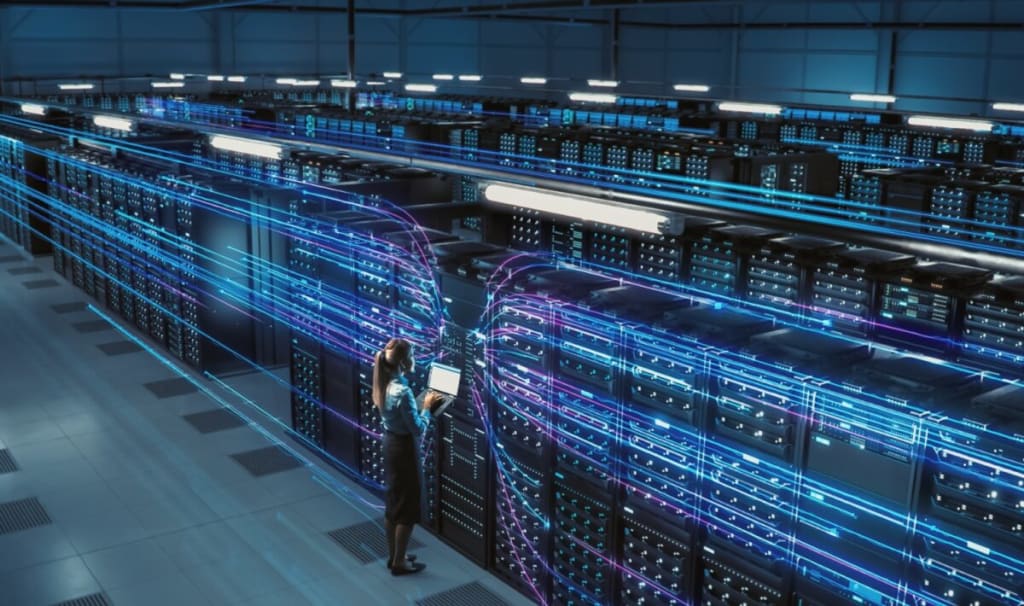
Data centers are of vital importance when it comes to the modern digital economy. They manage, handle, and organize data in large quantities which businesses in various sectors depend on to operate efficiently. Meanwhile, identifying data center types is important as the dependence on cloud services, data storage, telecommunications, and computing power increases. It becomes essential for both individuals and businesses wanting to strengthen and make their IT infrastructure more efficient.
This piece will help you understand the different data center types along with their features and benefits. It will also guide you to identify the best data center services in Estonia.
Data Centers As You Know
A data center is a physical room, building, or facility used by organizations, mostly IT hubs, to harbor critical applications, data, and systems. It comprises storage devices, network servers along other equipment that are customized to ensure availability. In addition to this, it also ensures readability and security of the data. Data centers, over time, have surfaced to fulfill numerous business requirements, from on-premises solutions to cloud-based options.
There are 5 data center types-
Enterprise Data Centers
Colocation Data Centers
Cloud Data Centers
Edge Data Centers
Hypescale Data Centers
Now, lets check out all these data center types in detail below.
Enterprise Data Centers
Enterprise data centers are the type of data centers that are owned and managed by a single organization. They are used to host critical applications and process internal data. The main components are-
I. Servers (physical computing equipment processing data),
II. Storage devices (physical computing equipment storing data),
III. Network Systems (physical computing equipment processing data),
IV. Firewalls (physical components protecting data),
V. Switches (physical components processing data), and
VI. Routers (physical components processing data).
Key features:
I. Ownership: Handled and managed by the company
II. Customization: Highly designed according to the company’s specific requirements
III. Cost: Significant financial investment due to the need for hardware, and software requirements
Uses: They are suitable for large organizations requiring full authority over the infrastructure, particularly when dealing with sensitive data or custom-built systems
Colocation Data Center
Colocation data centers are the ones that permit users or customers to rent space, equipment, or bandwidth. Businesses or institutions rent up spaces for their services, networking equipment, and storage devices. It also offers building, power, cooling, and physical security.
Key features are:
Shared Infrastructure: They offer physical resources while the business owns its equipment
Scalability: Companies can rent further space if need requires
Security: Such centers generally hold high-end security protocols which include physical security, fire protection, and redundancy.
Uses: Companies with more control over their hardware than investments in building their data center are more interested in them.
3. Cloud Data Center
Third-party service providers generally handle cloud data centers. It is a collection of servers where users take computing power and storage capacity from the service provider on lease.
Key features are:
Scalability: Users can easily allocate and deallocate computing resources
Flexibility: Users can use computing resources on-demand without any need to own or maintain physical hardware
Global Availability: They are spread over a huge region assuring high availability and low latency
Uses: These centers are ideal for businesses needing flexibility, scalability, and cost efficiency. They are the best choice for companies that want to avoid the expense and complexity of managing physical infrastructure.
4. Edge Data Centers
Edge data centers are generally closer to users so that data can travel short distances and respond faster. They are local data centers where data is processed to close end users. They provide minimal cost, and low latency support to 5g users.
Key features:
Vicinity to Users: Positioned near end-users to decrease latency
Distributed Architecture: They are a part of a distributed network of data centers, hence endorsing a wide spectra of devices and applications.
Speed Specific: Streamlined for low latency operations for supporting real-time applications
Uses: Edge data centers are the best fit for businesses with real-time data processing needs like those in gaming, IoT, etc. They are good for organizations needing fast data access with minimal delay. These data center types are generally beneficial for industries like finance, healthcare, etc.
5. Hyperscale Data Centers
Hyperscale Data Centers usually support large-scale data processing, storage, and computing. They store and process data on a large scale. Customized to handle huge workloads and deliver high performance, scalability, and security to users worldwide, they use modifications in power delivery, cooling, security, and maintenance.
Key features:
Large scale: They can include thousands of servers and storage devices
Efficiency: They are designed to lower costs through energy-efficient technologies, streamlined management processes, and economies of scale
Automation: These data centers frequently use automation to enhance the efficiency of management and upkeep
Uses: They are mostly used by massive enterprises or cloud service providers requiring significant computational resources. Additionally, they are also beneficial for organizations with global reach.
Modern Data Center Architecture
With the fast-growing digital world, data center architectures have transformed to meet the surging needs of scalability, reliability, and efficiency. Updated and modern data center architecture is designed to manage vast quantities of data while providing high performance. Though businesses rely more on IoT or AI-driven apps, the evolution of data center design is critical.
Key Features of Modern Data Center Architecture
1. Data Center Physical Infrastructure
Key elements:
i. Server racks
ii. Cooling systems
iii. Power systems
iv. Network Infrastructure
2. Virtualization and Software-Defined Infrastructure (SDI)
Key elements:
i. Server virtualization
ii. Network Virtualization
iii. Storage virtualization
3. Automation and AI
Key elements:
i. AI-Driven Monitoring and Maintenance
ii. Automation of Routine Tasks
iii. Self-Healing systems
4. Redundancy and Reliability
Key elements:
i. Redundant Power Supplies
ii. Data Replication
iii. MultipleNetwork Paths
5. Scalability and Flexibility
Key elements:
i. Modular Design
ii. Cloud Integration
6. Security and Compliance
Key elements:
i. Physical Security
ii. Network Security
iii. Compliance Standards
Data Centers in Estonia
Estonia is speedily becoming a top destination for data centers in Europe. Its sturdy digital ecosystem, secure data storage solutions, etc., are the best fit for businesses looking to propagate their IT infrastructure. Furthermore, data center services in Estonia also include Dedicated server services making it the perfect choice for businesses.
- Estonia, being a member of the EU, ensures that sensitive data is protected under GDPR ( General Data Protection Regulation).
- Estonia ensures maximum uptime and data availability
- It holds proper connectivity with both West and East Europe. Therefore, it is a suitable choice for businesses in Europe.
To Conclude
Landing up to the perfect data center is very challenging these days. It might affect the performance, security, and scalability of your business. It is essential to understand the benefits and trade-offs of each option.
For businesses looking for data center services Estonia, we would strongly suggest you to collaborate with a trustworthy provider like EstNOC. Hence, you can rest assured that your business will indeed remain scalable and agile in this fast-changing world.
Read Also:- When Do You Need a Dedicated Server for Your Website
Want to know furthermore about it? Discover data center services in Estonia with EstNOC and unravel ample possibilities for your business.
About the Creator
Estnoc
EstNOC offers hosting and datacentre services in Estonia, Sweden, Russia, Romania, Netherlands, Norway and Switzerland. Estnoc Hosting is closer to you to bring the hosting service you dreamt of. we
The Politics of Playing Dress-Up
Well, to start off I'd like to say a happy world book day to all who celebrate. I know I haven't really posted anything on my socials about it but I'm not a jubilant kind of person. I lay low most of the time. Let's start off with a popular anecdote from the vaults...
By Annie Kapur7 days ago in Geeks


Comments
There are no comments for this story
Be the first to respond and start the conversation.