
Crisis Looms in Israel Over Ultra-Orthodox Conscription Bill
A deeply divisive draft law threatens to shake Israel’s political stability as the nation debates equality, faith, and military service.

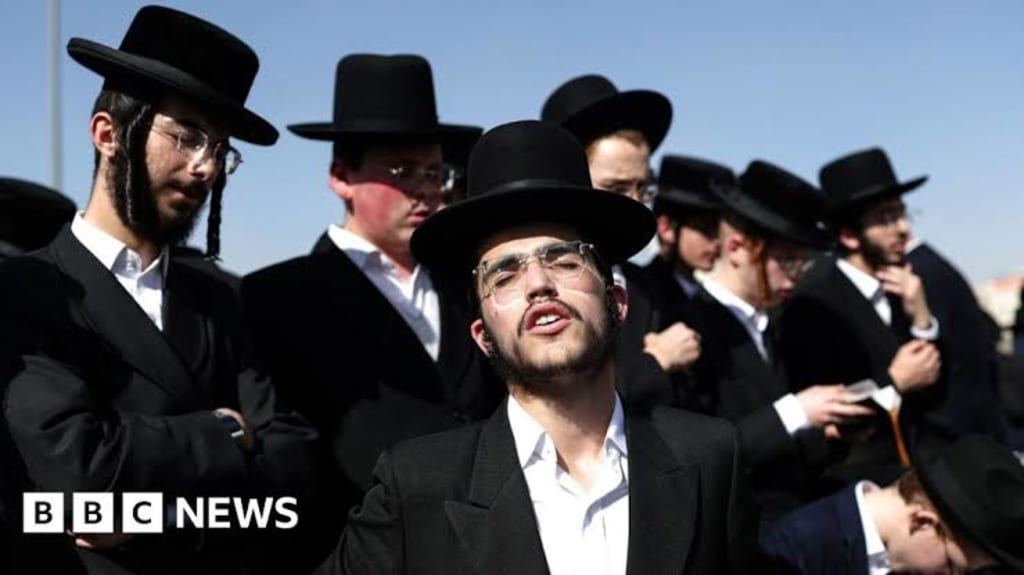
For decades, Israel has lived with a delicate and often uneasy balance between national security needs and social realities. Few issues reflect this tension more sharply than the ongoing debate over whether ultra-Orthodox (Haredi) men should serve in the Israel Defense Forces (IDF). As Israel faces a prolonged period of regional instability and internal political strain, a new conscription bill has pushed the country into one of its most divisive debates in years—threatening to fracture the governing coalition and deepen social divides.
The crisis intensified after the government moved forward with legislation aimed at ending long-standing exemptions for Haredi men enrolled in full-time religious studies. While previous governments attempted reforms, none have fully resolved the issue. This time, however, pressure from the military, the Supreme Court, and secular coalition partners has made compromise increasingly difficult.
A History of Exemptions and Tension
Since the early years of Israel’s statehood, Haredi men studying in yeshivas have received exemptions from mandatory military service. The original intent was to allow a few hundred scholars to help rebuild the shattered world of Jewish religious learning after the Holocaust. But over the decades, the number has ballooned into the tens of thousands.
Today, Israel’s demographic trends show a rapidly growing Haredi population. Critics argue that maintaining widespread exemptions is unsustainable—placing a greater burden on secular Jewish Israelis and threatening the IDF’s ability to maintain a balanced, stable reserve force.
Haredi leaders, however, insist that Torah study protects the nation spiritually and that forced conscription violates their religious lifestyle. Many also fear that military service would expose young men to secular influences they view as harmful.
These competing visions of Israel’s identity—religious vs. democratic, traditional vs. modern—sit at the heart of the current crisis.
Supreme Court Pressure Adds Fuel to the Fire
For years, Israel’s Supreme Court has ruled that blanket exemptions for one group violate the principle of equality. Several previous conscription laws were struck down for discriminating against non-Haredi Israelis. The court has now made it clear: the government must pass a law that either applies fairly to all citizens or establishes a constitutional justification for exemptions.
This deadline has placed Prime Minister Benjamin Netanyahu in an especially difficult position.
On one side are Haredi parties—key partners in his fragile coalition—who demand that exemptions continue, or even be expanded. On the other side are moderate and secular members of the coalition, as well as the IDF leadership, who argue that the military desperately needs more manpower amid rising security threats across multiple fronts.
If Netanyahu sides with the Haredi parties, he risks backlash from the military and the public. If he agrees to broader conscription, he risks losing his coalition—and potentially his government.
A Nation Divided
Public sentiment has reached a boiling point. Large demonstrations have taken place in Tel Aviv, Jerusalem, and other major cities. Secular Israelis—many of whom serve multiple reserve cycles—argue that “equal service for all” is a basic pillar of national responsibility.
At the same time, mass Haredi protests, some involving clashes with police, have erupted against any attempt to enforce conscription. For their communities, the bill is not merely political—it is existential.
The debate is also spilling into everyday life. Families are divided, workplaces tense, and online spaces filled with heated arguments about fairness, identity, and the future of the country.
The IDF’s Changing Needs
Israel’s security establishment has been unusually vocal. High-ranking military officials warn that manpower shortages are becoming a strategic concern. With ongoing operations in Gaza, the threat of conflict with Hezbollah, and rising tensions across the region, the IDF needs more soldiers—especially for cyber, intelligence, and support roles that could accommodate Haredi recruits without clashing with religious standards.
Some propose a special Haredi corps with strict religious accommodations. Others suggest national civilian service as an alternative.
But no agreement seems close.
What Happens Next?
As the conscription bill moves through the Knesset, every option carries risk. A government collapse could push Israel into new elections. A forced compromise could send thousands into the streets. And continued stalemate could leave the IDF facing deeper manpower shortages in a time of heightened danger.
What remains clear is that this debate is more than a legal issue—it is a battle over Israel’s identity and future direction. The crisis may eventually force the country to confront one of its most difficult questions: Can Israel remain both a modern democratic state and a religiously diverse nation without demanding equal sacrifice from all its citizens?
For now, the answer remains uncertain, and the political storm continues to build.
About the Creator
Fiaz Ahmed Brohi
I am a passionate writer with a love for exploring and creating content on trending topics. Always curious, always sharing stories that engage and inspire.
Keep reading
More stories from Fiaz Ahmed Brohi and writers in FYI and other communities.
Prof Kishore Paknikar Named Prime Minister Professor, to Join COEP Technological University
In a significant boost to India’s higher education sector, Prof Kishore Paknikar has been appointed as a Prime Minister Professor and is set to join COEP Technological University (COEP-TU). The appointment highlights both the academic excellence of Prof Paknikar and the government’s ongoing efforts to strengthen research and innovation in technical education.
By Fiaz Ahmed Brohi3 months ago in FYI


Comments
There are no comments for this story
Be the first to respond and start the conversation.