
Cotton: Colonialism, Fashion, and Foundations of Western Capitalism
Early on, the raw material fascinated ancient Europeans. Like many of Europe’s modern cultural obsessions (coffee, chocolate, garlic, tomatoes, etc.), cotton did not naturally grow and is not native to the region.

Cotton has played an important role in historical events. It has been the premier fabric in several societies. The ancient Peruvians, around 5000 B.C., used it as a primary textile in the production of nets and clothing. Ancient Indian, Chinese, Mayan, and Bengali societies also used the fabric to clothe their elite, exchange currencies, export to Europeans, and create entire trade industries. In more modern times, the fabric has also been a central element in the rise of Western capitalism, high-fashion trends in eighteenth century Europe, and the progression of clothing’s role in women’s sexuality. We still see cotton’s role in our society. In 2021, the cotton industry has also seen an increase in sustainable manufacturing practices, cultural promotion, and the rise of athleisure wear designers.
The cotton industry is much older than modern capitalism. It’s older than ancient Greece and Rome and has been the subject of extensive travel stories and myths circulating in older societies. Europeans did not introduce cotton to the Americas. The plant, which derives from the Gossypium genus, is native to the Americas, Africa, and Central Asia. The plant produces a white or beige colored soft raw material that is collected and spun into the world’s most famous fabric.
As a result of its indigenous cultivation, the fabric has a long history in the Americas and the ancient East. Both continents explored the fabric on their own terms and valued the craftsmanship associated with the textile due to its ability to be used in both domestic and ritualistic activities.
In ancient Peru, the Incas used cotton for both domestic purposes and royal burials. Archaeologists have found cotton buried in the tombs of ancient lords and sewn into the objects inside of their burial grounds. The Incas also produced nets and colorful patterns out of cotton. The American version of the plant, found in North, Central, and South America, has a white, beige, and creamy color. The creamy and beige colors are mostly native to Peru and Ecuador, although the plant, mostly in its white fuzzy form, is found all throughout the continent’s northern and southern hemispheres. In the south, the ancient Incas used cotton to build strong fishing nets, which allowed them to create an immense empire out of one of man’s earliest fishing industries. Archeologists have discovered the foundations of the earliest major civilization in the Americas forged out of a burgeoning fishing industry made possible by cotton nets.
The Mayans had extensive uses for cotton and its root plant. They used cotton as currency. The ancient Central-Americans in modern day Guatemala also made most of their clothing out of cotton and various other plants. Elite women in Mayan society wore elaborate outfits that were carefully made to display the wearer’s social class. The Mayans even used the cotton plant to cure asthma, ulcers, and skin conditions. Historical texts show the Mayans, present in Central-America before the Spanish colonized the region, also used the plant for medicinal purposes unknown to their contemporary Europeans.
Speaking of the old country, most early Europeans did not own or know of the plant’s existence, and to many the textile was a mythical fabric. In the east, the fabric traces its roots to ancient India, where early nation-states would commission teams of women to produce garments out of raw cotton. Europeans found the commissioned fabrics highly valuable. Their early beliefs ranged from outright fascination to other myths that are downright silly. The ancient Greeks would travel as far as modern-day Bangladesh to find Bengali Dhaka muslin to dress their goddesses’ statutes. An Egyptian text written over 2,000 years ago marvels at the Indian fabric. Ma Huan, a medieval Chinese adventurer, also describes the fabric in classic texts. Explorers found Dhaka muslin impossible to recreate, and, centuries later, they were still unable to replicate the intricate designs of the Bengali craftsmen. And since Europeans found it impossible to produce the Dhaka muslin, many spread an odd rumor that supernatural creatures created the fabric. They claimed ghosts and fairies weaved the natural threads together out of pixie dust and cloud nuggets. It was the ancient equivalent of the aliens built the pyramids intellectual dung that circulates certain insecure male conspiracy theory groups.
Early on, the raw material fascinated ancient Europeans. Like many of Europe’s modern cultural obsessions (coffee, chocolate, garlic, tomatoes, etc.), cotton did not naturally grow and is not native to the region. Ancient writers and historians took note of cotton’s unique qualities. Herodotus, author of The Histories and chronicler of the Greco-Persian wars, wrote of the splendors of Indian cotton. His description of the raw material awed ancient Greeks. He described India as a land where fabric grew on wild trees; and compared the raw plant to sheep’s wool.
The images were awfully creepy and something out a British fantasy gothic horror film (think Neil Jordan’s The Company of Wolves). Europeans innocently drew images of sheep growing from trees and plants. They even thought that lambs could grow out of vegetation and tried to explain cotton’s existence by theorizing that in Central Asia there existed a flower that could birth a live sheep. Somehow a person could kill it after opening the plant (after some research, I’m still not sure why this was part of the process). Early travel literature brings the creepy plant up several times, but its featured most prominently in a 14th century French travel memoir titled “The Travels of Sir John Mandeville”. In it, the writer wrote of a lamb found inside of a flower. In a fictional region that Europeans called Tartary (because why bother identifying a real place, I guess), located somewhere in Central India or China, the original author explained that the plant held a live lamb inside of a strange, ripe fruit. “The Travels of Sir John Mandeville” was one of two books (the other being Marco Polo’s Travels) that heavily influenced, perhaps unfortunately, Christopher Columbus during his childhood.
As a result of its uniqueness, cotton has played a role in both fashion and colonization, mostly as a form of assimilation and power. In old Siberia, the indigenous people of the Far East experienced Chinese customs and traditions as regional influence migrated from East Asian into Siberian territories. Chinese influence introduced cotton to native populations, mostly the Amur peoples of modern-day Russia, and heavily changed their way of dressing. The Chinese provided the fabric along with other important cultural symbols, such as traditional monster masks and agricultural tools. Their fabrics also took on Chinese symbols, patterns, and dragon figures. To this day, the Amur peoples’ culture has been radically influenced by these early Chinese cultural items.
In the United States, cotton played a role in the subjugation of human beings on the American continent. It defined the American South and lined the pockets of powerful criminal families (to note: slavery was not yet a crime, but I refer to these families as criminal because they participated in what we would consider modern day racketeering, human trafficking, rape, child labor, illegal detentions, and many activities we would, in 2022, associate with the Colombian FARC or the transnational Russian mafia). Cotton was one of the first global luxury goods. After sugar and tobacco, cotton held a steady place as a top commodity. United States cotton plantations enslaved millions of Africans to move both the economies of The United States and the British Empire. The slaves provided free labor, which enriched American businessmen, European slave traders, and textile investors. Essentially, the economies of both continents were built on a sort of Gambino crime family meets gulagocracy where the subjugation of human beings and their forced, free labor was a national economic philosophy like cryptocurrencies or trickle-down economics.
The British were in on this game from the beginning. Western Europe became heavily dependent on American cotton. Despite Britain’s status as the premier world power in the 19th century, its economy was directly tied to the United States and its slave-economy. Forty percent of Britain’s exports relied on the English textile industry, which derived entirely from the American cotton industry. Unable to diversify its textile sourcing, one-fifth of The United Kingdom’s population was tied to the American cotton industry. One-tenth of Britain’s economy was invested fully in cotton, and raw cotton accounted for 61 percent of American exports.
As a result, cotton became a principal reason for the American Civil War. Many southern American slave owners refused to free Black Americans out of concerns it would destroy their financial empires. Besides Britain, France and Russia also heavily depended on the economy of cotton. British colonialist Herman Merivale even credited slavery as a necessity for the cotton market’s success. Not surprisingly, Europeans heavily debated the dependence on the American slave market and the moral and political dilemmas in maintaining a dependence on forced labor. Of course, they could have just stopped purchasing cotton and supporting something as abhorrent as slavery, but their intellectual debates on the matter would be the modern-day equivalent of whether or not we should purchase clothing made in sweatshops where women and children are abused, shackled, and forced to work alongside roaches and rats (here’s looking at you FashionNova and Ivanka Trump).
Not many textiles can claim to have influenced colonizers, empires, ancient historians, and influential modern nations. Cotton and the slaves that worked the plantations in the American south are responsible for building The United States’ modern banking institutions. By the late 1800s, most historians agreed that the cotton industry had grown to become the most important market of any civilization that ever existed. By 1862, twenty million people were part of the cotton trade. Cotton made the American economy one of the most powerful in the world. The inhumane and genocidal history of slavery alone made this possible. It certainly wasn’t, as Danny McBride once stated, powdered wig, wooden teeth “intellectual philosophers”.
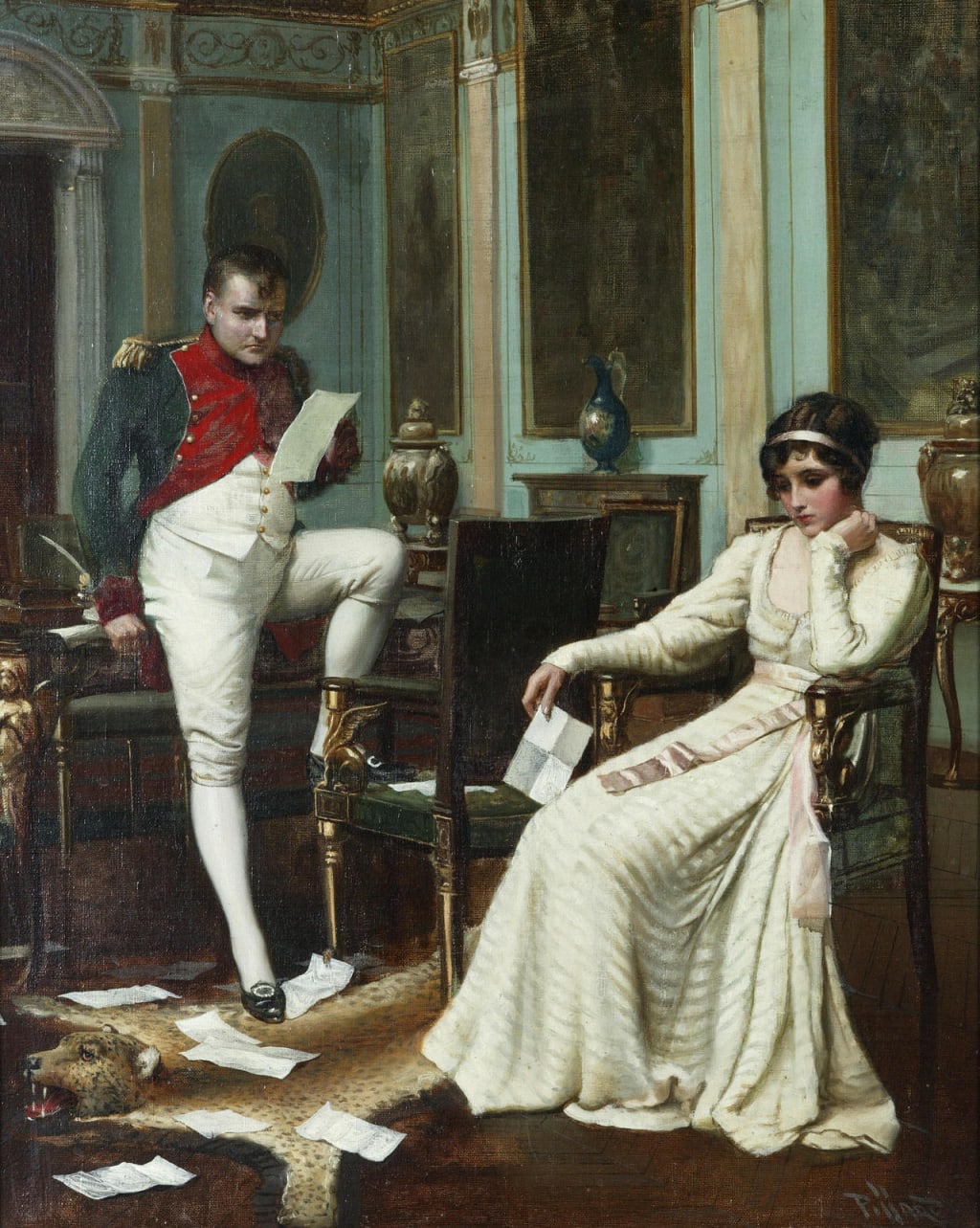
Cotton as a luxury fashion item has played an important role in the politics of haute couture, often creating tensions in society, and introducing provocative trends that challenged contemporary culture. In the late 19th century, European elites imported vast amounts of Dhaka muslin cotton from what is now modern-day Bangladesh. The same cotton that ancient Bengali kings commissioned through royal decrees began to make its way into the fashion houses of France, Italy, and Britain. These Europeans really never got over the whole Dhaka muslin thing, and just couldn’t get enough of it. After centuries of buying it from Bengali merchants, they went full vulture capitalists and began to bankrupt the original craftsmen with predatory loans and unrealistic advanced purchase orders. Marie Antoinette, Joséphine Bonaparte, and countless elite European women wore the almost transparent fabric in public. Europe both laughed and wondered at semi-nude women walking the streets of Paris and Versailles. The British and French drove the merchants out of business, created cheap local knockoffs, and wiped the tradition off the face of humanity. The muslin, which boasted a thread count of up to 1200, has remained unmatched. Most modern thread counts in cotton cannot achieve that sort of craftsmanship. British colonialists wiped out the merchants that had produced the textile for thousands of years. Demanding more luxury goods and lowering the quality of the original design to sell more of the fabric to elite Europeans wiped out the weavers by forcing them into financial ruin. Not even Versace or Valentino can recreate a cotton thread count that Bengali men and women mastered hundreds of years before Brutus and Cassius shanked Julius Caesar on the Roman Senate floor.
Cotton has been a domineering force in women’s history. It has provided avenues for designers to create risqué styles, like those seen in the earlier Dhaka muslin fashion craze, to challenge men’s perceptions of the feminine body and its traditions. Designers have used the fabric as a flexible and modern channel for transforming commonly accepted beliefs. Designers such as Coco Chanel (whose troubling Nazi past should never go unmentioned), Paul Poiret, and others took on turn of the century styles to recreate women’s fashion.
In the 20th century, French designer Paul Poiret revolutionized clothing by adopting kaftans, an eastern design made of cotton and traditionally worn by sultans, and introducing them to the Western market. Despite the obvious cultural appropriation, Poiret’s contribution to 1920s flapper-style is unrivaled, and his masculine-inspired women’s dresses, which included sleek androgynous designs that came to define the flapper woman of the roaring twenties were mostly made of cotton fabrics with Art Deco patterns. The flapper, much like the Dhaka muslin of the 19th century, challenged the traditional image of the female body by adopting a boyish physique referred to as la garçonne. Poiret also introduced cotton headscarves to the modern woman, liberating her from the conservative image of long-haired hyper-feminine antiquity.
Modern fashion has adopted cotton as a staple of the twenty-first century. In 2021, designers focused on collections that used breathable, comfortable, and flexible athleisure wear as a response to the growth in American-inspired sports fabrics. Challenged by the COVID-19 pandemic and the work from home phenomenon that took over everyone’s life during the past two years, designers approached the concept of athleisure with higher priced consumers in mind. Max Mara, Givenchy, Tibi, and Eckhaus Latta introduced collections inspired by the sweatsuit, an upgraded sweatshirt and sweatpants combination that tailors the fabric to the body the same way a sophisticated garment would fit in an office setting. JW Anderson currently sells cotton sweatsuits, with loose tops and flared bottoms, for almost six hundred dollars, elevating the status symbol of stay-at-home clothing. Rodarte redefines the American “ugly sweater” as a seven-hundred-dollar cotton sweatshirt with elaborate stitches and red, blue, and gold patterns reminiscent of warm, family gatherings in late December New York.
Sculptural sweatshirts utilize cotton to create large, structured designs while other fashion houses have introduced combinations of cotton sportswear with classic figures. Alexander McQueen’s 2021 neo-corset puff-sleeve cotton sweatshirts adapt the feminine curves of the female silhouette to the larger, more overpowering dimensions of the sweatshirt, a combination that plays on the classic restrictive gear and creates an item that was once uncomfortable and frees it from its constraints by introducing its elegance to twenty-first century attire. Goodbye suits! Hello cotton sweatpants at big corporate meetings!
Layering offers an opportunity to utilize cotton in luxury fashion with intricate, comfortable pieces. Jason Wu layers cotton shirts and sweats on top of each other. A grey and blue top, layered on top of each other and stitched together in one full piece, currently sells for $325 at Bergdorf Goodman. That fashion houses now produce luxury items once reserved to companies like Nike and Under Armour is an indication that modern clothing is once again revolutionized by a simple and ancient fabric such as cotton. It’s influence, even thousands of years later, continues to evolve, to provide new breath into human use of clothing.
The creation of clothing, however, has also brought about environmental challenges that prove difficult to curtail. Denim, originally created in the twelve-century in Italy and France, became a popular staple in the twentieth century. But its environmental impact is grotesque, and its production causes immense harm to the environment. Globally, two billion pairs of jeans are made every year. Manufacturing utilizes two million tons of chemicals and trillions of liters of water. The industry consumes about 1.4 million tons of raw cotton. Rivers in manufacturing countries have turned blue from the dyes used in the fabric, and factory workers have had their lungs infected with toxic chemicals because of the cotton-derived fabric’s mass production.
Designer brands have turned to new sustainable alternatives to traditional denim manufacturing. An Italian mill named Candiani, which supplies denim to the most prestigious fashion labels in the world, uses various techniques to control the effect that denim production has on the environment. It uses natural indigo dyes rather than synthetic inks and advertises itself as the greenest textile mill in the world. The mill is one of many that uses Kikotex, an alternative dye made from used shrimp shells from the leftover food industry. Kikotex uses 30% less energy, 50% less water, and a whopping 70% fewer chemicals than conventional industries.
Major designers have adopted sustainable fashion to their use of fabrics, dyes, and manufacturing. In March 2021, Ralph Lauren Corp. announced the creation of Color on Demand, a technology-based system that will allow the company to recycle its water used in cotton dying for clothing. The company expects 40% less water and 80% less energy in its manufacturing line.
Other high-end designers have embraced their culture to create new cotton-based fashion. Peruvian designer Chiara Macchiavello, founder of Escvdo, uses local artisan weaving reminiscent of the ancient cotton used by indigenous civilizations. Escvdo manufactures expensive, sought after European dresses. The company directly invests in the local economy of Peruvian communities in the Andes and promotes the history and craftsmanship of Native-Americans. Macchiavello, who studied theatre design in London, advertises the thousands year old textile traditions on the company’s website.
Chinese fashion brands have found ways to also weave their traditional use of cotton into contemporary fabrics aimed at wealthy Chinese women in search of higher quality clothing not found in Western labels. Emphasizing ancient Chinese traditions, designers shape a women’s body and bring to life the classical Chinese garment known as the du dou (also known as the pearl underwear). Chinese designers find inspiration in Ancient China’s historical use of the garment, where hidden lovers and East-Asian royalty would find comfort in cotton and silk undergarments. Versace and Miu Miu have embraced the du dou in high end designs for over twenty years.
Chinese socialites and celebrities have embraced the design of the du dou to express their sexuality in classical Chinese fashion, rather than relying on the European designs that have represented most women’s underwear for the past century. Yang Yuhuan, the inventor of the ancient bra, was the secondary-wife and lover of a Tang Dynasty Emperor. The cotton or silk undergarment’s history is rooted in secret, mysterious sexuality. Popular Chinese films The Palace and Let The Bullets Fly prominently featured the du dou. Let the Bullets Fly won the Best Costume Design at the 5th Annual Asian Film Awards.
Chinese designers advertise the du dou as a response to Western brands such as Victoria’s Secret. The promotion of local and regional designs over historical colonial powers comes off as a natural progression of global politico-economic changes. Unlike the more revealing designs of Western underwear, the du dou covers the women’s breasts, and suits more slender figures found in East Asia. This return to traditional non-Western uses of cotton is like Macchiavello’s high fashion Peruvian designs: the local, the ethnic authenticity is used and brought to domestic and international markets, as opposed to the historical fashion hegemony of Europe and The United States.
Cotton is the most important textile in the fashion industry. It was an early tool used to expand civilizations in Peru and India. It also played a role in the rapid expansion of colonialist powers, encouraging them to enslave other human beings and destroy entire textile weaving traditions to suit their expensive fashion trends. The fabric has also played important roles in the perception of the female body, allowing designers to create patterns and structures that challenged traditional and misogynistic beliefs that constrained women. During the past twenty years, cotton has played another significant role in sustainability, cultural promotion, and the social and economic expansion of developing nations.
About the Creator
Diego Arias
Colombian-American, lawyer, writer. Lived in NJ most of my life, then moved to The Dominican Republic for two years, then China for two years. I speak Chinese, Spanish, English, and Italian. Currently living in Costa Rica.
Keep reading
More stories from Diego Arias and writers in FYI and other communities.
Charlatocracy: Welcome to the Rise of Anti-intellectualism, Anti-Democracy, and Pixiedust Economics
Tesla has been producing electric cars since 2003. When Martin Eberhard and Mark Tarpenning founded the company, they had spent several years working on electrical vehicle science and hoped to one day change the world and create affordable electrical vehicles. When Tesla first registered in California, Elon Musk was not attached to the company, and instead was toying around with the idea of building spaceships to send humans into outer space, most specifically the oxygen deprived, highly radiated rock planet of Mars. Eberhard, Tarpenning, and Musk met at a Mars exploration club in the early aughts. Musk had no experience in advanced mechanical engineering. Most of his income and experience came from software programming, which was essentially the code writing that helped him hit it big with one of his initial projects—Paypal, the online payment system. When developing what would go on to become SpaceX, Musk’s first adventure in the aeronautics industry was a failed attempt at buying cheap Russian rockets to bring back to America (quite possibly an illegal operation based on U.S. government restrictions on foreign nationals buying and importing Russian space technology). Now, about two decades later, Musk can topple entire currencies with several taps on his smart phone.
By Diego Arias4 years ago in Futurism




Comments
There are no comments for this story
Be the first to respond and start the conversation.