
China becoming a Space Power
It’s Plans to Dominate space exploration
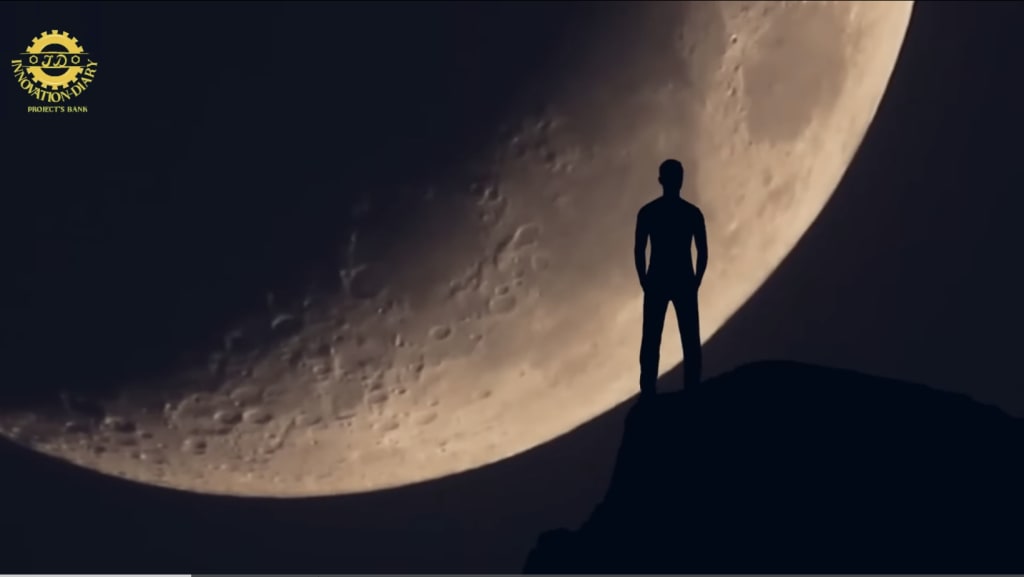
Have you ever wondered why humans haven’t colonized the moon yet? The answer lies in the fact that until recently, water had not been found on the moon. This led to speculation and controversies surrounding the authenticity of NASA’s moon landing in 1969. However, recent discoveries by China have changed the game. They have found 270 billion tons of water on the moon, which could potentially revolutionize the concept of lunar colonization. In this episode, we will explore China’s innovative endeavors, their projects, and their growing influence in different parts of the world, particularly their advancements towards colonizing the moon. Welcome to another exciting episode of Innovation Diary, where we delve into China’s development and increasing power. If you’re new to our channel and fascinated by fast-paced modernity, you’ll find our videos intriguing. Let’s dive in and learn more about China’s groundbreaking discoveries on the moon.China has been investing heavily in its space program for the past decade, spending billions of dollars to excel in space exploration and make groundbreaking discoveries. They have already built their own International Space Station and numerous private companies in China are working on inventing new technologies, including rockets, new types of fuel, and high-speed internet. China has set its sights on sending astronauts to the Moon by 2030, not just for landing purposes but for the ambitious goal of lunar colonization.
China’s space exploration achievements reached a significant milestone when their Chang’e 5 mission successfully collected lunar samples from the moon’s Oceanus Procellarum, also known as the Ocean of Storms. This robotic mission landed near Mount Rümker and retrieved lunar samples that were transported back to Earth. Analysis of these samples revealed the presence of water, solving one of the moon’s long-standing mysteries.
The prevailing theory about the moon’s formation suggests that it was created around 4 billion years ago when a planet-sized object collided with Earth, causing a fragment to break off. This impact was believed to have evaporated all water on the moon, leaving it completely dry. However, recent missions and observations have confirmed the existence of water, primarily in the form of ice concentrated near the lunar poles, which were unexplored by previous missions.
China’s Chang’e 5 mission shed light on the origin of lunar water by discovering impact glass beads containing small amounts of water. These glass beads are formed during meteorite impacts and have been producing water over the past two billion years. It is estimated that the moon may hold a massive 270 billion tons of water in the form of these impact glass beads, presenting a larger water resource than previously anticipated.
The discovery of water on the moon is significant because it opens up possibilities for sustaining life and fuel production. Water can be used as a raw material for producing rocket fuel, supporting future missions to Mars. Additionally, water is essential for agriculture, which is crucial for long-term habitation on the moon. China’s knowledge of these water reserves puts them in a favorable position to not only land on the moon by 2030 but also establish lunar bases and explore further.
It’s important to note that the exploration outcomes of different countries vary due to their landing locations and research focuses. China’s targeted areas with potential water resources have contributed to their significant discoveries. This raises questions about why other countries, such as the United States and NASA, did not make similar findings. However, it is worth emphasizing that the achievements of one nation do not invalidate the accomplishments of others.
In conclusion, China’s discovery of water on the moon is a remarkable achievement with implications for future space exploration and lunar colonization. Water resources are crucial for sustaining life and enabling long-term habitation beyond Earth. With their advancements, China is well-positioned to pursue their ambitious goals and further expand their influence in the realm of outer space.
About the Creator
Kenny Browne
I am Kenny I have and affection for writing I‘m keen to be obsessive with a good story I write freely and let things flow without restriction so I can embellished my craft at writing to produce extraordinary stories now
Keep reading
More stories from Kenny Browne and writers in FYI and other communities.
Why the SaaS Business Model Is Under Pressure in 2026?
In the 2010s, SaaS felt inevitable. Founders pitched recurring revenue. Investors rewarded annual recurring revenue multiples. Customers preferred subscription access over upfront licensing. Cloud infrastructure made deployment frictionless. The model seemed superior to everything that came before it.
By Nick William3 days ago in FYI




Comments
There are no comments for this story
Be the first to respond and start the conversation.