
Capture India Like Never Before With Essential DSLR Photography Techniques
Capture India like never before using a DSLR camera with essential techniques that bring every moment to life.

Snapping great pictures is not just holding a DSLR in hand and hitting the capture button; it's more than that. You need to understand a mix of different things. The first one is the availability of lights, then the subject being snapped, the surroundings, the pose, and whatnot. All these aspects, when taken care of, transform a scene into a masterpiece.
With the following DSLR camera techniques mentioned in the blog, your next India tour will get unforgettable memories on paper-
Travel like a Boy Scout
Boy Scouts is an American term that truly fits for travel photography. Boy Scouts include various sayings like “be prepared”, scouts should be trustworthy, clean and reverent and more. Therefore, when you are travelling across India, you have to be prepared to capture incredible moments.
All the professional equipment in the world won’t get perfect pictures of the dawn from the peak if you run out of memory cards and batteries. You must pack some extra for your best Canon camera to keep it going. Also, keep your camera fully charged before exiting your hotel.
Steady shots in low light
Need to shoot a long exposure scene without a cable extension? That’s no reason for getting away from clicking amazing pics. Set your Canon camera on a tripod and use its timer to trigger the shutter release; no shaking, just steady shots in low light even.
The camera includes a 2-second timer option, allowing you to avoid waiting like the usual 10-second delay meant for chaotic family photos. The digital cameras from Canon come with fully customisable timers, so you can control your photo’s clarity.
'Correct' exposure isn't always the best
The mood of an image can change dramatically, so you have to be prepared for this.
On the flip side of popular belief, the in-built exposure metre of your camera should not be the ultimate deciding factor for an image’s best exposure. Some sunny days can appear more vibrant when underexposed by 1½ to 2 stops, particularly with filters or polarisers. Conversely, certain scenes may look more vivid with slight overexposure. Can’t understand and work on an ideal exposure?
Use “bracketing” to take a few snaps of the same scene in slightly different exposures, match the outcomes, and take which exposure is good for you. A digital SLR camera comes with easy-access exposure compensation settings to make 'bracketing' easy.
The eyes have it
You may not realise it, but when you see a photo of a person or any subject with a face—whether it's a human, an animal, or even a statue—the first thing you'll often notice is the eyes. If the eyes are sharp and in focus, the rest of the photo feels more comfortable and appears acceptably sharp, even if other areas are soft. Therefore, it’s essential that your subject's eyes are clear and crisp.
Capture India in the most captivating with a digital SLR camera “Canon camera”. If you know the techniques of insane image capturing, no one can stop you from creating unforgettable memories. Having an advanced camera is not just enough; understanding the features and using them perfectly is also crucial. It’s time to learn all those techniques and implement them on your next trip.
About the Creator
Keep reading
More stories from Preeti Aggarwal and writers in FYI and other communities.
How Infrastructure Developments Are Reshaping Office Rental in Kolkata
For years, Kolkata’s office market revolved around a few prime locations, but that’s changing fast. With major infrastructure upgrades, businesses are no longer limiting themselves to traditional commercial hubs. Nearly 5 million sq ft of new office space is expected to be added in the next two years. According to real estate consultancy Cushman & Wakefield, gross leasing volume is projected to reach 2 million sq ft this year, with net leasing volume expected to hit 1.7 million sq ft.
By Preeti Aggarwal10 months ago in FYI
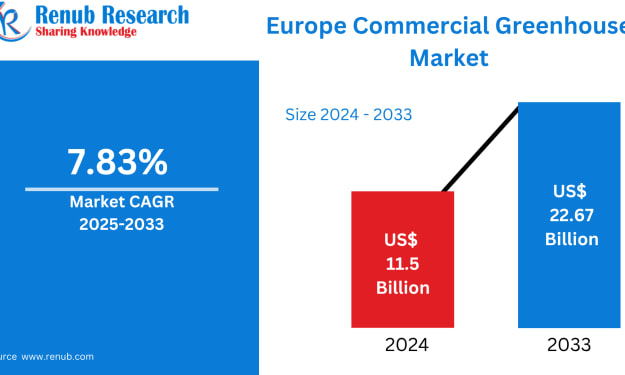
Europe Commercial Greenhouse Market Size and Forecast 2025–2033
The Europe Commercial Greenhouse Market is set for dynamic expansion over the coming decade, reflecting the region’s accelerating transition toward sustainable, technology-driven agriculture. According to Renub Research, the market is projected to reach US$ 22.67 billion by 2033, rising from US$ 11.5 billion in 2024, at a robust CAGR of 7.83% during 2025–2033. This growth is being driven by increasing demand for year-round crop production, the rapid adoption of Controlled Environment Agriculture (CEA), and a strong policy push toward climate-resilient and resource-efficient farming.
By Renub Research6 days ago in FYI



Comments
There are no comments for this story
Be the first to respond and start the conversation.