
Cannabis Chronicles
Cannabis Chronicles: From Counterculture to Corporate Colossus Greed!

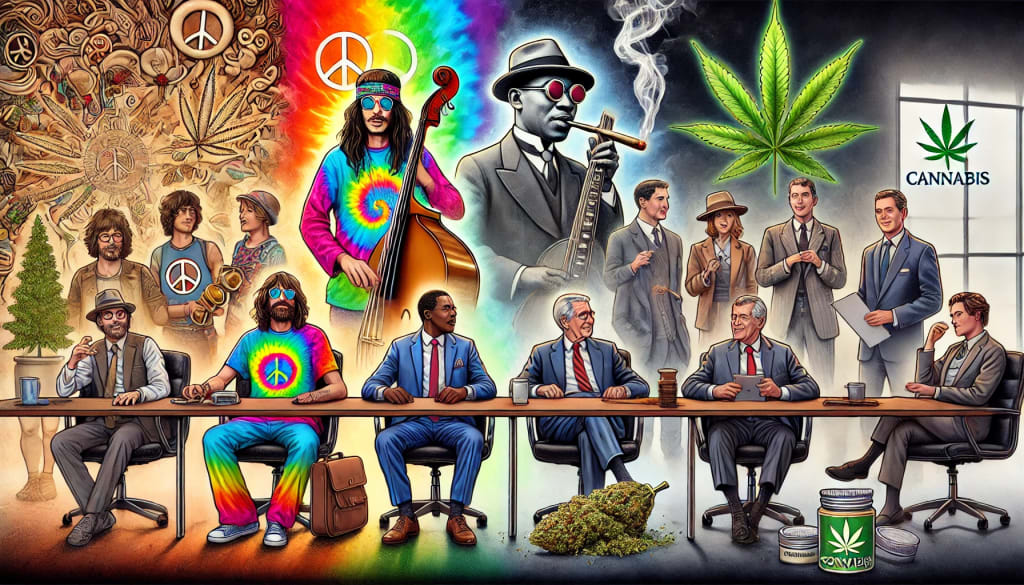
Cannabis Chronicles: From Counterculture to Corporate Colossus Greed!
Introduction
Right, let us kick this off with a bang. Cannabis – weed, Ganja, Mary Jane, call it what you will – has been on one hell of a rollercoaster. From the smoky haze of rebellious youth in the '60s to the sterile boardrooms of today's multi-billion-dollar industry, the journey of cannabis is as twisted as the mind of someone who has just had a bit too much of the green stuff. So, buckle up and join me on this wild ride through the evolution of cannabis – from counterculture icon to corporate behemoth.
Ancient Beginnings: Cannabis in Antiquity
Cannabis has been around longer than your granddad's dodgy hip flask. The ancient Chinese, for instance, were ahead of the game. They were using cannabis for everything from making textiles to, believe it or not, early forms of paper. Talk about a plant of many talents! Meanwhile, the folks in India were mixing it into their spiritual practices, claiming it was a gift from the gods. Maybe that’s why Lord Shiva is often depicted with a cheeky grin and a chillum.
Early Agricultural Uses: Textiles and Medicine
In ancient China, cannabis was pretty much the Swiss Army knife of plants. Its fibres were turned into sturdy textiles and ropes, essential for the daily grind of early agricultural societies. Over in India, cannabis was more than just a utility plant; it was a miracle medicine. Ancient texts like the Atharvaveda waxed lyrical about its healing properties, touting it as a cure for insomnia, pain, and other ailments.
Spiritual and Religious Significance
Cannabis did not just stop at practical uses; it went spiritual. In Hindu traditions, it is associated with Lord Shiva, who is often shown puffing away. During festivals like Holi, bhang – an edible concoction of cannabis – is consumed with gusto. It is not just about getting high; it is about connecting with the divine. Over in Persia, cannabis was used in religious rites to bring about spiritual visions. Imagine the church bake sales if they had followed that trend!
The Spread Through Trade
The Silk Road was not just for silks, you know. This ancient trade route was the superhighway for cannabis distribution. Traders carried it across continents, from Central Asia to Europe and Africa. By the time European colonizers hit the Americas, cannabis had become a staple crop. They were planting it for practical uses like rope and sails. Who knew the Age of Exploration was also the age of horticultural experimentation?
Jazz Era: Cannabis in the Roaring Twenties
Fast forward to the early 20th century, and cannabis found itself in the smoky backrooms of jazz clubs. The Jazz Era, also known as the Roaring Twenties, was a time of cultural dynamism, with cannabis playing a notable role. Jazz musicians like Louis Armstrong and Duke Ellington often indulged in "reefer," which was seen as a muse for creativity and relaxation.
Cannabis and the Birth of Jazz Culture
The jazz scene was a melting pot of cultures and influences, and cannabis was right in the mix. Musicians believed it enhanced their creativity, helped them relax, and allowed them to connect more deeply with their music. The smoky, dimly lit clubs of New Orleans, Chicago, and Harlem were hotspots for jazz and cannabis culture.
Political Backlash and Reefer Madness
However, not everyone was swinging to the sweet sounds of jazz and reefer. The 1930s saw the rise of a political and social backlash against cannabis, fuelled by racial and xenophobic fears. Harry Anslinger, the first commissioner of the Federal Bureau of Narcotics, spearheaded the anti-cannabis crusade. His campaign, filled with sensationalist propaganda like the infamous film "Reefer Madness," painted cannabis as a dangerous substance that led to crime and moral decay. This was less about the plant itself and more about targeting minority communities associated with its use, such as African American jazz musicians and Mexican immigrants.
The Counterculture Movement: Cannabis Takes Centre Stage
Now, fast forward to the 20th century, where things really get interesting. The 1960s and '70s were all about peace, love, and a whole lot of cannabis. The counterculture movement, led by hippies, embraced cannabis as a symbol of rebellion. It was not just about getting high; it was about sticking it to The Man and exploring new ways of thinking and living. Music, art, and literature of the time were steeped in cannabis culture.
The Birth of the Counterculture
The 1960s saw a seismic shift in societal norms. Young people were rejecting the rigid structures of their parents’ generation and embracing a new, freer way of life. At the heart of this movement was cannabis. It was more than a drug; it was a symbol of defiance and liberation. Woodstock was not just a music festival; it was a massive smoke-out that became emblematic of the era’s ethos.
Cannabis Fuels Creative Expression
The influence of cannabis on the creative minds of the ‘60s and ‘70s is legendary. Musicians like Bob Dylan and The Beatles were not just smoking it; they were writing songs about it. Psychedelic art, with its vibrant, mind-bending visuals, flourished. Artists like Peter Max and Wes Wilson created iconic works that remain synonymous with the era. And let us not forget the beat poets like Jack Kerouac and Allen Ginsberg, whose literary works often reflected their cannabis-induced epiphanies.
The War on Drugs: Backlash Begins
But not everyone was groovy with the green. The 1980s and early ‘nineties were dominated by the War on Drugs, led by the likes of Nancy Reagan and her infamous "Just Say No" campaign. This era saw harsh penalties for cannabis possession, disproportionately affecting minority communities. Despite this, the underground cannabis culture thrived, with activists continuing to push for legalization and researchers starting to uncover its medicinal potential.
Medical Marijuana: Changing Perceptions
The 1990s marked a significant turning point. The medical marijuana movement gained traction, especially after California’s Proposition 215 in 1996. This allowed patients with severe illnesses to access cannabis legally. Suddenly, the narrative shifted from "stoners" to patients seeking relief. Cannabis was no longer just for recreational use; it was a legitimate medicine.
The Rise of Medical Cannabis
The medical marijuana movement was bolstered by compelling personal stories. AIDS patients in San Francisco found that cannabis helped with appetite stimulation. Cancer patients undergoing chemotherapy used it to combat nausea. These narratives helped change public perception, showing cannabis as a compassionate, effective treatment for various ailments.
Legal Milestones
Proposition 215 was just the beginning. Other states soon followed California’s lead, creating a patchwork of medical cannabis laws across the United States. By the early 2000s, states like Colorado, Oregon, and Washington had established their own medical cannabis programs. Each new law brought cannabis further into the mainstream, slowly but surely shifting the public’s perception.
Advocacy and Research
Groups like NORML (National Organization for the Reform of Marijuana Laws) and the Marijuana Policy Project (MPP) played crucial roles in advancing the medical cannabis movement. They lobbied for legislative changes, educated the public, and supported scientific research. Studies from institutions like the NIH began to provide evidence of cannabis’s therapeutic potential, giving the movement the credibility it needed to push forward.
The Green Rush: Cannabis Goes Corporate
Enter the 21st century, and cannabis is no longer just a countercultural symbol; it is big business. States like Colorado and Washington made headlines in 2012 by legalizing recreational cannabis. This was not just about letting people smoke weed; it was about tapping into a lucrative market. The "green rush" was on, and everyone wanted a piece of the pie.
Legalization and Regulation
Colorado and Washington’s move to legalize recreational cannabis set the stage for other states to follow. These pioneers implemented regulatory frameworks to control the production, distribution, and sale of cannabis. Their success showed that legalization could be managed responsibly, paving the way for broader acceptance and normalization of cannabis use.
The Booming Cannabis Industry
The legalization wave unleashed a flood of entrepreneurs and investors into the cannabis market. Dispensaries popped up like mushrooms after a rainstorm, offering a wide range of products from flowers to edibles to topicals. The industry attracted professionals from diverse backgrounds, all eager to cash in on the green gold. This influx of talent and capital spurred innovation and growth, transforming cannabis into a booming industry.
Challenges and Opportunities
Of course, it has not all been smooth sailing. The cannabis industry faces significant challenges, from navigating complex regulations to competing with the black market. Banking restrictions pose a particular headache, with many businesses forced to operate on a cash basis. But despite these obstacles, the potential rewards are huge. The industry is expected to generate billions in revenue, create jobs, and contribute to tax coffers, making it a vital part of the economy’s future.
Challenges and Controversies: The Corporate Conundrum
The journey from counterculture to corporate has not been without its hiccups. The cannabis industry is now a battleground of regulation, competition, and ethical dilemmas. How do you stay true to the rebellious roots of cannabis while navigating the cutthroat world of big business?
Regulatory and Legal Hurdles
Despite legalization at the state level, cannabis remains illegal federally in the United States. This legal limbo creates a host of issues, particularly in banking and taxation. Cannabis businesses often struggle to find financial institutions willing to handle their money, leading to security risks and financial management nightmares. The IRS is not much friendlier, imposing heavy tax burdens due to the federal prohibition.
Corporate vs. Counterculture
As cannabis companies grow, they must balance corporate practices with their countercultural origins. High Times magazine is a prime example of this tension. Known for its advocacy and celebration of cannabis culture, High Times now finds itself navigating corporate waters. The challenge is to stay true to its roots while expanding its brand in a rapidly commercializing industry. This balancing act is a microcosm of the broader dynamics at play in the cannabis market.
Cannabis in Australia: Down Under Dynamics
Australia, being the sunburnt country that it is, has its own unique journey with cannabis. From harsh penalties to recent shifts towards legalization, the green wave has certainly made its way Down Under. Let us dive into the kangaroo pouch and explore how Australia is navigating the highs and lows of cannabis regulation.
Early Prohibition and Cultural Stigma
Much like the rest of the world, Australia initially took a hardline approach to cannabis. The plant was criminalized in the early 20th century, aligning with global trends driven by international treaties and domestic politics. The cultural stigma around cannabis use was reinforced by media portrayals and government campaigns, painting it as a dangerous drug leading to moral decay and social instability.
Medical Marijuana Movement
Australia’s journey towards cannabis acceptance took a significant turn in the 21st century. In 2016, the Australian government legalized medicinal cannabis, allowing patients with certain medical conditions to access the plant under strict regulations. This shift was driven by growing evidence of cannabis’s therapeutic benefits and public advocacy by patients and their families.
Legal Milestones in Medical Cannabis
The legalization of medical cannabis in Australia was a landmark moment. The Narcotic Drugs Amendment Act 2016 established a framework for the cultivation, production, and manufacture of medicinal cannabis products. States and territories developed their own regulations to align with this federal framework, creating a pathway for patients to access medical cannabis through authorized prescribers.
Recreational Use and Decriminalization
While medical cannabis has gained acceptance, recreational use remains a contentious issue. However, there have been moves towards decriminalization in certain parts of Australia. The Australian Capital Territory (ACT) made headlines in 2020 by legalizing the possession and cultivation of small amounts of cannabis for personal use. This bold move set a precedent and sparked a national conversation about broader cannabis reform.
Public Opinion and Advocacy
Public opinion in Australia has been gradually shifting towards a more progressive stance on cannabis. Surveys indicate increasing support for the legalization of recreational cannabis, particularly among younger generations. Advocacy groups like the Australian Greens and the Australian Cannabis Industry Association (ACIA) have been vocal in their push for reform, emphasizing the potential benefits of a regulated cannabis market.
The Current Landscape: Cannabis Law in Australia
Navigating the legal landscape of cannabis in Australia is akin to wrangling a herd of wild kangaroos – complex, unpredictable, and not without the occasional kick to the shins. Let us break down the current state of play across the nation’s states and territories.
Federal Framework
At the federal level, the Narcotic Drugs Amendment Act 2016 remains the cornerstone of Australia’s medical cannabis regime. The Therapeutic Goods Administration (TGA) oversees the approval and regulation of medicinal cannabis products, ensuring they meet safety and efficacy standards. Patients require a prescription from an authorized medical practitioner to access these products.
State and Territory Regulations
Each state and territory in Australia has its own set of regulations governing the use of cannabis. Here is a snapshot of the situation across the country:
• New South Wales (NSW): NSW has a compassionate access scheme for patients with terminal illnesses. The state also allows the use of medicinal cannabis through the Special Access Scheme (SAS) and Authorised Prescriber Scheme (APS).
• Victoria: Victoria was the first state to legalize medicinal cannabis in 2016. The state has established a robust regulatory framework for the cultivation, manufacture, and distribution of medicinal cannabis.
• Queensland: Queensland allows the use of medicinal cannabis under the Public Health (Medicinal Cannabis) Act 2016. Patients can access cannabis products through the SAS and APS.
• South Australia: South Australia permits the use of medicinal cannabis through the SAS and APS. The state also has a decriminalization policy for the possession of small amounts of cannabis for personal use.
• Western Australia: Western Australia follows the federal guidelines for medicinal cannabis, allowing access through the SAS and APS.
• Tasmania: Tasmania has a Controlled Access Scheme (CAS) for medicinal cannabis, providing access to patients with severe and treatment-resistant conditions.
• Northern Territory: The Northern Territory aligns with federal regulations, allowing access to medicinal cannabis through the SAS and APS.
• Australian Capital Territory (ACT): The ACT stands out for its progressive stance on cannabis. In addition to allowing medicinal cannabis, the territory has legalized the possession and cultivation of small amounts of cannabis for personal use.
Challenges and Opportunities
Despite the progress, Australia’s cannabis industry faces several challenges. Regulatory complexity, limited access for patients, and high costs are significant barriers. However, the opportunities are vast. The industry has the potential to generate substantial economic benefits, including job creation, tax revenue, and advancements in medical research.
The Future of Cannabis in Australia
Looking ahead, the future of cannabis in Australia is as bright as the Southern Cross on a clear night. The potential for further reform and expansion is immense, driven by shifting public attitudes, advocacy efforts, and global trends towards legalization.
Pathways to Legalization
The pathway to full legalization of recreational cannabis in Australia will likely be gradual and incremental. Building on the ACT’s example, other states and territories may explore similar decriminalization measures. Public education and advocacy will play crucial roles in this process, helping to dispel myths and promote a more informed and balanced view of cannabis.
Economic and Social Impact
The economic potential of a legal cannabis market in Australia is enormous. Estimates suggest that legalization could generate billions in revenue and create tens of thousands of jobs. Additionally, a regulated market could address issues of social justice, providing opportunities for communities disproportionately affected by prohibition.
Innovation and Research
Australia is well-positioned to be a leader in cannabis research and innovation. With its strong healthcare system and robust regulatory framework, the country can support cutting-edge research into the therapeutic benefits of cannabis. This research could lead to new medical treatments and products, further boosting the industry’s growth and credibility.
Conclusion: A Journey Worth Watching
The story of cannabis is far from over. From its ancient beginnings to its modern-day corporate stature, cannabis has proven to be a resilient and adaptable plant. Its evolution mirrors broader societal changes and continues to influence and be influenced by cultural, legal, and economic forces. As we move forward, it is essential to keep advocating for fair policies, combating stigma, and ensuring that the benefits of cannabis are shared equitably. So, light up (responsibly), keep an eye on the horizon, and get ready for the next chapter in the Cannabis Chronicles.
In Australia, the journey is just beginning. With a combination of regulatory reforms, public advocacy, and a bit of good old-fashioned Aussie ingenuity, the future of cannabis Down Under looks incredibly promising. Whether you are a patient seeking relief, an entrepreneur looking to break into the market, or just a curious observer, there is no denying that the cannabis chronicles are a saga worth following. So, sit back, relax, and watch as this green revolution unfolds – it is going to be a wild ride!
About the Creator
Mr BatShit
Mr. BatShit is the whimsical wizard of wellness, turning complex psychological concepts into engaging, humorous, and unforgettable content. Mr Batshit makes even the toughest mental health topics fun and relatable.
Keep reading
More stories from Mr BatShit and writers in FYI and other communities.
The Cannabis Conundrum
Introduction: The Green Debate Cannabis—oh, what a tangled green web we weave when first we practice to toke. Whether you are sparking up for the first time or just navigating the dense fog of public opinion, it is clear that this little green plant has sparked more debates than your aunt at Christmas dinner after a few too many sherries.
By Mr BatShitabout a year ago in FYI



Comments (1)
Amazing piece