
Burnout in a Civilian Job:
Why Veterans Face a Tougher Emotional Battle Than Combat


By R. T. Garner
For similar articles join us here Your True Direction
I Served 14 Years in the Army – And Civilian Burnout Feels Worse
I spent 14 years in the Army, starting as an enliated soldier heading to West Point and ending as a senior captain. I led troops in high-stakes situations, made split-second decisions under pressure, and carried the weight of responsibility. Combat was tough – mentally, physically, and emotionally. PTSD came with the territory.
But I’ll be honest. None of that prepared me for the burnout, frustration, and emotional toll of working a civilian job.
This isn’t about missing the military lifestyle or struggling to adapt. This is about walking into an environment that claims to value leadership but actively punishes anyone who actually shows it. It’s about a workplace culture that smothers initiative, drowns in bureaucracy, and rewards stagnation over progress.
I’ve been called out for being too proactive. Too independent. Too focused on fixing problems instead of waiting for permission. In the Army, that made me a leader. In the civilian world? It makes me a liability. And I know I’m not the only veteran who feels this way.
The Military Leadership Mindset vs. Civilian Work Culture
In the Army, Leadership is Expected. In the Civilian World, It’s Feared.
In the military, leadership isn’t a title – it’s an expectation. From enlisted soldiers to officers, you’re trained to think critically, take ownership, and act decisively.
You don’t sit around waiting for orders when there’s a problem. You assess, adapt, and execute within the framework of the mission.
In the Civilian World, Leadership is a Buzzword – Not a Practice.
• Instead of being empowered to solve problems, employees are forced into an endless cycle of approvals and check-ins.
• Instead of taking action, people wait weeks for someone higher up to make a decision – even when that person has no understanding of the situation.
• Instead of accountability, you get finger-pointing and blame avoidance.
I’ve been in meetings where nothing gets done because everyone is too scared to make a call. Ideas die before they’re even attempted – not because they won’t work, but because no one wants to take responsibility.
The Key Difference?
• Military leadership is about owning problems and fixing them.
• Civilian leadership is about avoiding blame and maintaining the status quo.

Micromanagement: The Death of Initiative
One of the biggest shocks I faced was realizing how deeply embedded micromanagement is in civilian jobs.
In the Army, we had commander’s intent – leaders gave you the mission, objectives, and boundaries, but how you accomplished it was on you.
The Civilian World is the Opposite.
• You’re assigned a task, but instead of being trusted to execute it, you’re buried under layers of unnecessary oversight.
• Instead of being efficient, you’re forced into endless meetings and pointless check-ins.
• Instead of getting things done, you waste time waiting for approval from someone who doesn’t even understand the task.
My Personal Experience with Civilian Micromanagement:
• I streamlined a process that directly improved performance metrics. Instead of a “good job,” I got reprimanded for not seeking approval first – even though the improvement was within my job description.
• I identified an obvious inefficiency and proposed a simple fix. Leadership spent weeks “discussing” it – by the time they decided, the problem had already caused unnecessary delays.
• I got a “talking to” for working ahead on tasks that were inevitably coming my way. Apparently, in the civilian world, it’s better to wait for orders than to anticipate and act.
Micromanagement isn’t about quality control – it’s about control.
And control at the expense of efficiency is a recipe for burnout.
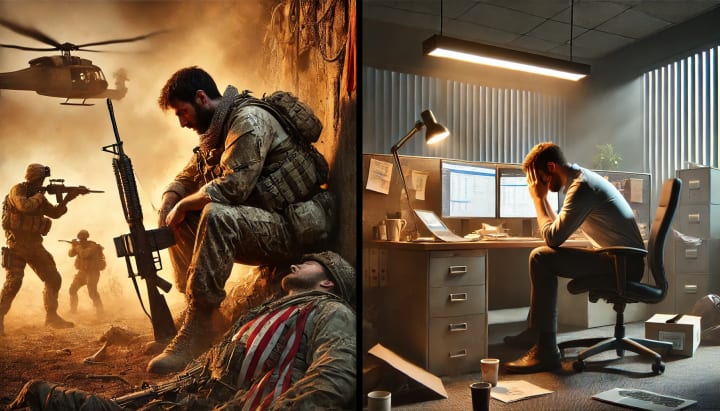
The Emotional Toll of Civilian Burnout
I’ve been through combat. I’ve experienced the physical exhaustion of pushing my body beyond its limits. I’ve endured the mental strain of leading troops in high-pressure situations.
But the exhaustion I feel in the civilian world? It’s different.
• Military burnout is physical. You push through it because there’s purpose – the mission matters.
• Civilian burnout is psychological. It’s a slow, crushing realization that nothing you do really matters.
For veterans, this kind of burnout is devastating. We’re wired to fix problems, lead, and make things better. Being told to “stay in your lane” is like being forced to watch things crumble while doing nothing.
It’s demoralizing. It’s suffocating. And it’s why so many veterans struggle with civilian employment – not because we can’t adapt, but because we’re being asked to unlearn everything that made us successful leaders in the first place.
The Hypocrisy of Civilian KPIs and Performance Metrics
Here’s the thing — many civilian jobs have performance indicators (KPIs) that claim to reward the same qualities they actually punish.
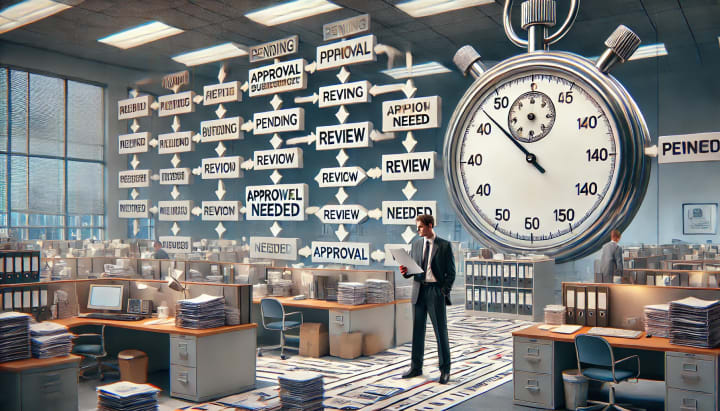
The Contradictions Are Everywhere:
• A KPI might say “increase efficiency”, but if you improve a process without waiting for approval, you’re told you didn’t follow protocol.
• A KPI might say “demonstrate leadership”, but if you take charge, you’re told you need to stay in your role.
• A KPI might say “be proactive”, but if you anticipate a problem and solve it early, you’re accused of overstepping.
The Hypocrisy in One Sentence:
Companies want results, but they don’t want leadership.
They want change, but they don’t want disruption.
What Needs to Change?
Corporate America needs to learn from military leadership.
That doesn’t mean adopting a rigid, rank-based system, but it does mean fixing a broken culture.
What Workplaces Need to Do:
• Encourage initiative instead of punishing it.
• Decentralize decision-making so employees can solve problems in real time.
• Replace micromanagement with trust.
• Promote real leaders, not yes-men.
Veterans bring a powerful mindset to the workplace.
We know how to get things done. We know how to lead. The problem isn’t that we don’t fit in – it’s that the system is broken in ways we refuse to accept.
The Toughest Battle Yet
I expected war to be my hardest battle. I was wrong.
Walking into a civilian job every day, knowing that leadership is failing, that mediocrity is thriving, and that my skills are seen as a problem instead of an asset – that’s a battle I never expected to fight.
For veterans, civilian burnout isn’t about the work.
It’s about the realization that leadership, as we knew it, doesn’t seem to exist here.
And that’s something we need to start talking about.
FAQs
Why do veterans struggle in civilian workplaces?
Many civilian jobs emphasize compliance over leadership, making it difficult for veterans accustomed to autonomy and responsibility to fit in.
2. How can veterans cope with burnout in civilian jobs?
Finding companies that value initiative, networking with fellow veterans, and advocating for workplace improvements can help. VA Resources for Veterans offer support.
3. Are all civilian workplaces like this?
No, some organizations recognize and appreciate military leadership skills. Hiring Our Heroes helps veterans find the right fit.
Call to Action: Speak Up
If you’re a veteran struggling with civilian burnout, share your experiences. Let’s talk about it. Because this system is broken, and it’s about time someone called it out.

About Your True Direction
Your True Direction is dedicated to empowering individuals navigating life’s transitions. Through inspiring stories and actionable strategies, we aim to help you reclaim ambition, overcome challenges, and thrive in every stage of your journey.
Connect with Us
Follow us on Medium @YourTrueDirection
Your journey is yours to shape – take the next step in Your True Direction.
About the Creator
R.T. Garner
I am passionate about helping people achieve more than they ever thought possible. I am vibrant, alive, full of possibilities. I ache from a desire to create positive change, and I am driven to help others realize their own potential.
Keep reading
More stories from R.T. Garner and writers in FYI and other communities.
Narcissistic Parenting — How They Keep You Small and Powerless
Last time, we exposed the sneaky truth behind the phrase, “You’re not a parent, so you don’t understand.” It’s more than just dismissive — it’s a weapon in the narcissist’s arsenal of control. This time, we’re diving even deeper to uncover how narcissistic parents use manipulation to keep you doubting yourself and stuck in their cycle of power plays.
By R.T. GarnerExclusive • about a year ago



Comments
There are no comments for this story
Be the first to respond and start the conversation.