
Building a New Era: Inside the Indonesia Commercial Construction Boom
Exploring the drivers, key segments, and major players transforming Indonesia's infrastructure landscape

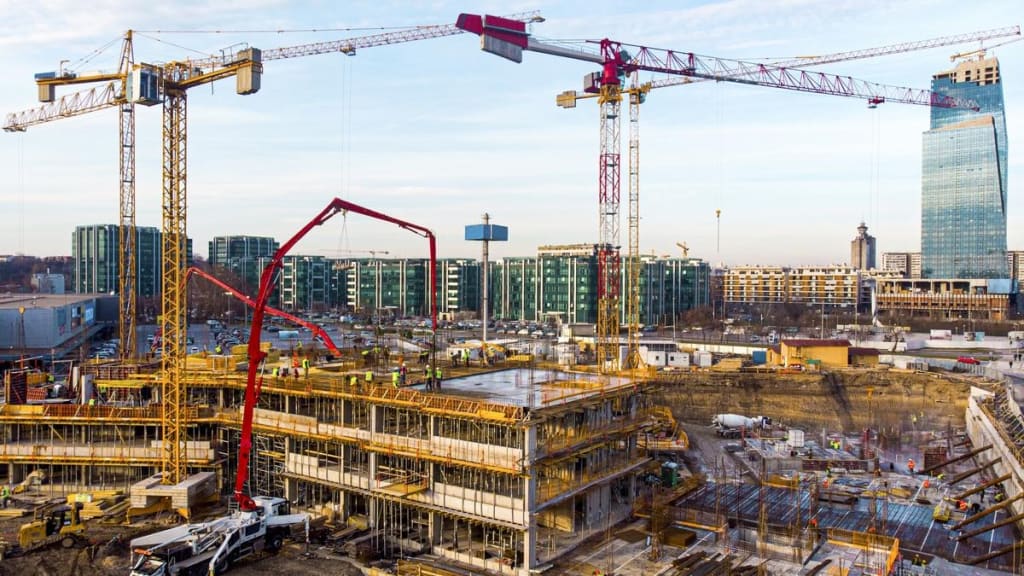
Market Overview: The Construction Engine of Southeast Asia
Indonesia is currently undergoing one of the most significant infrastructure transformations in its history. As the largest economy in Southeast Asia, the archipelago is moving beyond basic infrastructure development and stepping into a new era of sophisticated commercial construction.
In terms of market valuation, the sector is showing resilient growth. According to IMARC Group, the Indonesia commercial construction market size reached USD 185.1 Million in 2025. Looking forward, the market is expected to continue this upward trajectory, reaching USD 333.9 Million by 2034, exhibiting a solid CAGR of 6.77% during the forecast period (2026-2034).
Unlike the previous decade, which focused heavily on state-funded toll roads, this growth is increasingly defined by vertical expansion—office towers, mixed-use complexes, and industrial hubs. The sentiment among stakeholders is optimistic, fueled by the government’s commitment to modernization and the private sector’s rapid adaptation to post-pandemic lifestyle changes.
Key Growth Trends and Drivers
Several powerful engines are propelling this market forward, making Indonesia a hotspot for construction activity in the Asia-Pacific region.
• The "Nusantara" Effect: The relocation of the capital city from Jakarta to Nusantara (IKN) in East Kalimantan is the single largest catalyst. This massive undertaking is not merely about government buildings; it has triggered a ripple effect creating demand for commercial support facilities, including hotels, hospitals, and retail centers in the new capital zone.
• Urbanization and the Middle Class: Indonesia’s urbanization rate is steadily climbing. As more people move to cities like Surabaya, Medan, and Bandung, the demand for commercial spaces naturally follows. A rising middle class means higher consumption, driving the need for modern shopping malls and entertainment centers.
• Digital Economy Boom: The rapid rise of Indonesia’s digital economy is reshaping construction needs. There is an unprecedented demand for data centers and logistics parks to support e-commerce giants, shifting the focus from traditional retail builds to high-tech industrial storage solutions.
Want to dive deeper into the data? The figures mentioned in this analysis are just the tip of the iceberg. For a comprehensive breakdown of market shares, competitor analysis, and future forecasts, you can explore the detailed data in the full report. Request a Sample Report for Detailed Market Insights
Market Segmentation:
Type Insights:
• Office Building Construction: There is a clear "flight to quality" in this segment. While older buildings face vacancy challenges, demand is surging for Grade-A, green-certified office towers that offer modern amenities and energy efficiency.
• Retail Construction: Despite the e-commerce boom, physical retail remains dominant in Indonesia. Developers are pivoting towards "lifestyle centers"—open-air malls that combine shopping with dining and leisure experiences.
• Hospitality Construction: With tourism rebounding post-pandemic, construction activity is heating up in Bali, Lombok, and Labuan Bajo, focusing on luxury resorts and boutique hotels.
• Institutional Construction: This includes the massive build-out of schools, hospitals, and government facilities, particularly driven by the new capital city project.
Regional Insights:
• Java: Remains the epicenter of commercial activity, hosting the majority of high-rise projects in Jakarta, Surabaya, and Bandung.
• Kalimantan: Currently the fastest-growing region due to the massive IKN (Nusantara) project, attracting billions in construction contracts.
• Sumatra & Sulawesi: Seeing steady growth supported by commodity booms (palm oil and nickel), which is driving demand for commercial and industrial facilities.
Competitive Landscape
The competitive landscape of the Indonesia Commercial Construction Market is a dynamic mix of state-owned enterprises (SOEs) and private giants. Unlike other service sectors, this market is dominated by heavy engineering and property development firms.
Recent Developments and Future Outlook
The market is not static; recent months have seen pivotal developments that signal where the industry is heading.
• Green Building Adoption: Sustainability is no longer a buzzword but a regulatory pressure. Recent projects in Jakarta are aggressively pursuing Greenship certification (Indonesia’s green building rating). Developers are incorporating solar panels, energy-efficient glass, and water recycling systems to attract multinational tenants who have strict ESG (Environmental, Social, and Governance) mandates.
• Smart City Integration: New commercial developments are increasingly being designed as "smart compounds." From automated parking systems to IoT-enabled building management systems, technology is becoming a core component of construction briefs.
Conclusion
The Indonesia Commercial Construction Market is standing at a pivotal crossroads. With the massive momentum from the capital relocation project and a booming digital economy, the opportunities for growth are substantial. For investors and industry observers, the key takeaway is clear: Indonesia is building for the future, and the scale of its ambition is matched only by the concrete and steel rising across its skyline.
About the Creator
Sam walter
As a Market Researcher at IMARC Services Private Limited, I lead strategic initiatives to deliver in-depth market analysis and insights.
Keep reading
More stories from Sam walter and writers in FYI and other communities.
Singapore Logistics Market: Trade Connectivity, Automation, and Regional Hub Strength
According to IMARC Group’s latest research publication, the Singapore logistics market size reached USD 26.4 Billion in 2024. Looking ahead, the market is expected to reach USD 42.2 Billion by 2033, growing at a compound annual growth rate (CAGR) of 4.37% during 2025–2033.
By Sam walter2 months ago in FYI
Top 50 Bespoke Travel Experiences Around the World
Travel is no longer just about visiting famous landmarks—it’s about immersive, curated experiences that allow travellers to connect deeply with culture, nature, and unique adventures. Bespoke travel experiences focus on personalization, exclusivity, and meaningful engagement, making each journey one-of-a-kind.
By All 4 Season3 days ago in FYI




Comments
There are no comments for this story
Be the first to respond and start the conversation.