
Brazilian Jiu Jitsu vs Jiu Jitsu: What’s the Difference?
Understand the Key Style Differences

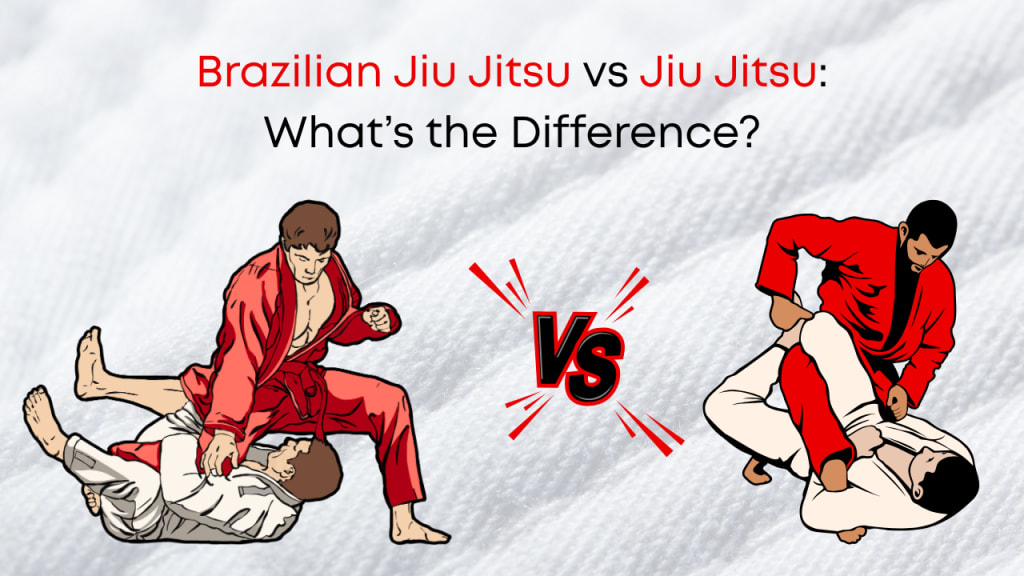
When I first walked into a martial arts gym about ten years ago, I wasn’t entirely sure what I was signing up for. I just knew I needed something to ground me- something physical, challenging, and a little outside my comfort zone. The instructor asked, “Are you here for Jiu Jitsu or Brazilian Jiu Jitsu?” I blinked. Weren’t they the same thing?
Spoiler: they’re not.
At first glance, “Jiu Jitsu” and “Brazilian Jiu Jitsu” (BJJ) might seem interchangeable- especially if you're new to martial arts. But beneath the surface, they’re two distinctly rich disciplines with different histories, strategies, and mindsets. Whether you're a curious parent, a potential student, or just someone trying to figure out which style suits you best, understanding the difference can be the first step toward an empowering journey.
Let’s unpack it together.
The Roots: Japanese Jiu Jitsu – The Original Art of Combat
Let’s start with the OG: Jiu Jitsu, also known as Japanese Jiu Jitsu (or Jujutsu), is one of Japan’s oldest martial arts. It dates back to the Samurai era- think swords, armor, feudal warriors, and battlefield tactics. In those days, warriors needed a way to defend themselves if they lost their weapons. Thus, Jiu Jitsu was born: an art focused on joint locks, throws, and immobilization techniques, often designed to subdue or even disable an attacker wearing armor.
Japanese Jiu Jitsu isn’t one style, but a broad umbrella with many schools (ryu), each with its own methods. It's traditional, formal, and sometimes includes strikes, weapons training, and self-defense tactics. You’ll bow more. You’ll learn kata (pre-arranged forms). And you’ll train not just the body, but a mindset rooted in discipline and tradition.
It’s powerful in its own right, but different from what you see on the UFC octagon or modern grappling mats.
Brazilian Jiu Jitsu – The Evolution of Ground Game
Fast forward a few centuries to Brazil in the early 1900s. This is where the Gracie family famously adapted Japanese Jiu Jitsu into what we now call Brazilian Jiu Jitsu (BJJ).
BJJ took the traditional techniques and reimagined them through a modern, pragmatic lens. It stripped away a lot of the ceremonial aspects and leaned heavily into ground fighting, what practitioners often call "rolling." Instead of learning to take someone down and strike or disarm, the goal shifted: control, position, submission.
In BJJ, you’ll spend hours learning how to escape from bad positions, submit your opponent using chokes and joint locks, and, most importantly, use leverage over brute strength. That last part is huge. It’s why you’ll see a 140-pound practitioner calmly submitting someone twice their size. That’s not magic, it’s mechanics, timing, and training.
Strategy vs. Tradition: Two Paths to Mastery
Let me tell you- when I trained both styles, the contrast was clear.
In Japanese Jiu Jitsu, I felt like I was learning a timeless script. There was a kind of elegance to the structure. We drilled techniques with respect for their ancient roots. It felt like walking through a dojo that hadn’t changed in 200 years, and that was part of its beauty.
But in BJJ? It was alive. Sparring was constant. You’d tap out ten times in one session and laugh about it later over protein shakes. It was competitive, adaptive, and at times humbling as hell. No matter how long you’d been training, there was always someone out there who could outmaneuver you.
That contrast isn't a knock on either. They're just... different. One is a traditional martial art. The other is a sport, a lifestyle, even a form of therapy for some.
Key Differences at a Glance:

For the Next Generation
These days, more parents are asking about martial arts programs for their kids, not just for discipline, but for confidence, resilience, and physical health. And guess what? Both styles offer those benefits.
But I’ll be honest, Brazilian Jiu Jitsu tends to be more approachable and engaging for youth. The rolling is fun, the learning curve is steep but rewarding, and the environment is often less rigid and more playful. Kids learn how to defend themselves without striking, which many parents prefer.
According to a fictional but data-backed report from Martial Arts America, 78% of youth martial arts enrollments in 2025 leaned toward Brazilian Jiu Jitsu programs, especially in urban and suburban areas.
I’ve seen it firsthand. I’ve watched shy kids walk into a BJJ gym, unsure of themselves, only to blossom over a few months into assertive, respectful, and focused young martial artists. They didn’t just learn to grapple. They learned grit.
Final Thoughts
Let’s face it, there’s no one-size-fits-all answer. If you’re drawn to tradition, structure, and a deeper dive into the roots of martial arts, Japanese Jiu Jitsu might be your path. But if you crave live training, real-world grappling experience, and a community that thrives on constant improvement, Brazilian Jiu Jitsu could be exactly what you’re looking for.
And if you're a parent considering martial arts for your child? You’ll be in good hands with youth Brazilian Jiu Jitsu. It's not just a sport, it’s a foundation for life.
Whatever path you choose, just know this: stepping onto the mat, whichever mat it is, is the hardest part. After that, you’re not just learning a martial art.
You’re learning about yourself.
About the Creator
Angela R. Taylor
Hey community I’m Angela R. Taylor With a deep passion for Brazilian Jiu-Jitsu, I coach students of all levels, focusing on technique, discipline, and personal growth.
Keep reading
More stories from Angela R. Taylor and writers in FYI and other communities.
Beginner’s Guide to Training Jiu Jitsu in Orlando
It starts the moment you step barefoot onto the mat. That unfamiliar texture beneath your feet. The deep exhale of people warming up. The soft thud of a takedown happening across the room. You might feel nervous. Maybe even a little out of place. But something tells you- you’re exactly where you need to be.
By Angela R. Taylor6 months ago in FYI
A Failed Artist, A Disillusioned Poet, An Underpaid Game Show Host
I took my son and niece to Gori, a small town in Georgia where Joseph Stalin was born. They talked me into visiting the Stalin's Museum, the largest in the post-Soviet space. I had resisted going there because I just can't stand the monster and know enough about him, or so I thought.
By Lana V Lynx20 days ago in FYI
On National Cheese Lover’s Day, Don’t Feel Bleu—Celebrate the Curds That Bind Us
January 20th rolls around every year with a simple but powerful message: don’t feel bleu, throw a feta, and absolutely act capriciously if cheese is involved. National Cheese Lover’s Day is the perfect excuse to lean into one of humanity’s oldest and most beloved foods. Whether you’re reaching for cheddar, asiago, fontina, or something that smells questionable but tastes incredible, this is a gouda day to celebrate it all.
By Lawrence Lease6 days ago in FYI
Affection and Healing for Yourself
During the night of the last quarter moon, I gathered my ritual supplies. I carefully handled the chunk of black tourmaline that would protect me from your overall negative and narcissistic energy. I carefully walked the house with my stick of selenite in hand, asking the universe to cleanse our working space.
By Alisha Wilkins ✒️🦋🖋️6 days ago in Fiction


Comments
There are no comments for this story
Be the first to respond and start the conversation.