
Beyond Swipes and Feeds: Building Real Bonds In Life's Transitions
How small-group apps can turn loneliness into lasting support networks.
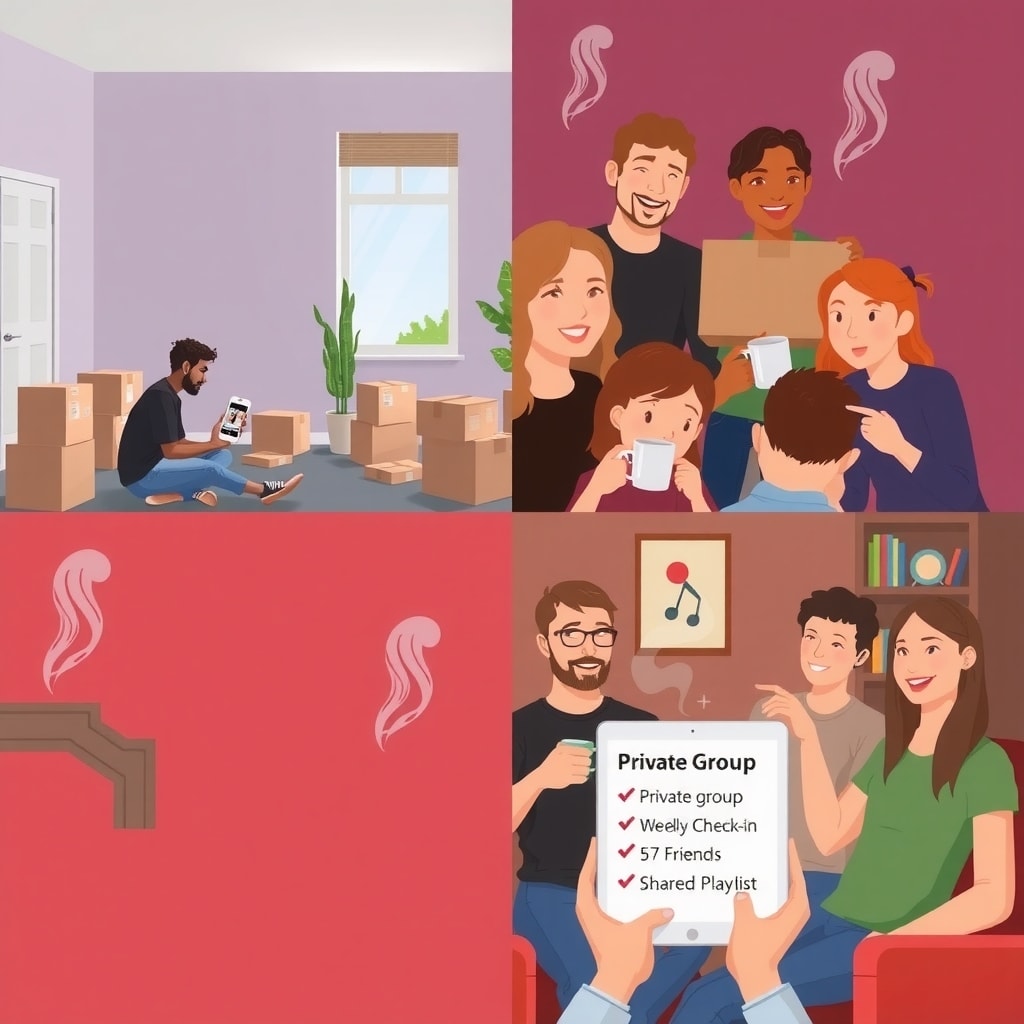
Here's some thoughts from a good friend. He still remembers the day he arrived in the DMV with two suitcases and a phone full of “connection” apps—yet not a single genuine friend. The padded bus seats smelled like stale coffee, and every swipe right felt like playing a game he’d already lost.
That morning, he scrolled through profiles promising companionship: “Meet new people today!” “Find your tribe!” But each chat quickly stalled. Profile pictures and ice-breaker lines couldn’t bridge the yawning gap between small talk and real understanding. Fresh off a divorce, uprooted across state lines, and determined to stay sober, he felt a hollow ache that emojis and “super-likes” couldn’t fill.
Loneliness isn’t a match-three puzzle solved by pairing two avatars. It’s the quiet in an apartment when the moving boxes are unpacked but the heart still feels boxed in. It’s the late-night craving for someone who truly “gets” why this chapter feels both terrifying and hopeful.
He tried every popular app. Each treated connection like a dating hustle—algorithms rewarding flashy selfies and punchy one-liners. He optimized his profile, tested different opening lines (“Hey there!” vs. “What’s your story?”), even paid for boosts. Nothing changed. He still poured coffee alone.
Then he stumbled onto a small peer-support group for people in recovery—a text-based circle that met at 8 pm every evening. No profiles, no “swipe fatigue,” just a simple prompt: “What’s one small victory you had today?” One night he typed: “Stayed sober when old habits whispered.” Within seconds, responses trickled in: “That’s huge—congrats!” “I felt that today too.” “You inspired me to take a walk instead of opening a bottle.” Those words felt like handrails in the dark. Over time, he began to share wins and setbacks: a successful job interview, the panic when temptation struck, the relief of making it through.
Real connection isn’t won by winning attention—it’s earned by sharing vulnerability. When he celebrated a month sober, someone he’d never met in person mailed him a handwritten card. When he landed his first freelance gig, another member offered to review his portfolio. Together, they built something that no dating-style app could replicate: a network of empathy.
That small group inspired him to seek out platforms designed for life’s big pivots—tools that prioritize shared experience over superficial attraction. He discovered writing circles for newcomers in town, divorcee book clubs, sober-living chatrooms. Each space used guided prompts, real-time audio rooms, or co-reading features to spark genuine conversation. No gamified badges for “most matches”—just badges for “most check-ins,” “most encouraging message,” “most honest share.”
Suddenly, loneliness didn’t feel like an endless void. It was a signal that he needed the right kind of community—one built on mutual support rather than fleeting chemistry. When people rally around each other’s journeys—moving boxes, broken hearts, daily sobriety—they create a safety net stronger than any dating algorithm.
He realized that the real cure for loneliness—especially during life’s seismic shifts—wouldn’t come from another broadcast-style feed or swipe-left mechanic. It would come from platforms built not for discovery, creator monetization, or engagement metrics, but for deepening real relationships among people who already care about one another.
My Epiphany
That got me to thinking. Today’s dominant social apps prize virality over vulnerability, passive consumption over active connection. But the spike in loneliness amid moving cities, divorce, or early sobriety reveals an urgent white space: small-group social applications that function like a “family Slack” or “friend hub,” exclusively for circles of 5–15 high-trust individuals.
The Opportunity
Pain Point: No leading platform truly serves as a private gathering place for existing friends or relatives.
Market Size: Gen Z already shows a preference for close-knit sharing; retention on micro-community apps runs twice as high as on mass-market networks.
Revenue Potential: Members are four times more willing to pay for features that strengthen bonds—shared calendars, milestone celebrations, collaborative playlists—than for tools that merely expose them to new content.
Business Models That Serve, Not Sell
Premium Group Features Charge a modest subscription for tools that automate weekly check-ins, mood tracking, or “IRL Streaks” achievements—rewarding real-world meetups logged via a simple geofenced check-in.
Event Coordination Services Offer concierge-style event planning for family reunions, sobriety anniversaries, or post-move housewarmings, with in-app ticketing and shared memory albums.
Private Community Marketplaces Enable small circles to trade expertise—parenting tips, local recommendations, recovery resources—through secure, invite-only forums where microtransactions fund facilitators or specialist hosts.
How to Build It
Start with Trust: Recruit initial user groups who already interact offline—college roommates, siblings, hobbyist meet-ups.
Structure for Depth: Launch with templated interactions—daily gratitude prompts, shared media playlists, mini-challenges that require collaboration.
Limit Group Size: Lock each circle at 5–15 members to preserve intimacy.
Monetize Outcomes: Tie premium fees to real-world benefits—stronger support networks, habit formation, shared celebrations—not to vague promises of “growth” or “exposure.”
BeReal’s $500 million acquisition showed that small-group sharing has value—but it only scratched the surface. The next unicorn won’t chase AI gimmicks or endless feeds; it will solve the obvious problem of sustaining genuine human bonds during life’s biggest transitions.
→ Build for transitions, not trends.
→ Charge for outcomes, not optimism.
→ Solve real problems, not hypothetical ones.
Which gap speaks to you? Drop a comment and share what you’d build for the groups you care about most.
- David
About the Creator
Keep reading
More stories from David Gilmore and writers in FYI and other communities.
Moosend, Best Email Marketing Too? Here's My Take
Have you ever taken a moment to consider how your favorite brands communicate with you? The truth is, they’re not just sending emails; they’re weaving a story, nurturing a relationship, and making you feel seen. I had this epiphany while experimenting with an email marketing tool called Moosend.
By David Gilmore9 months ago in FYI
Smart phones, Humans and Aliens.
WARNING. I will be tapping into one of your favorite creative tensions: The absurdity of humans worshipping their glowing rectangles as if they were tiny oracles. There’s something deliciously poetic about that contradiction, and it lends itself beautifully to an instructive proviso.
By Novel Allen5 days ago in Poets


Comments
There are no comments for this story
Be the first to respond and start the conversation.