
Angels: A Comprehensive Guide
Test your angel knowledge


Angels have been a part of human culture and religion for centuries. They are often depicted as having wings and carrying a harp. But what do we really know about angels? In this guide, I will explore the earliest references to angels, their roles in various religious texts, and their appearances in mythology and popular culture. I will also discuss some of the common characteristics of angels and their purported abilities. Finally, I will consider why people should still be interested in these celestial beings.
According to the Bible, angels were created by God before the creation of man and they play a vital role in both the Hebrew Scriptures and New Testament stories. Angels are depicted as being messengers from God who bring prophecies or enact God’s will on Earth. They are also often seen as protectors of humans and are thought to be able to intervene in human affairs.
However, angels appear in many different religious traditions, not just Christianity. In Islam, for example, angels are known as the “servants of God” and they play a number of important roles, such as guarding the gates of Heaven and overseeing human actions on Earth. In Judaism, angels are messengers who carry out God’s will; they also serve as guardians for people and nations.
Angels appear in many different myths and legends as well, including Greek mythology (e.g., Hermes), Norse mythology (e.g., Thor), and Hindu mythology (e.g., the devas). Angels are also featured in popular culture, including books like The Screwtape Letters by C.S. Lewis or the movie Wings of Desire directed by Wim Wenders; angels can be found on television shows too — for example, there is an angel called Castiel who appears on the show Supernatural.
So what are some of the common characteristics of angels? Generally, angels are seen as celestial beings who are more powerful than humans but not as powerful as God. They often have wings and are able to fly; they may also have other supernatural abilities, such as the power to heal or to read minds. Angels are often depicted as being messengers from God who bring prophecies or enact God’s will on Earth; they are also seen as protectors of humans and can intervene in human affairs. Angels may be good (e.g., guardian angels) or evil (e.g., fallen angels).
One of the most popular depictions of angels is guardian angels. In this role, an angel watches over a person and protects them from harm; for example, if a child falls down the stairs but doesn’t get hurt because there was someone at home who caught them before hitting their head — it could be speculated that maybe that “someone” was actually an angel.
The earliest known reference to angels comes from ancient Mesopotamia where they were associated with gods such as Anu or Enki. Angels often play an important role in sacred texts like Christianity’s Bible (e.g., the Book of Revelation) and in mythology (e.g., Greek mythology’s Hermes).
Greek Mythology
Angels have been a part of Greek mythology since its very beginning. For example, Hermes (the god of travel, communication, and thieves) was often depicted with wings on his sandals and hat. In fact, one of the earliest mentions of angels in literature comes from Homer’s Iliad where the gods are described as “angels.” Similarly, Thor (the Norse god of thunder) is often seen as an angel due to his role in bringing order to the world.
Islam
In Islam angels play an important role as the messengers of God and bringers of revelation; they are also guardians for people or nations. The Qur’an mentions four archangels by name: Jibril (Gabriel), Mikail (Michael), Israfil (Raphael) and az-Zakariyaa’(Zachariah). Angels in this tradition have no free will which means they cannot disobey what Allah tells them to do because it is against their nature; some angels — like those who guard Hell — are also tasked with punishing sinners.
Another example of angels in Islam is the angel Jibril who came down from heaven to tell Muhammad about God’s message of peace on earth and goodwill toward men. They also have many different names such as Gabriel (who brought Adam his soul) or Michael (who fought Satan before he fell into Hell). Angels are described in both Surah Al-Baqarah and Surah An-Nisa of The Holy Qur’an.
Jibril is said to be responsible for bringing Allah’s message down from heaven while Mikal oversees the rains that fall on Earth; he also watches over people who pray during Ramadan or Hajj pilgrimage in Mecca according to tradition. Izra’il has been given the responsibility of taking souls out of bodies when they die so that they can enter Paradise after their death — he sometimes appears before humans as a black angel with two wings while at other times he will appear human-like but wearing traditional Islamic clothing like a turban or robe.
Judaism
In Judaism angels have many names and there are three main types: mal’achim (messengers), serafim (winged creatures), and cherubim (guardians). The angel Gabriel is believed to be a member of the Malachi order who appeared before Daniel in his vision; he was also said to have visited Mary when she found out that she would give birth to Jesus Christ according to Christian tradition.
Malchut (“kingdom”) denotes an angelic being that acts as God’s representative on earth while Shekhinah refers specifically to that aspect’s feminine side or manifestation within Jewish mysticism known as Kabbalah — it represents wisdom from above which is why it’s often called the “Bride of God”.
Angelic Orders
Seraphim is an angelic order mentioned in both Hebrew and Christian scriptures. The word “seraph” derives from the root ser which means burning; they are described as having six wings each: two covering their faces, two covering their feet and one pair for flying (Isaiah).
Two of these angels appear before Isaiah to show him God’s glory. They stand above Him with one wing stretched out toward Heaven while another stretches down towards Earth so that they can cover all things between them like a veil or curtain over His presence; this image symbolizes how important it would be if we were able to see past our own selves into eternity — something only possible through divine intervention according to Jewish tradition. Seraphim function as guardians and messengers of God, and they often sing praises to Him.
Cherubim are an angelic order mentioned in both Hebrew and Christian scriptures. They are often depicted as having two pairs of wings, which they use to fly around. Cherubim also have four faces: that of a man, lion, ox, and eagle (Ezekiel).
Their primary duty is to guard the entrance to Eden and keep Adam and Eve from returning; interestingly enough, they are not actually mentioned in the story of Genesis itself but appear later on when God places them at the east of the Garden of Eden with a flaming sword turning back and forth to prevent anyone from entering.
In addition to the three angelic orders, there are also seven archangels (Michael, Gabriel, Raphael, Uriel) that appear throughout various religious texts.
Christianity
Angels are an important part of Christianity and appear throughout the Bible in both the Old and New Testaments. The word “angel” comes from the Greek angelos which means “messenger.” In general, angels are beings who serve as intermediaries between Heaven and Earth; they often deliver messages from God to humans or act as protectors.
One of the most famous biblical passages about angels is found in the Book of Revelation (often called the Apocalypse) where John sees a vision of seven angels with golden bowls full of wrath that are poured out on Earth.
The first mention of angels in Christian scripture can be found in Genesis where two angels visit Abraham and announce the birth of Isaac. Throughout the Bible, angels are often sent to earth to help humans in difficult situations.
Angels have many different roles such as guardians (of both people and places), messengers, warriors, and rescuers. Christians also believe that angels will be at the final judgment to judge the living and the dead.
In Christianity angels play an important role as messengers of God and bringers of revelation; they are also guardians for people or nations (for example, the guardian angel). The New Testament mentions three archangels: Michael, Gabriel, and Raphael. In addition to these three archangels, there is another seven who serve as angels in heaven (e.g., Cherubim).
The angels play an important role in the Book of Revelation. The first angel is Michael, who has seven trumpets and helps to defeat Satan with them. Next up comes Gabriel (the archangel), whose job it is to announce that God’s kingdom will arrive soon after Armageddon; he also warns humanity about what will happen if they don’t repent their sins before then — namely, eternal damnation. Finally, there’s Raphael (another archangel) who aids St John by providing him with healing water from Heaven itself so he doesn’t die while writing down his vision which would have happened otherwise due to its intensity.
In Christianity, there is no single view about how many angels exist; some say there are millions while others believe there are only a few thousand.
Hinduism
In Hinduism, there are many different types of angels including the devas (divine beings), gandharvas (heavenly musicians), apsaras (celestial nymphs) and asuras (demons). Interestingly, some Hindus believe that fallen angels can be redeemed and eventually become part of the divine. Devas can be found in many different forms, such as animals or plants; for example, there is a goddess called Lakshmi who is often depicted with four arms and two legs.
Buddhism
Angels don’t play a very significant role in Buddhism with most references being found in East Asian art or folklore instead of religious texts. There are however two important angel-like figures: Tianzi (the son of the sky god) and Ksitigarbha (the bodhisattva of the underworld).
Tianzi is often depicted as a young boy wearing a crown and holding a peach — symbolic of immortality. He is sometimes accompanied by his father, the sky god, and mother, the earth goddess. Tianzi’s role is to bring blessings to people on earth and he is seen as a symbol of hope.
Ksitigarbha on the other hand is usually portrayed as an elderly man with a kind face carrying a staff in one hand and a pearl in the other. His duty is to help those who are suffering in Hell and guide them back to the path of righteousness.
Chinese and Japanese Mythology
There are also references to angels in other cultures such as Chinese mythology where they are known as tiānshén and play an important role in helping humans ascend to heaven. Japanese mythology mentions Tenma who serve as messengers between Heaven and Earth.
There are many different types of tiānshén, but they all share some common characteristics such as having a human-like form, wings, and the ability to fly. They often act as messengers or intermediaries between humans and the gods.
In Chinese mythology, tiānshén are seen as benevolent beings who help people in times of need. For example, there is a story about a man named Zhang Daoling who was lost in the mountains when he encountered a group of tiānshén. The tiānshén helped him find his way back home and then taught him how to become immortal.
Tenma is the Japanese name for the angel Metatron. He is often considered to be the highest-ranking of all angels and is responsible for recording people’s good and bad deeds.
Angels in Art
From ancient times until the present day, angels have been depicted in many different forms across various cultures and religions. They are often portrayed as messengers who bring messages from God or deities to humans — often depicted with wings on their backs, a halo above their heads, and sometimes carrying a staff or sword in hand. They may also be shown wearing white robes (symbolic of purity) with gold trimming around the edges; some angelic beings have two pairs of wings instead of one pair like most angels do.
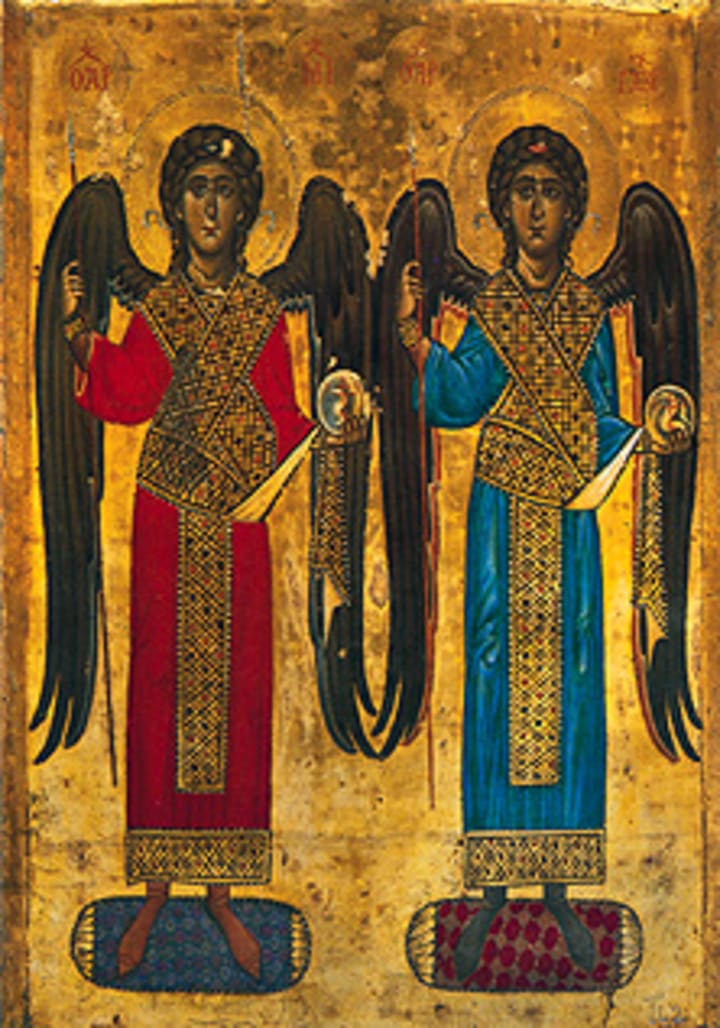
Angels in Literature
Angels also play a big role in various religious texts such as the Bible and Quran, but they are also mentioned in other famous works of literature too. For example, there is an angel named Ariel who appears in Shakespeare’s play "The Tempest."
Ariel is a spirit who helps Prospero (a sorcerer) to control the elements and perform magic. He is described as being beautiful with “amber hair” and “wings like a dove’s”.
In Mary Shelley’s novel Frankenstein, there is a creature known as an “angel” which was created by Victor Frankenstein from corpses he had stolen. This angel is different from other angels because it has demonic features and is “the vilest and most hateful of all the creatures I had made”.
Angel Themes
As shown above, angels play an important role in many religions, sacred texts, mythology, and culture. Some of the key points about angels are:
- they serve as messengers of God or other divine beings
- they bring revelation or guidance to people or nations
- they may have supernatural powers like healing sicknesses or speaking with humans on behalf of Allah/God
- they represent hope and possibility
Misconceptions about Angels
Angels have been portrayed in a variety of ways over the years which has led to many misconceptions; for example, they are often seen as gentle, sweet creatures that only do good but this isn’t always the case. In some cases, angels can be just as fierce as any other warrior and they’re not all white — in fact, some angels (such as Sariel) are black. They can also be very powerful beings and are not to be messed with.
Another misconception is that angels are only found in Christianity or Judaism when they actually appear in many different religions from around the world. Additionally, people sometimes think that angels are only female but they can actually be male too (such as Gabriel who is described as a “man” in the Bible).
People’s Opinions on Angels Today
There are many different opinions when it comes to how angels fit into our lives. Some believe that angels are here for God and not us, so there’s no reason why we should worship them — they’re just messengers sent by Him which means their purpose isn’t really meant to help humans unless He wants them to. Others say that if someone believes strongly enough then an angel may come down from heaven at any moment; however, others disagree with this because angels don’t come when you call them but rather they’re sent by God so if we pray hard enough then there could be a chance.
While there are many different opinions, I think that for the most part, people see angels as beings that are beyond our understanding. They can be seen as a way to connect with the divine or as symbols of hope and protection. For some people, they may provide comfort in difficult times or offer guidance when we feel lost. While there are many different opinions about what angels represent, I think that for the most part, they offer us hope and protection.
Conclusion
Angels have fascinated people for centuries and I think they will continue to do so because they remind us of the possibilities that exist beyond our everyday lives. They are a tangible representation of hope and remind us that we have help from on high when things get tough.
Angels are often depicted as having wings and flying because this reminds us to soar above our circumstances in life; it also shows how we should be willing to go higher than others might think possible for ourselves.
If you've liked what you read you can show your support by subscribing, pledging your support, or leaving me a tip that directly supports and aids me as a writer.
About the Creator
Talia Meadows
MA in Theological Studies, MA in Depth Psychology, and an MS in CIS. Living on our Highland cattle ranch in Colorado, I am inspired by the land and animals.
Keep reading
More stories from Talia Meadows and writers in FYI and other communities.
The Mommy Trap: Break Free of Working Mother's Guilt
It’s no secret that moms (and dads) often feel guilty when they’re not at home with their kids. But what about when they’re at work? Moms can feel guilty for not being able to be at home with their kids, for working long hours, or for leaving their kids with a sitter.
By Talia Meadows4 years ago in Families




Comments
There are no comments for this story
Be the first to respond and start the conversation.