
Aid Freeze to Poor Countries: Big Up to President Trump
Without Aid Poor Countries Will Get Their Act Together!
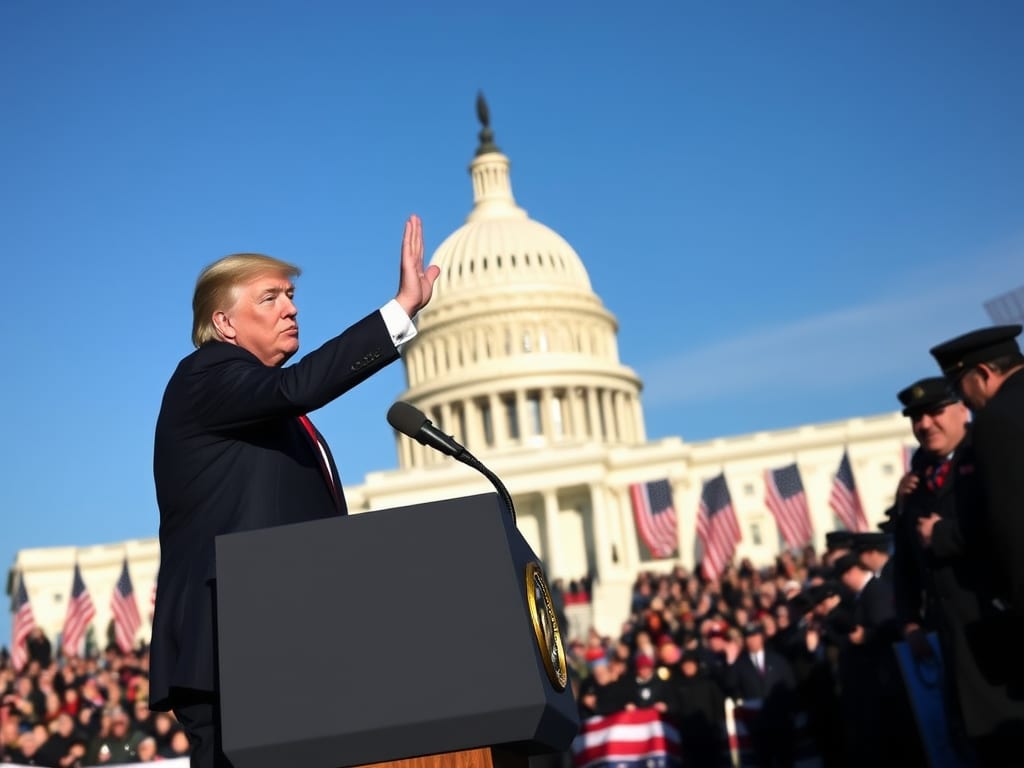
Since being sworn in as president of the United States on January 20, 2025, President Trump has made many landmark policy shifts that have left many people speechless. Among these is his decision to freeze US aid to poor countries, especially those in Africa. His arguments are sound. Aid is making third-world leaders complacent and failing to devote internal resources to the development of their countries.
Why Is President Trump Right on This Issue?
Let us take a closer look at things. Getting resource allocation right is key to achieving anything, and yet, in many African countries, this is a serious problem. Apart from theft regularly conducted by those in power, spending money on matters that hardly add value to people’s welfare is very common. For example, using millions of dollars to celebrate national anniversaries like Independence Day is common. But does it make any sense to celebrate these anniversaries while you don’t have hospitals, roads, schools, and so on, and close to half the population is living below the poverty line? Or does it make sense for a country to own a presidential jet, while agricultural extension officers fail to visit the country’s peasants most of the time because of lack of transport?
These are just a few examples. One can write a whole book on how African governments could better spend the resources at their disposal and steer their countries in the direction of serious development. And actually, they won’t even have to learn by trial and error. A clear path has already been laid down by leaders like Lee Kuan Yew. You have heard of Lee Kuan Yew, the former Singaporean Prime minister?
The guy was responsible for catapulting Singapore from a backward third-world nation to a first-world industrial nation in just a few decades. Singapore was previously in a union with Malaysia. In 1965 Malaysia decided to pull out of the union leaving poor Singapore to fend for itself. At that time Singapore’s GDP Income per capita was 500 US Dollars only. Fast forward to 2025. Currently, Singapore’s GDP Income per capita is 84,734.3 US Dollars! Calculate the growth rate: 16,846.8%! This is in a space of 60 years only.
But how did Lee Kuan Yew Achieve This?
Lee’s formula consisted of three main components:
1. Avoiding Wasteful Spending: For example, while other third-world countries would send large delegations to international conferences, often flying business class and staying in luxury hotels, Singapore’s delegations were smaller, flew economy class, and stayed in middle-class accommodations. Within the country, public officials in Singapore use public transport to commute to work, while their counterparts in many third-world countries use the latest design, fuel-guzzling SUVs!
2. Nurturing Brain Power: In contrast to many third-world countries, where government positions are awarded based on political, tribal, or other nonsensical criteria, Lee’s government prioritized the highest levels of talent. He understood that amassing brain power was the fastest route to national development, even hiring highly paid foreigners to bring expertise into the country. This emphasis on brain power is evident in Singapore's consistent ranking among the top 100 world universities.
3. Creating a Stable Economic Environment: Singapore's friendly economic policies attracted foreign investment and boosted manufacturing, while other third-world nations engaged in destructive nationalization campaigns that scared away investors.
Many third-world countries during the nineties realized the importance of foreign investment and made policy reforms accordingly. Unfortunately, these countries have failed to tackle wanton spending and effective deployment of human capital. These failures have held back these countries' quest for development. As an example, take a typical African country and analyze its situation, compared to that of Singapore.
A Comparative Analysis: Kenya and Singapore
In 1965 Kenya had a GDP of 998 million US Dollars. This GDP was 66.5% of the GDP of Singapore, which stood at 1.5 billion US Dollars at the time. Fast forward to 2023. According to the World Bank, the nominal GDP of Kenya in 2023 was 108 billion US Dollars, while that of Singapore was 501 billion US Dollars. In a space of 60 years, the GDP of Kenya went down from 66.5% to 21.5% that of Singapore! The gap between the GDPs of the two countries has increased tremendously in 60 years.
The move by President Trump to freeze aid in the long run may be the biggest blessing to Africa. The freeze will create an environment not only for more responsible resource allocation, but also for more responsible spending, and intolerance for theft of public funds.
About the Creator
Juma Killaghai
Juma Killaghai is a research chemist with over 30 years of experience in the field of research and development. He has a Master’s degree - Organic chemistry, from the University of Dar es Salaam. He resides in Dar es Salaam, Tanzania
Keep reading
More stories from Juma Killaghai and writers in FYI and other communities.
Technology is Failing Facebook: A Critical Analysis
Facebook, now part of Meta Platforms Inc., is a giant in social media. It has about 3.07 billion monthly users and made $156.23 billion in 2024. It's one of the richest companies, ranked 24th by Forbes. But, Facebook faces big challenges that could make it decline.
By Juma Killaghai12 months ago in Beat



Comments
There are no comments for this story
Be the first to respond and start the conversation.