
AI in 2025: The Silent Workforce Taking Over Daily Jobs Faster Than We Expected
earn how AI is quietly changing routine work, jobs most at risk, and smart moves you can make to stay ahead.

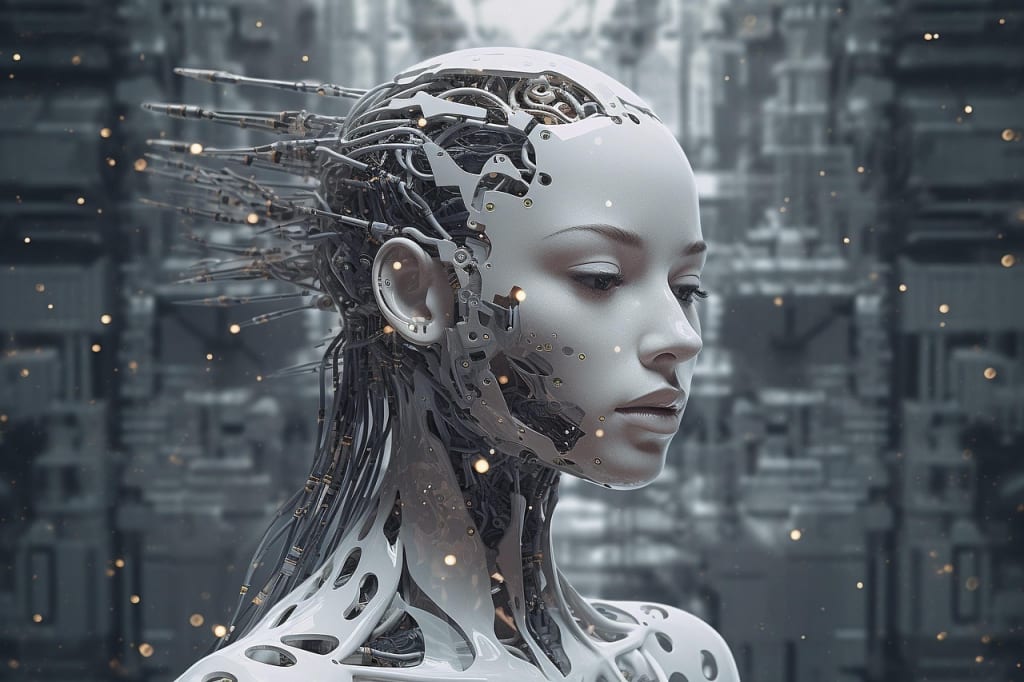
Have you ever imagined waking up one day and discovering that a computer can do your job faster, cheaper, and more accurately than you?
This is the life for many today, in 2025, no longer an imagination.
Artificial Intelligence (AI) has slowly become a powerful digital assistant in every industry. It reads, writes, designs, calculates, analyzes, and learns from millions of examples. The surprising part is that it doesn't get tired, it doesn't forget, and it doesn’t make common human mistakes.
Because of these advantages, AI is taking over many simple, repetitive, and predictable jobs — sometimes quietly, and sometimes openly.
But what precisely is taking place? Which jobs are changing?
Let's consider all this more clearly and in the simplest manner.
1. Customer Service Jobs — AI Is Becoming the First Choice
In the past, when people had problems with a bill, order, or service, they usually talked to a human support agent. But now, things are changing.
Most customer support conversations these days begin with an AI chatbot.
These chatbots:
- Answer immediately
- Comprehend common questions
- Solve simple problems in seconds
- Work 24 hours a day
- Never need a break
Banks, phone companies, online stores, and delivery services are now using AI to handle most customer queries. This means many entry-level customer support roles are disappearing or becoming smaller.
However, humans are still needed for emotional or complicated cases — AI cannot understand feelings like frustration, fear, or confusion the way humans can.
2. Data Entry Work - Largely Automated
One of the most common online jobs included data entry.
But in 2025, AI tools can now read documents, extract information, and fill forms automatically.
AI handles:
- Scanning forms
- Text Extraction
- Sorting files
- Typing Information
- Detecting Errors
Companies prefer this because it is faster and cost-effective. As a result, data entry jobs have dropped sharply.
Still, humans are needed to supervise AI tools and correct mistakes — which creates a different kind of job rather than a complete replacement.
3. Design Jobs: AI tools are accomplishing simple tasks.
This work, which quality required years of experience for graphic designers to create,
Today, anyone can produce a decent poster or logo using:
- Canva AI
- Midjourney
- DALL·E
- Adobe Firefly
You only need to describe it, and the AI generates diverse designs.
Saves time and money for small businesses.
This does not mean designers are no longer needed.
AI struggles with this because
- Deep creativity
- Unique brand identity
- Human emotion
- Complex designs
So while simple tasks are automated, skilled designers still stand strong because creativity cannot be replaced.
4. Video Editing — AI Makes Fast Work Possible
Video editing used to take hours of cutting, trimming, adding subtitles, adjusting audio, and arranging clips.
Now tools like:
- Runway ML
- Pika Labs
- CapCut AI
can process video automatically.
AI can:
- Background removal
- Captions added
- Smoothen colors
- Generate new video clips
- Cut scenes perfectly
This helps content creators and businesses work faster. Basic editing work is decreasing, but creative direction and storytelling remain important human skills.
5. Writing & Translation — A Mixed Change
AI can create blog posts, product descriptions, and summaries in a few seconds.
It also instantly translates text into almost any language.
But AI-generated writing usually lacks:
- Real-life examples
- Human emotion
- Personal voice
- Original thinking
- Cultural knowledge
This is why writers who can add emotion and opinion will always have a place. AI helps with the first draft, but humans give the writing life.
6. Office Tasks: AI Assistants are the New Helpers
AI assistants are fast becoming digital personal workers.
They can:
- reply to emails
- Arrange conferences
- Track bills
- Arrange documents
- Set reminders
- Plan routines
Earlier, these tasks required clerks, secretaries, or assistants.
Now a single AI assistant can handle multiple tasks, reducing the need for extra manpower.
Yet again, it is man that must decide and lead.
7. Should You Be Afraid? Not Really — If You Adapt
AI will replace many old jobs, but at the same time, it'll create new ones.
The key difference is skills.
Individuals who refuse to adapt or learn new skills will suffer.
People who will learn AI tools will grow faster than ever.
Jobs that AI cannot replace include:
- Creative storytelling
- Strategic thinking
- Emotional communication
- leadership roles
- Complex decision-making
- Human experience-based writing
Briefly:
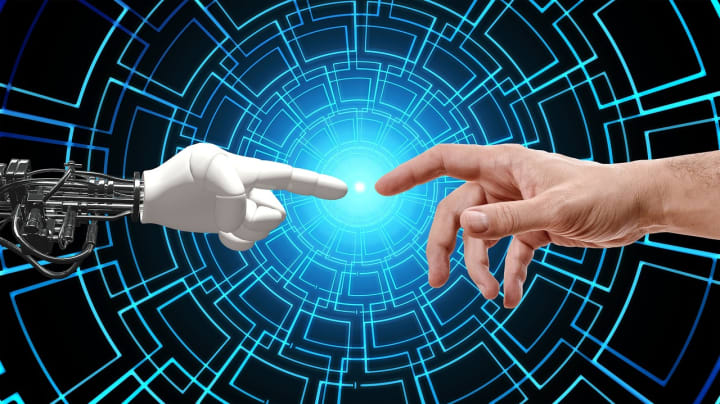
AI replaces tasks, not talent.
8. How You Can Stay Safe in an AI-Driven Future
Here are a few easy ways to protect and build your career:
✔ Learn the AI tools used in your industry✔ Improve creativity — the one thing AI cannot copy ✔ Add personal voice to your writing or work ✔ Develop good communication skills ✔ Keep updated on new technology ✔ Concentrate on the real-life problem-solving skills It is people who work with AI, not against it, who own the future. Conclusion: A New Era Has Begun AI in 2025 is not here to take your life away — it is here to change how things are done. It replaces repetitive tasks but creates smarter jobs. It removes old opportunities but opens new ones. If you stay flexible, learn new tools, and keep improving your skills, AI becomes your partner — not your competitor. The world is changing fast, but with the right mindset, you can stay ahead of the shift.

About the Creator
iftikhar Ahmad
"I write true stories, mysteries, and real-life inspiration. If you love engaging, easy-to-read articles with a human touch, you’re in the right place."
Keep reading
More stories from iftikhar Ahmad and writers in FYI and other communities.
Karoline Leavitt & Her Husband: Behind Closed Doors
Maybe the headlines scream, the cameras flash, but the easily forgotten fact about public figures is that they are human too. Karoline Leavitt could be the face that commands the headlines, the voice that commands the stage, but the world that exists beneath the headlines, the world that Karoline Leavitt shares with her husband, is another world altogether, a world that has nothing to do with the headlines, the demands, the politics, the arguments, or the debates.
By iftikhar Ahmad23 days ago in FYI


Comments
There are no comments for this story
Be the first to respond and start the conversation.