
A scientist who gives his life to science
Galileo's path to science
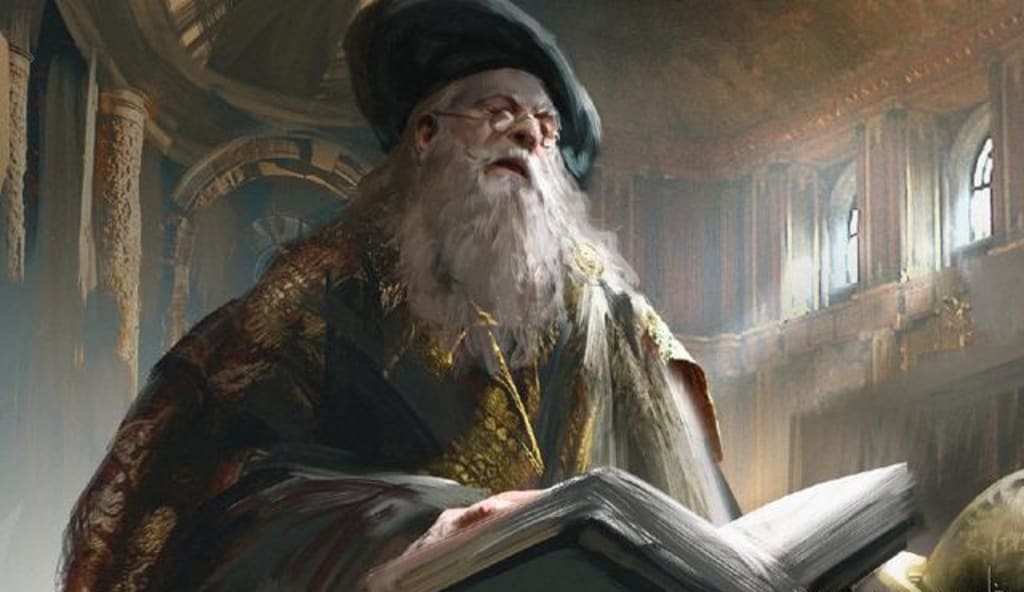
On the morning of February 1564, a little baby was born in Pisa, Italy. His parents named him Galilei, Galileo. Galileo's father, Vincencio, was a cultured gentleman who moved his family to Florence in 1574 in order to give his children a better education. Soon after arriving in Florence, Galileo was sent to a school run by a monastery. In addition to teaching religious doctrines and religious stories, schools run by monasteries also offer courses in Latin, rhetoric, logic and mathematics. Here Galileo was exposed to far more knowledge than his father had ever acquired, and to a wide variety of views on things, which greatly broadened his horizon.
After 5 years the monastery school in the book, Galileo home by his father, helping his father cooking wool shop business, but still Galileo's interest in reading, he is especially interested in philosophy and mathematics, father also see Galileo's talent, but his father hoped he would be able to engage in medical, because the doctor this profession not only respected by society at that time, And they make a lot of money. Under the arrangement of his father, Galileo entered the University of Pisa in 1581, when he was only 17 years old.
However, Galileo, who entered the University of Pisa, was not interested in medicine at all. He was particularly keen on philosophy and mathematics. It is said that Galileo often stood at the door of the classroom listening to the math teacher and often discussed problems with the math class. Math teachers know the situation after, and actively help Galileo will by medical professional to mathematics and physics, and Galileo in the two direction also showed amazing talent, but because the family's income less and less, couldn't afford the tuition, Galileo in 1585, Galileo had to study from the university of Pisa, Galileo doesn't even have a diploma to get back home, Unable to give up his love for mathematics and physics, he devoted all his spare time to the study of these two fields. Galileo's 1586 essay, The Study of gravity, made him quite famous in Italian mathematics and established contacts with famous mathematicians and aristocrats. In 1589, With the help of a group of mathematicians and nobles, Galileo returned to his Alma mater, the University of Pisa, to teach.
In Galileo's time, Aristotle's views were regarded as irrefutable truth, but in fact many of Aristotle's views were wrong. Galileo discovered early on that Aristotle was wrong about the speed of falling bodies changing with the mass of objects. To prove his point, Galileo climbed the Leaning Tower of Pisa and dropped two iron balls of different masses. Both landed at the same time. In 1590, Galileo published his long treatise on Gravity, which for the first time proposed the law of free fall.
In 1592 Galileo left the University of Pisa to teach at the University of Padua. There, he made many new advances in his research, and he made the first thermometers based on the properties of objects expanding and contracting with heat. As Galileo became more famous, he made more and more friends with nobles, and he began to live a rich and prosperous life, which promoted his research work.
In 1600, Galileo was shocked by the death of Bruno in Rome. Bruno (1548~160) believed in the heliocentric theory of Copernicus (1473~1543), but rejected the geocentric theory approved by the Church. As a result, Bruno was arrested by the Inquisition and burned to death in the Piazza de fiori in Rome. Galileo had also read Copernicus's Theory of the Movements of the Heavenly Bodies and agreed with many of Copernicus's ideas. As a result, Galileo was filled with anger over the burning of Bruno by the church.
In the summer of 1609, Galileo heard that an eyeglass maker in Holland had produced a mirror that could see distant objects clearly. Galileo realized that the mirror could be used for scientific observation as well as for recreation or military use. So he began his research, and soon Galileo's telescope for astronomical observation was successfully developed.
In November 1609, Galileo galilei developed his telescope which can magnify objects more than 30 times to the distant night sky, to the bright moon. Galileo saw for the first time that the surface of the moon was also covered with mountains, with volcanic cracks faintly visible. He also observed that Jupiter had four moons, and that the Milky Way used to be made up of innumerable stars.
The Aristotelian view that the heavenly bodies were perfectly spherical, with surfaces as smooth as mirrors, was also the view that the church adhered to. But Galileo's observations clearly disproved Aristotle's view. In 1610, Galileo published the "Star Messenger" book, his telescope observation of the moon, Jupiter, the Milky Way and other conditions are written into the book, the book of those magical scene attracted a large number of readers, a time the street talk is the moon, Jupiter and so on.
After the publication of Starmessenger, Galileo continued to observe while improving his telescope. In 1613, Galileo published his Letter on Sunspots, in which he wrote down his observations of sunspots and argued that Copernicus's heliocentric theory was correct. Soon, some stubborn conservative clerics Galileo began attacking defending the heliocentric theory of Copernicus, Galileo and charged in violation of the Christian doctrine, called on the inquisition arrested Galileo found guilty when Galileo's reputation in Italy is very big, even if there are some attack teach soil, the Pope also not put Galileo to felony, Galileo himself written request to the Pope don't punish yourself. In 1616, Pope Paul V issued the famous "Injunction of 1616" : Galileo was forbidden in any form, verbal or written, to maintain the propaganda or defense of Copernican heliocentric theory. But Galileo did not abandon his faith in science.
Galileo also tirelessly engaged in scientific research, and wrote a dialogue on the Two Great World systems of Ptolemy and Copernicus. On his fifth visit to Rome in May 1630, Galileo finally obtained permission to publish the book. In order to get the book published, Galileo took the form of a fictional dialogue between three people, and then used literary interpretation to illustrate the confrontation between geocentrism and heliocentrism. In this book, the author maintained a neutral on the surface, that is to be the inquisition questioned after leeway, but between the lines or Galileo reflects the heliocentric theory, the attack on geocentrism in 1632, a dialogue about Ptolemy and Copernicus two world system the book published, the book just comes out, The three characters in the dialogue between Ptolemy and Copernicus, the Two Great World Systems, became household names. Six months later, however, the Vatican ordered the sale of Dialogue between Ptolemy and Copernicus on the grounds that the author had violated the "Prohibition of 1616" and was defending Copernicus's heliocentric theory.
Some countries began to ban the distribution of Dialogue between Ptolemy and Copernicus, believing that Galileo would have a great influence on their own religious heretical thought. The Pope also ordered Galileo to appear before the Inquisition.
Nearly seventy years old Galileo was ordered by the Pope, dragging his frail body to Rome, in the case of no excuse, was tortured for many times. In June 1633, the Inquisition ruled that Galileo violated the "prohibition of 1616", sentenced Galileo to life imprisonment, "Dialogue on Ptolemy and Copernicus two great World System" book burned, Galileo was not allowed to publish or reprint any works already ill Galileo, in prison health is getting worse and worse. In 1638, the ailing Galileo got permission from the Pope to move out of prison and live with his son. In the winter of 1641 Galileo fell ill again, and nothing could be done to save the old man. On January 8, 1642, Galileo closed his eyes for good, leaving behind his great works and the spirit of scientific inquiry.
About the Creator
Top tipple tricks
Been thinking a lot about drinking, lately. Not least because of a recent episode of over-indulgence and the inevitable after effects. Some readers may recall the earlier articles I wrote about beating the booze. Here I set out an experiment in techniques for cutting down on my alcohol intake. The experiment was successful, the techniques worked, and I have armed myself with an arsenal of weapons in the war against the demon drink. I have yet to fire the first round however. It's all a question of timing (perhaps procrastination).
By Raymond G. Taylor5 days ago in Psyche



Comments
There are no comments for this story
Be the first to respond and start the conversation.