
A Deeper Look: The Symbolism Behind Moroccan Tile Patterns and Colors
How Moroccan Tiles Bring Symbolism and Style into Modern Spaces

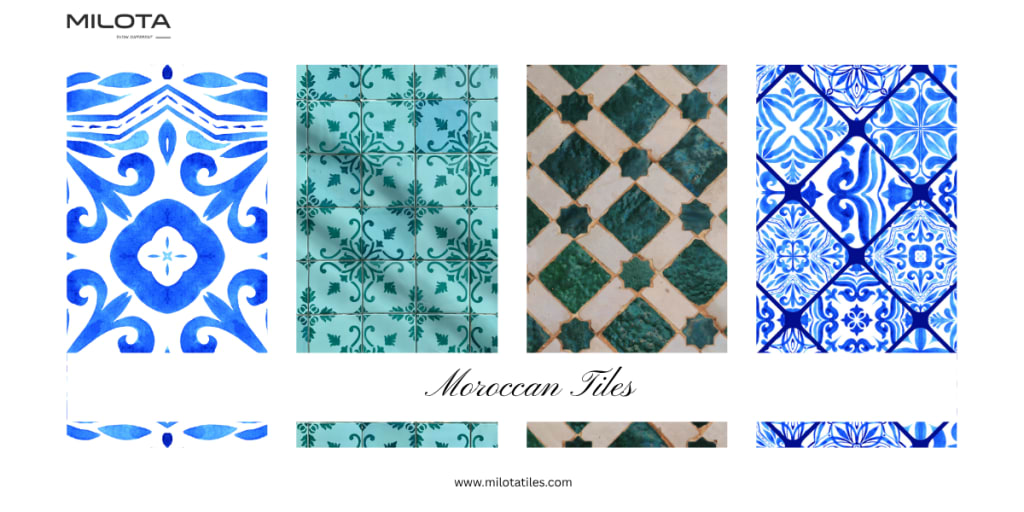
Moroccan design is instantly recognizable—rich in color, geometry, and intricate detailing. But beyond the visual appeal of Moroccan tiles lies a deeper story: a cultural, spiritual, and philosophical language expressed through pattern and pigment. Each motif and hue isn’t just a design choice—it’s a symbol shaped by centuries of tradition, belief systems, and craftsmanship.
Whether you're admiring Moroccan zellige tiles on a courtyard wall or considering a patterned backsplash for your Moroccan tiles kitchen, knowing the symbolism behind these patterns and colors will not only enhance your appreciation but also inspire more meaningful design decisions.
The Origin of Moroccan Tiles: A Sacred Art
The story of Moroccan tiles begins with Islamic art. Under Islamic influence, the depiction of living beings was discouraged, which led artisans to develop complex geometric and arabesque designs. These patterns reflect the infinite nature of the universe, divine unity, and the pursuit of spiritual order.
Over centuries, Moroccan tiles—also known as zellige (or zellij)—became a defining element of Islamic architecture, appearing in palaces, mosques, and homes throughout Morocco. The tiles were crafted by hand, each shape precisely cut and arranged in a mosaic to reflect balance and symmetry.
Geometric Patterns: Spirituality in Structure
The hallmark of Moroccan tilework is its hypnotic geometry. The repetition of shapes like stars, polygons, and interlocking lines is far from random. These motifs reflect mathematical and philosophical principles deeply rooted in Islamic culture.
Stars and Radiating Shapes
Stars often represent the heavens and divine light. An 8-pointed star, for example, is one of the most common symbols found in Moroccan tiles. It signifies balance, harmony, and cosmic order.
Squares and Rectangles
The square, often used as a base grid, represents stability and groundedness. When rotated to form a diamond, it can suggest movement and change—indicating the dynamic nature of the spiritual journey.
Circles and Interlace Patterns
Circles symbolize unity and the eternal. Interlaced patterns formed by overlapping circles or lines represent the interconnectedness of all things—material and spiritual.
The Hidden Meanings of Color in Moroccan Tiles
Color is a vital aspect of Moroccan tile design, and each hue carries symbolic weight drawn from religion, nature, and culture.
Blue
Associated with the sky and water, blue is calming and protective. It's believed to ward off evil spirits and is often found in Moroccan zellige tiles in fountains, courtyards, and walls.
Green
A sacred color in Islam, green represents paradise, life, and renewal. It frequently appears in Moroccan floor tiles and decorative borders, offering a sense of peace and growth.
White
Symbolizing purity and light, white is used to create visual space and balance. It often serves as the backdrop for more vivid hues and adds contrast to intricate patterns.
Black
While used sparingly, black can represent strength, mystery, and formality. It grounds colorful patterns and adds a sense of depth.
Yellow & Gold
These warm hues evoke joy, sunlight, and wealth. In tilework, they symbolize warmth and divine energy—especially when paired with blue or green.
Red
Red symbolizes courage, love, and vitality. It’s often used in Moroccan floor tiles to create a grounded and vibrant atmosphere, particularly in communal spaces like lounges or courtyards.
Zellige: The Soul of Moroccan Tilework
Among the most revered forms of Moroccan tiles are Moroccan zellige tiles—handcrafted from natural clay and glazed in an array of radiant colors. Their irregular surfaces and subtle variations give them a soulful texture that machines can't replicate. No two zellige tiles are exactly alike, making them an embodiment of wabi-sabi—the beauty of imperfection.
Zellige patterns often include complex mosaics, created using tiny pieces (called tesserae) that are individually chiseled and fit together like a puzzle. The making of zellige is not only an art but also a form of meditation and devotion, reflecting harmony, precision, and spiritual intent.
Symbolism in the Moroccan Tiles Kitchen
In modern homes, the Moroccan tiles kitchen has become a space where tradition meets functionality. But even in these practical settings, symbolism still plays a role.
- Backsplashes with blue zellige tiles can reflect cleanliness and protection.
- Green or white floor tiles offer balance and purity—ideal qualities for food preparation areas.
- Geometric motifs in star or lattice patterns inspire creativity and order, making the kitchen both a place of nourishment and artistic expression.
Designers today often choose Moroccan kitchen tiles not just for aesthetic appeal but for the deeper meanings they bring into the heart of the home.
Moroccan Floor Tiles: Symbolism Beneath Your Feet
Flooring has always been an important application of Moroccan tilework. In homes, palaces, and public courtyards, Moroccan floor tiles are arranged in deliberate motifs to guide energy flow and enhance harmony in the space.
- Star patterns underfoot are meant to inspire higher thinking and spiritual reflection.
- Bold color schemes energize communal areas, encouraging conversation and connection.
- Repeating geometric patterns create a calming rhythm, especially in spaces meant for relaxation or prayer.
Today, these same principles can be applied in contemporary interiors—whether you're laying Moroccan tiles in a minimalist living room or a bohemian-style bedroom.
Designing with Intention: Modern Uses of Symbolic Tilework
Understanding the symbolism behind Moroccan tiles allows you to design with intention. Whether you’re creating a bold accent wall, a tranquil patio, or a personalized Moroccan tiles kitchen, each pattern and color has the power to shape mood, energy, and flow.
Here are a few thoughtful design ideas:
- Tranquil Bathrooms: Use blue and white zellige tiles to evoke serenity and spiritual cleansing.
- Welcoming Entryways: Combine red and yellow floor tiles in star patterns to energize and uplift.
- Mindful Bedrooms: Choose muted greens and soft geometry for restful, grounded spaces.
- Inspired Kitchens: Mix symbolic colors with mosaic layouts to bring vitality and focus into everyday routines.
Final Thoughts: Bringing Symbolism Home
The true beauty of Moroccan tiles lies not just in their visual richness but in the layers of meaning beneath each line and hue. Every tile you lay becomes part of a larger story—of tradition, artistry, and sacred geometry. Whether you choose glossy Moroccan zellige tiles or patterned Moroccan floor tiles, you're not just decorating—you’re participating in a centuries-old legacy of symbolism, intention, and beauty.
At Milota Tiles, we honor the roots of Moroccan tilework while curating designs for the modern world. Our collection brings you authentic craftsmanship, inspired patterns, and timeless colorways—perfect for making every space more meaningful.
About the Creator
Milota Tiles
Milota Tile is a proud venture of the Milota Group, rapidly emerging as a leading name in the manufacturing, distribution, and export of premium ceramic and porcelain tiles under the MILOTA brand.
Keep reading
More stories from Milota Tiles and writers in FYI and other communities.
Color & Texture Trends in Tumbled Pavers for 2025
As outdoor living continues to evolve into a design-forward extension of the home, the demand for versatile and visually rich materials like Tumbled Pavers is on the rise. These weathered, timeworn pavers offer a classic, old-world appeal that blends beautifully with modern landscaping trends. In 2025, the spotlight is on color and texture, with homeowners, architects, and designers gravitating toward palettes and finishes that reflect a deep connection to nature, sustainability, and sophisticated simplicity.
By Milota Tiles7 months ago in FYI
Bomb Scare
It was 2027, and the world never thought it would happen. A missle hit the United States, but it wasn't where they had anticipated. A little town in the northeast was hit by a missile strike, they didn't know why, and they didn't know exactly where it hit, but they did know it was a coastal community, somewhere between Maine and Delaware.
By Gregory Payton2 days ago in Fiction


Comments
There are no comments for this story
Be the first to respond and start the conversation.