
A Brief History of MPAA Movie Ratings
Talking about the evolution of film goes hand-in-hand with talking about the evolution of movie ratings.


We all know the modern ratings system: G, PG, PG-13, R, and NC-17. What many may not know is how movie ratings have evolved since the dawn of cinema. For demographic purposes, I will be referring to the system as the MPAA ratings system (Motion Pictures of America Association)--as I am talking about the American ratings system, and the ratings system is different all over the world.
Early Films
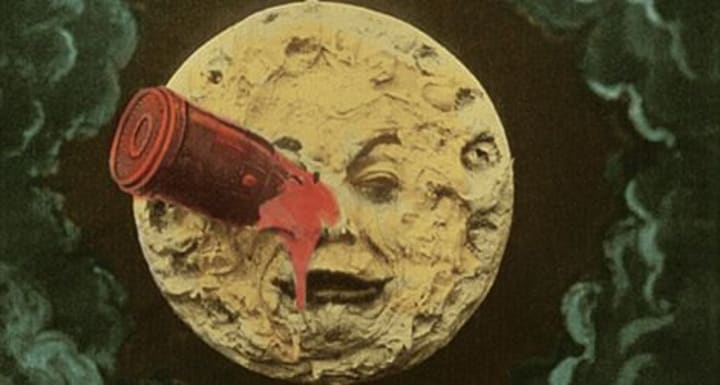
Film as an artistic medium was conceived in 1895 when the Lumiere brothers premiered a short moving picture of a train arriving at the station in Paris. The early Lumiere films were basically "micro-documentaries" just filming every day life. Georges Melies, a master of illusion, decided to use this medium as part of his acts and created the first fantasy/science fiction film.
In the early years of a brand new, fantastic artistic medium, there were no restrictions on what could be put in a film. There was an unwritten assumption that every film was suitable for all audiences. Sometimes there would be instances of nonsexual, non-pornagraphic nudity. Often body stockings would be used to simulate nudity, or have otherwise nude actors and actresses be covered. In historical dramas or films portraying mythology, it wasn't uncommon for nudity to be shown. (1918's Tarzan of the Apes had Gordon Griffith, the child actor who played Tarzan, appearing fully nude onscreen.) But like art museums with paintings that had similar content, there was very little moral outrage concerning these things. (Okay maybe there was on an individual level, but nothing the government felt the need to intervene in.)
The Hays Code
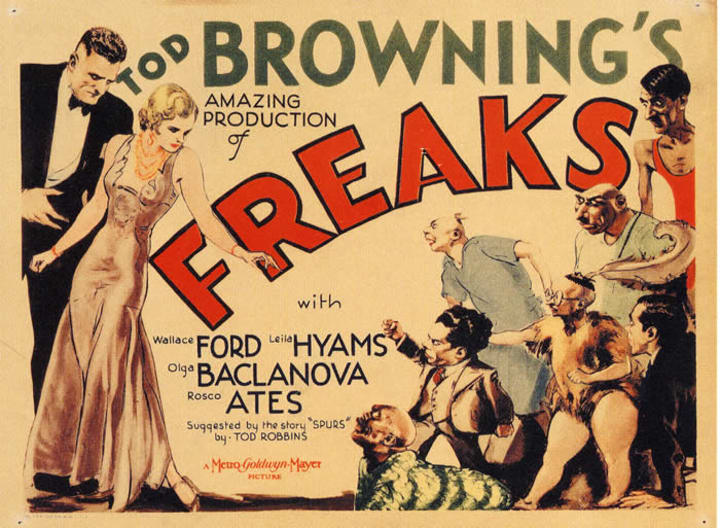
When the depression hit at the end of the 1920s, there was a push for more people to go out and enjoy movies. Not only as means to keep money in the economy, but also to help take the public's mind off of a very bleak situation. (Think of how we were encouraged to spend more after 9/11 or during the COVID-19 pandemic, so the economy wouldn't collapse--and to keep morale high. Whether or not it worked is a discussion for another time.)
With no television or internet to compete with, movies were the main form of entertainment. But even so, getting people to muster up the energy to get dressed and go to the theater when they're not sure where their next meal is coming from, is not an easy task. So movies became more violent, more sexual, more scandalous. Maybe not by today's "anything goes" standards. But by 1930s standards? Absolutely. Even in fiction, people love a scandalous story.
The Hay's Code was initially introduced in 1930, by Will H. Hays of the Motion Picture Producers and Distributors of America (MPPDA). It laid the earliest groundwork for a ratings system in Hollywood. Rather than categorizing films into separate ratings, all films were expected to follow certain guidelines.
Some of these included:
- Depictions of childbirth are a no-go.
- On-screen kisses can only last three seconds.
- All women's dresses must be a modest length, and reveal no cleavage or collarbones.
- Any character who participates in illegal activity must be shown getting arrested.
Though this code was introduced in 1930, it wasn't until 1934 that it was officially put into action and enforced. No film would be released to the public if it didn't stick to the code. Making all films squeaky clean and inoffensive. It isn't that life was more wholesome and happy back then...It's just that that's all that was allowed to be portrayed in film.
Film Noir, or The Beginning of the End of the Hays Code
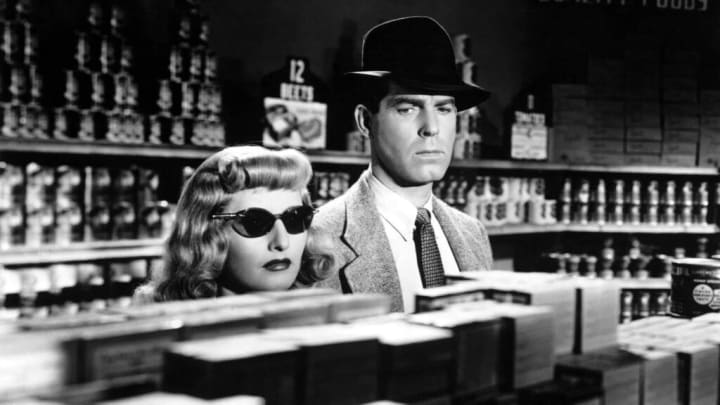
Film noir was more or less a delayed reaction to the bleakness of the depression. Noir films, were much more morally ambiguous and dealt with stronger themes. The Hays Code was still in place, so directors had to find creative ways to get things past the censors. (For example, the now cliche use of smoking a cigarette on a return from a "fade to black" to imply sex has taken place.)
The Hays Code now had less of a grip on Hollywood films. Understandably so, as Americans had been through a depression and a world war. What exactly would the Hays Code be shielding them from? The truth of reality? Not to say the Hays Code didn't still have a hold on some films. For example, there was still the clause that morally ambiguous characters needed to be shown getting their comeuppance. Even though noir films revolved around moral ambiguity, early films of this genre still made sure to show antihero protagonists getting caught by the long arm of the law.
As the 1950s rolled around, campy cult films began pushing the limits of the production code. Russ Meyer, for example, debuted in the 50s and was making a lot of films with ample bosomed women showing a lot of cleavage--something the early Code films frowned on. Otto Preminger release The Man With The Golden Arm in 1955. A film about a recovering heroin addict getting out of jail and eventually relapsing on his sobriety. Actual use of the drug is not shown, but if you have more than an elementary understanding of media literacy--you can put the pieces together. Preminger released the film before submitting it for a Code seal of approval--though he was adamant that the film would not make viewers want to partake in the use of illicit drugs.
The films were definitely controversial on release. But the fact they were able to be commercially released, does say a lot about society's shift in attitude towards film as an art.
New Hollywood, New Ratings System
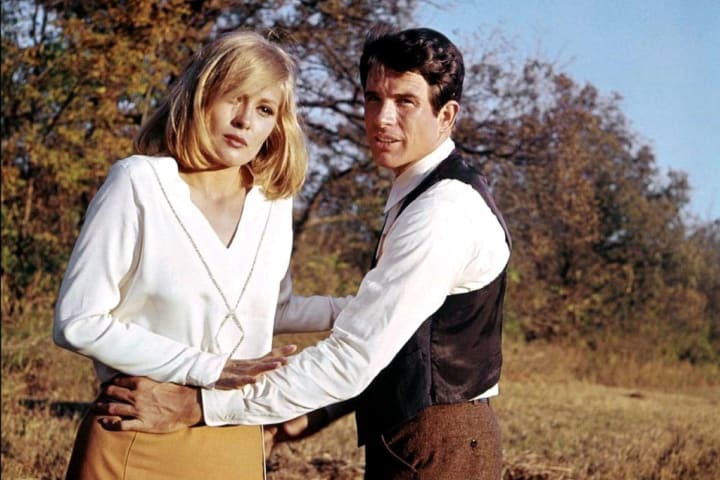
In 1960, Alfred Hitchcock released the groundbreaking film, Psycho. It had everything that movies from the Golden Age hadn't dared show: Nudity, brutality, perversion, mental illness, even--gasp!--a toilet flushing! Yes, the censors almost didn't let the film pass the initial viewings because there was a toilet flushing. It only remained because Hitchcock persuaded them that it was essential to the movie's plot.
While subsequent releases of Psycho have given it an "R" rating; at the time of release, no such rating existed. But it was very obvious that this movie was not for general audiences. So it was advertised as being for "mature audiences only." Perhaps the closest prototype to the MPAA as we know it. There wasn't a "code" dictating what could and couldn't be shown--but rather a warning to parents to think twice before taking their kids to see it.
Psycho broke new ground in cinema, and--depending on who you ask--created the "slasher" horror subgenre. Afterwards, movies became more violent, more sexual, and a lot more morally ambiguous. For people with children, going to see a movie was now less of a fun family activity...and almost more like Russian Roulette. Are you going to see a cute, wholesome movie? Or are you going to see Anne Bancroft's nipples?
With movies now being loose cannons of sex, violence, and mature topics--people needed a way to distinguish which films were and were not safe to take their kids to see. In 1966 Jack Valenti, the president of the Motion Picture Association of America, decided to help take some of the guess work out of going to see a movie--and devised a ratings system.
When it was first released to the public in 1968, the ratings included G, M, R, and X. M was later changed to PG.
The Birth of PG-13 and The Teen Movie
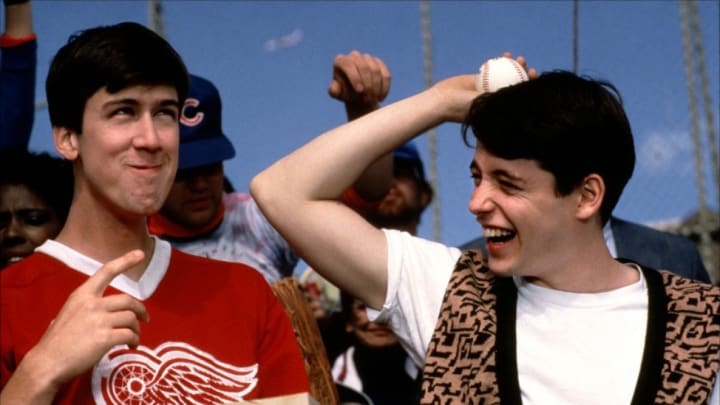
The 80s saw the release of three different movies that bridged a strange line between PG and R that the public had never really seen before. Indiana Jones and The Temple of Doom, Gremlins, and The Poltergeist were given a PG rating on their release. However, each film contained scenes of violence that was not quite R-rated, but still more intense than some children could probably handle. (The skin pulling scene from The Poltergeist, for example.)
Stephen Spielberg suggested the PG-13 rating, which was accepted by the MPAA. The first official PG-13 movie was 1984's Red Dawn. With this, parents now had a better understanding of which movies their kids could handle and which ones might be too mature for them. This gave birth to the "teen movie". Now teens could freely go to movies that appealed to their demographic. Not too mature, but not too childish either.
Hello, NC-17
After PG-13 created a safe middle ground between PG and R, the former "X" rating became much more stigmatized in Hollywood than it was previously. The rating had been unofficially hijacked by the adult movie industry. With that in mind, many movies that had originally been released with an "X" rating (Such as A Clockwork Orange and Midnight Cowboy) were now brought down to an "R" rating. This signified that, unlike porn, they were not created with the intention to arouse. Rather, they were meant to be consumed by the public (Provided they are over 18 or under supervision of someone who is.)
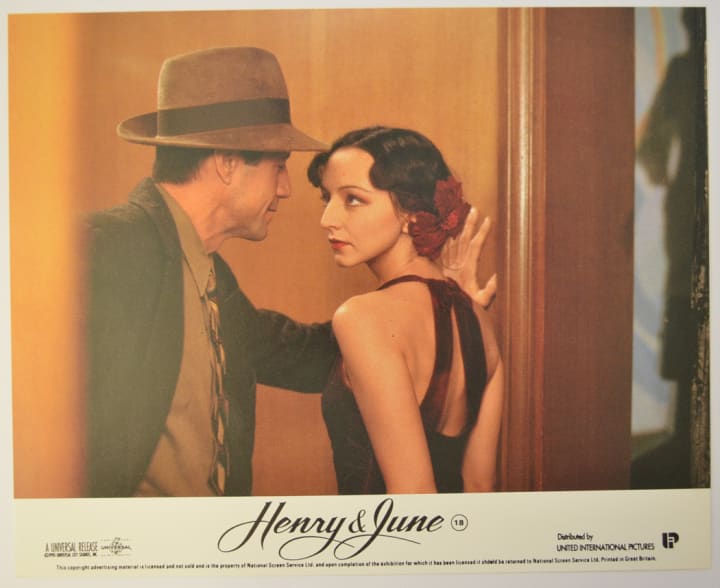
But some artists enjoy pushing the envelope of what is considered acceptable. Even R rated films have boundaries they cannot and will not cross. But there are still some artists that will try to go over that line. Everything beyond that, that isn't straight up pornography, falls under NC-17. NC-17 came into the fold in 1990 with the film Henry and June, which contained a lot of erotic content. More than--at the time--would have passed for an R rating. Rather than editing these scenes to make the "R-cut" they were kept as is.
While the R rating still walks a strange gray line, NC-17 most certainly does not. With R-rated movies, people under 17 can still be admitted as long as they are accompanied by an adult. This gives parents the choice on whether or not they think their child is mature enough to handle the content. NC-17, however, is patently adult. Absolutely no one under 18 is to be admitted at all. Even with adult supervision.
As you can imagine, out of all the ratings, this one is probably the most controversial. NC-17 rarely gets widespread theatrical release, and they are usually blacklisted from streaming services. There is still a lot of debate over what should and shouldn't qualify for an NC-17 rating. Some will argue that it's just a way to sneak porn into mainstream film. Others say that there's still a fine line between NC-17 and "adult entertainment."
At the end of the day, the main takeaway for NC-17 is: Don't let your children watch it.
The MPAA In Present Day
Movie ratings have remained relatively unchanged since 1990. For now, it seems it will stay about the same for the foreseeable future. Because of websites like IMDb which have a "content advisory" page on each film, viewers are able to see what specifically is in a film that might have contributed to its rating. That way, viewers with certain triggers or sensitivities; as well as people with children, can see if a movie will be enough for them to handle before they watch it. So there doesn't seem to be any real reason to amend the system any further.
Does the public always agree with how some films are rated? Not always. Everyone has different sensitivities. It's not a perfect system by any means, but it does play a big factor--whether consciously or not--in which movies we decide to consume.
About the Creator
Jennifer Childers
I just write thoughts on anime, games, music, movies, or other things that are on my mind. Occasionally a poem or short story might come up.
Reader insights
Nice work
Very well written. Keep up the good work!
Top insights
Easy to read and follow
Well-structured & engaging content
Expert insights and opinions
Arguments were carefully researched and presented
On-point and relevant
Writing reflected the title & theme
Keep reading
More stories from Jennifer Childers and writers in FYI and other communities.
A Strange Japanese Euphemism for Menstruation, Explained
While racking my brain trying to think of ideas for things to publish on Vocal this month, I started writing a list of euphemisms for menstruation that are used around the world. I thought it would make an interesting, quirky little article. The only problem was: I didn't have much original commentary to add to most of them...Except for one.
By Jennifer Childers2 years ago in FYI
What If the Oceans Disappeared? The Terrifying Scientific Reality
We take the oceans for granted. They’re just there, a massive, blue background to our beach vacations and sushi dinners. But the oceans cover 70% of our planet's surface. They hold over a billion cubic kilometers of water.
By Areeba Umair6 days ago in FYI




Comments