
8 Basic Earth Mysteries We Still Can’t Solve
Think You Know Everything About Our Planet? Think Again.


It feels like every day there’s a new headline about a distant star, a spacecraft mission, or maybe even finding another planet we could potentially live on. We’re constantly looking out into the vastness of space for the next great discovery.
Sometimes, it feels like our relationship with Earth is like an old marriage. We think we know every single thing about this planet; the mystery is gone, and we’re just looking for somewhere better. But the truth is, there’s still a huge amount of mystery right here beneath our feet.
Let’s take a look at some of the most basic things about our own planet that scientists are still trying to figure out.
1. The Unexplored Caves
We often hear that over 95% of our oceans remain unexplored, which is mind-boggling. But did you know there are literally thousands of caves that no one, at least no one we know of, has ever set foot in?
National Geographic estimates that the number of undiscovered caves could be as high as 90% of the planet’s total. Even in well-explored regions like the United States, only about 50% of caves have ever been officially mapped or documented. Imagine what untouched ecosystems and strange formations are hidden away in the dark.
2. The Unknown Minerals
Currently, we know of around 5,000 distinct minerals on Earth, which sounds like a lot. However, a fascinating study by mineralogist Robert M. Hazen and his team at the Carnegie Institution for Science suggests there are over 1,500 minerals we still don’t know anything about.
Keep in mind that many of the Earth’s known minerals are pretty rare, found in only a few select locations. Considering the massive amount of land across the globe that still hasn’t been properly surveyed, it makes sense that there are many minerals waiting to be discovered. What’s even wilder is that Hazen’s calculation only includes minerals that are possibly accessible. If you add in the ones we may never be able to reach, that number could increase exponentially.
3. What’s Really Beneath Our Feet?
When it comes to the knowledge of our planet, we have, quite literally, only scratched the surface.
Think about this: it took the Voyager 1 satellite 26 years to exit our solar system. It took us about the same amount of time to dig just 7.5 miles below the Earth’s surface. That hole, the Kola Superdeep Borehole in Russia, is only $12.3 \text{ km}$ deep. That is almost $4,000 \text{ miles}$ short of reaching the Earth’s core!
While researchers have a pretty good idea of what’s down there, based on analyzing things like gravity, fossils, and earthquakes, these are still just theories. Until we can actually get closer to the center, we can’t be completely sure. For instance, a surprising discovery in 2014 suggested that there might be a vast ocean inside the Earth, potentially holding as much water as all the world’s surface oceans combined. Where there’s water, there’s a possibility for life, maybe even strange new creatures in those internal waters!
4. Undiscovered Civilizations
When we think of ancient history, the Mayans or Egyptians usually come to mind because we’ve found tons of evidence of their existence. However, researchers believe there are still hundreds, or even thousands, of civilizations out there that we have no clue about. These lost cities could be covered by dense vegetation, buried under desert sands, or submerged beneath the ocean.
Every year, you see news of archaeologists digging up a new city. This means that legendary places like Atlantis or El Dorado could actually exist, and we just haven’t located them yet. Modern researchers are now using technologies like CT scans, satellite imagery, ground-penetrating radar, and even robotic drones to uncover these ancient ruins.
5. The Unknown Species
Our planet is massive and contains an astonishing amount of life, much of which we have never seen or documented before.
Consider the perspective of biologist Jennifer Owen, who documented the wildlife in her standard family garden in suburban Leicester, England. Over 40 years, she documented over 8,000 species, 20 of which had never been seen before in England, and 4 were completely new to science. All that from one ordinary backyard!
Even after 250 years of official documentation, over 15,000 new species of plants and animals are discovered each year. Researchers estimate that there are between 5 and 10 million species of wildlife in the world, and we have only identified around 1.2 to 1.3 million. That means up to 90% of the wildlife on Earth could be completely unknown to us.
6. How Gravity Really Works
When we think of gravity, we think of Newton and his apple, or how it keeps the Earth in orbit around the Sun. Scientists tell us gravity is the reason we don’t float off into space. But then, they really can’t tell us what gravity actually is, because nobody truly knows.
Gravity is considered one of the four fundamental forces of nature (alongside electromagnetism, the strong nuclear force, and the weak nuclear force). Yet, this force, which supposedly holds the entire universe together, is the weakest by far, trillions of times weaker than the others. This makes it incredibly hard to demonstrate in lab experiments. It also doesn’t fit neatly into Einstein’s Theory of Relativity, which only explains gravity on a large scale. At the level of atoms and molecules, gravity just seems to stop working, and researchers don’t know what it’s made of.
7. Why Ice is Slippery
This sounds simple, but it’s surprisingly perplexing. We know ice is slippery because there’s a very thin layer of liquid water on top of it, even when the ice is very cold. The question is: How did the ice produce that water layer?
For a long time, the leading theory was that the pressure of walking or skating on the ice lowered its melting point, causing the outermost layer to melt. However, experiments later showed that the pressure we apply is simply not enough to cause this to happen.
So, why? We have no definitive answer, but two theories remain. One is that the friction from walking causes the melt, but this is pretty much debunked because ice is still slippery even when you are just standing on it. The other theory is that the water on the outermost layer of ice just never freezes in the first place.
8. How the Moon Was Created
Okay, this one is a bit out of this world, but it’s still about our planet! We love talking about the Moon, looking at it, and sending people up there, but one thing we still have no clue about is how it was created.
We have a few compelling theories:
- The Fission Theory: Suggested in the 1800s, this idea claims the early Earth spun so fast that a chunk of our planet broke off and formed the Moon, held in place by Earth’s gravity.
- The Capture Theory: This theory says the Moon was formed somewhere else in the solar system, passed by Earth, and was caught in its gravitational field.
- The Giant Impact Hypothesis (Most Popular): This suggests something massive (a planet-sized object) collided with Earth millions of years ago, and the resulting debris broke apart and eventually coalesced to form the Moon.
What I love about research like this is that it reminds us how much is still a mystery. It’s awesome to know that even on our own planet, there’s always something new to discover.
What do you think? Which of these mysteries did you find the most surprising, and how do you think the Moon was created?
About the Creator
Areeba Umair
Writing stories that blend fiction and history, exploring the past with a touch of imagination.
Keep reading
More stories from Areeba Umair and writers in FYI and other communities.
A Failed Artist, A Disillusioned Poet, An Underpaid Game Show Host
I took my son and niece to Gori, a small town in Georgia where Joseph Stalin was born. They talked me into visiting the Stalin's Museum, the largest in the post-Soviet space. I had resisted going there because I just can't stand the monster and know enough about him, or so I thought.
By Lana V Lynx8 days ago in FYI
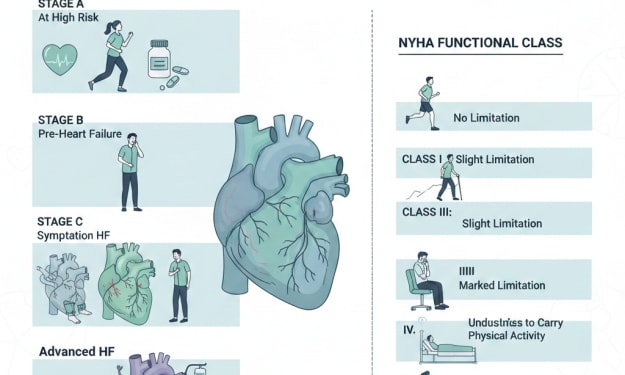
Stages and Classes of Heart Failure Explained
Heart Failure is a serious concern, and it is something that happens due to the gradual decline in health. Heart failure at early stages may not present as a serious disease, but over time, it can develop into a serious disease, which can be life-threatening.
By Sophie Blogsabout 21 hours ago in FYI



Comments
There are no comments for this story
Be the first to respond and start the conversation.