
7 Real-Life Places on Earth That Were Believed to Be Gateways to Hell
From Ancient Greek Caves to Fiery Volcanoes: A Journey Through the World’s Most Terrifying Underworlds
Throughout human history, almost every culture and religion has imagined a horrifying place for souls condemned to eternal punishment. While the names may differ, Hades, Xibalba, the underworld, the stories share a common theme: doorways, caves, rivers, and even volcanic craters on Earth believed to connect the living world to the realms of the damned.
From Turkey to Greece, Japan to China, these locations are steeped in myth, danger, and mystery. Here’s a look at seven actual places that people once believed were entrances to hell.
1. Cape Matapan, Greece - The Greek Gateway to Hades
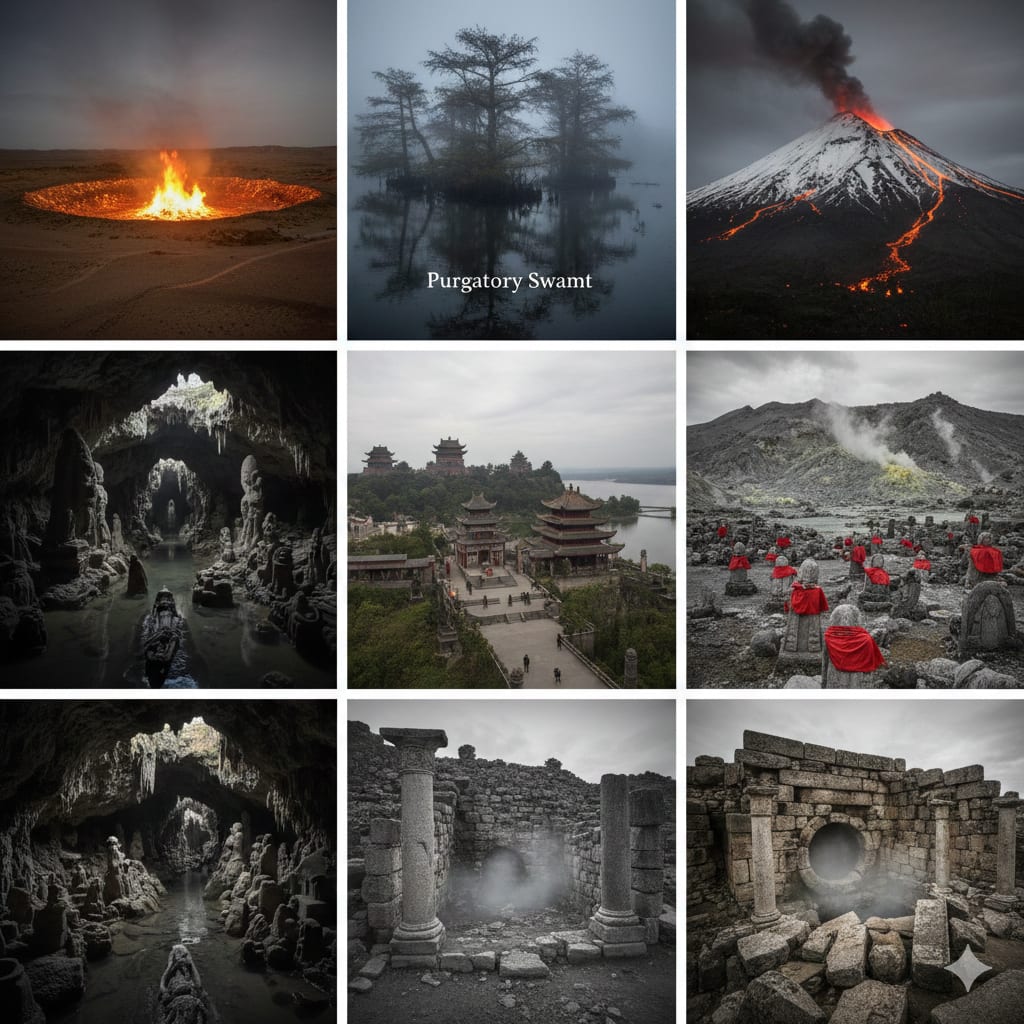
The southernmost tip of the Greek mainland, known as Cape Matapan (or Cape Tainaron), was once thought to be one of the entrances to Hades, the Kingdom of the Shades. Legends say Orpheus descended through a cave here to rescue Eurydice, and Hercules used the same caverns during his underworld adventures.
Today, the caves are still accessible to visitors, but you’ll need a boat to explore this chilling hellgate.
2. Hekla Volcano, Iceland - The “Eternal Prison of Judas.”
This active volcano in southern Iceland earned a reputation as a gateway to hell after its historic eruption in 1104. A 12th-century monk even called Hekla the “eternal prison of Judas.” Local legends tell of birds flying inside the crater, believed to be the souls of the damned, and folklore claims witches met with the devil here.
While volcanic activity has calmed, Hekla’s diabolical status has persisted in Icelandic culture.
3. Lacus Curtius, Rome - The Heroic Descent
At first glance, this pit in the Roman Forum doesn’t seem extraordinary. But legend says that the chasm, known as Lacus Curtius, would not close unless Rome sacrificed its strength. Brave Marcus Curtius, fully armored, rode his horse into the chasm, supposedly descending straight to the underworld. His sacrifice closed the pit and saved the city.
4. Actun Tunichil Muknal, Belize - The Mayan Underworld
The “Cave of the Crystal Sepulchre” is linked to Xibalba, the terrifying Mayan underworld. Explorers discovered a labyrinth of tunnels, rivers of blood, scorpions, and even the skeleton of an 18-year-old girl, ritualistically sacrificed for the death gods, now known as the “Crystal Maiden”.
Rediscovered in 1989, the caves are still a destination for adventurous travelers seeking a brush with Mayan mythology.
5. Pluto’s Gate, Hierapolis, Turkey - Temple of Toxic Trances
For centuries, Ploutonion in ancient Hierapolis was believed to be a gateway to hell. Archaeologists uncovered a temple of Pluto over thermal springs, where toxic fumes sent priests into hallucinogenic trances. Even today, the poisonous vapors kill birds that fly too close, reminding visitors of the site’s deadly reputation.
6. Fengdu, China - The City of Ghosts
Located in Chongqing, China, Fengdu is a city steeped in ghostly legends. Founded during the Han Dynasty, it is believed to be a stopover for the dead on their journey to the afterlife. Statues of ghosts and demons fill the streets, while the giant “Ghost King” rock carving dominates the city, a 452-foot-tall warning of the underworld.
7. Chinoike Jigoku, Japan - The Bloody Hell Pond
In Beppu City, a series of hot springs includes the infamous Chinoike Jigoku or “Bloody Hell Pond.” Its hellish red color comes from natural iron oxide deposits, and sculpted demons surround the boiling waters. Legends say prisoners were once tortured here, making it one of Japan’s most terrifying scenic sites.
From Greek myths to Mayan legends, volcanic craters to boiling hell ponds, the world is full of places where myth and reality intertwine. These sites continue to captivate explorers, historians, and thrill-seekers, reminding us that humans have always been fascinated, and terrified, by the idea of hell on Earth.
About the Creator
Areeba Umair
Writing stories that blend fiction and history, exploring the past with a touch of imagination.
Keep reading
More stories from Areeba Umair and writers in FYI and other communities.
The Dark Watchers of California: The Silent Giants That Still Haunt Big Sur
If you’re reading this today and dreaming of a peaceful coastal road trip through Big Sur, California, towering cliffs, crashing waves, and endless sky, you might want to know that not everything watching from those mountains is made of rock and fog.
By Areeba Umaira day ago in FYI


Comments
There are no comments for this story
Be the first to respond and start the conversation.