
5 Richest People In The History Of Mankind
The fact that Rockefeller Sr. and Andrew Carnegie will enter the list of the richest people on the planet will not surprise anyone, but that the Russian Tsar Nicholas I, and the Roman ruler Caesar, and one of the rulers of Mali will be surprised.

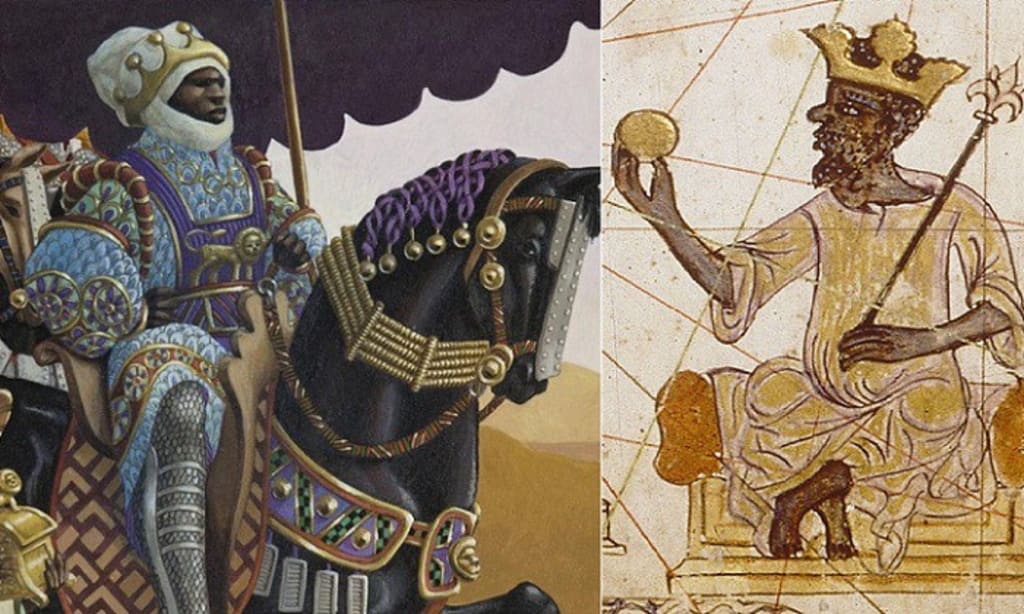
The well-known publishing house Forbes “is not lazy” to regularly acquaint us with the mighty of this world. However, the owners of colossal fortunes lived before these people. BBC News in one of its materials tried to identify the richest people in the history of mankind.
Let’s see if you know the leader of this top (editor’s note: to be honest — such a historical person who, according to the BBC, is the richest person who lived on Earth, I do not know).
5th place: Nikolai Alexandrovich Romanov, Nicholas II (1868–1918), $ 300 billion.
The last Russian emperor owned a fortune more impressively than any modern reigning person. Historians give different assessments, calling the source of the state the family inheritance of the reigning family for three hundred years on the throne.
The recollections of Alexander Mikhailovich Romanov helped in drawing up the details: “The personal income of the Emperor consisted of … annual allocations for the maintenance of … income from specific lands … percent from the capital stored in British and German banks.” Heirloom jewels also belonged to the sovereign’s fortune.
At the beginning of the year, the Emperor received from the treasury an amount equal to 12 billion modern Russian rubles. However, despite the enormous amount for a private person, it did not cover the monarch’s huge expenses. First of all, they were associated with the requirements of the life of the reigning family. The king had to take care of the maintenance of his palaces, museums, and parks. And money from this amount was spent on the annual rent of the Grand Dukes and the dowry to the Princesses. And this, not to mention the fact that each of the children born among close relatives automatically became a “millionaire” (in terms of modern money, the amount was close to 600 million rubles).
The lion’s share of the fortune of Nicholas II went to charity. This was especially noticeable during the First World War when huge funds were spent on the maintenance of hospitals.
The life of the now canonized last Russian monarch ended with a joint execution with his family in the basement of the Ipatiev House in Yekaterinburg. According to some versions, part of his money is still in secret accounts of German and French banks.
4th place: John Davison Rockefeller Sr. (1839–1937), $ 341 billion.
The name of this person has already become a household name for a rich fortune. It is interesting that the hero himself began his path to big money when he was 7 years old when he was saving the money he earned. At the age of 13, he gave an interest to farmers, and by 20 he had already opened his own company.
Rockefeller became a real oil king by 1880, controlling 90% of oil production in the United States. During his life, he also became the owner of 16 railway companies and 6 steel factories. Another 9 organizations were engaged in the real estate trade. And this does not even include shipping companies, banks, and orange plantations.
Small fact: Rockefeller’s Standard Oil went down in history as the largest American monopoly.
Despite his fabulous wealth, John Davison donated a lot to charities. He is known to have frequently sponsored medical research.
3rd place: Andrew Carnegie (1835–1919), $ 372 billion.
This richest man in world history has gone from a handyman to a dollar billionaire. In this, he was helped by a competent knowledge of the laws of investment. Of course, there were no special textbooks then, but business sense played a role, along with perseverance and confidence. Another quality was the ability to take responsibility for their mistakes.
The future billionaire began his career at the age of 13 when he got a job at a textile factory. And at the age of 20, having mortgaged his mother’s house, he began to invest in an analog of FedEx — Adam Express. Then there were contributions to companies related to the railway and shipping business. However, the really big money came to Carnegie after the construction of the steel plant.
Andrew Carnegie donated up to 90% of his fortune to charity. With this act, he confirmed his own essay with philanthropic ideas.
2nd place: Gaius Julius Caesar (63 BC — 14 AD), 4.6 trillion dollars.
Sly, bright, inimitable — all these words perfectly characterize the commander, politician, orator, and diplomat. His military campaigns always ended in triumph, and the Roman people wrote legends about the courage of their citizens. Despite the fact that Gaius Julius spent only a year in power, and his name became an imperial title.
Numerous historical facts point to Caesar’s fabulous financial condition. Among them — and the gift of Cleopatra’s father, Ptolemy XII, which amounted to at least 7 million sesterces. And 400 million sesterces, with which the commander drove to Rome after the end of the Civil War. Interestingly, a third of this amount belonged to him personally.
It is also known that Caesar built the forum with his own money, which means that he spent at least 100 million sesterces. Finally, after the death of the dictator, his widow handed over 300 million in Roman currency to the heirs of Mark Antony and Octavian.
And that’s not all. As the administrator of Caesar’s will, Octavian Augustus handed over the beautiful Tiberian gardens of the murdered ruler to the city. Also, every citizen of Rome received payments of 300 sesterces.
For understanding, the sum of 1,000 sesterces was enough at that time to provide a family of four for a year.
1st place: Mansa Musa (1280–1337), untold wealth.
This man was the supreme ruler of the Mali Empire in the 12th century. Many of our contemporaries do not even know about this state south of the Sahara, but it was highly developed and civilized even before the arrival of the Europeans.
One of his brightest leaders — Musa — not only became king at the age of 32, making a fortune on the resale of livestock, skins, and salt. He also created one of the largest gold mining enterprises of that time.
And not only of that time but experts also talk about the entire history of such an industry.
There is information that Musa did not regret surrounding himself with luxury goods. He ruled from an ivory throne, and servants circled above him with silk-weave fans.
In history, the ruler is remembered for his “luxurious” pilgrimage to Mecca, where he was accompanied by several tens of thousands of servants, hundreds of slaves, and dozens of caravans laden with jewels. Even when crossing the Sahara, the ruler had freshly prepared fish and vegetables on his table every day.
On the way, he generously distributed alms — at least 12.5 tons of gold, which, allegedly, provoked a collapse of the precious metals market in Europe. As if Europe had little of the civil wars that shook it then, Turkish attacks and the raging deadly black plague.
Another fact: Musa ordered to build a mosque in every city where he stayed.
In 2015, Money.com also confirms that African king Mansa Musa was so “rich that hardly anyone could describe it.”
Unfortunately, after the death of Mansa, his descendants almost immediately ravaged the treasury. And the heir-son turned the country from Islam back to paganism.
Instead of a conclusion.
Of course, history is fraught with many secrets and mysteries, and this list is far from complete. According to historians, for example, the emperor Zhao Xu from the Chinese Song dynasty and the parish of the Mughal Empire Akbar I the Great could have had innumerable riches.
One thing is clear: scientists can still expect unexpected “acquaintances” with the richest people from the past, capable of overshadowing the modern “vanity fair”.
About the Creator
Michail Bukin
Creative Writing Expert and Ambitious Stutterer
Keep reading
More stories from Michail Bukin and writers in FYI and other communities.
Scenes From Famous Movies Where the Cast Was Actually Drunk
Masterful acting works convince the viewer that a bloodthirsty maniac appeared before them, or a dramatic love scene is shown. Cinema makes the viewer believe that everything that happens on the screen is by no means a game.
By Michail Bukin4 years ago in FYI



Comments
There are no comments for this story
Be the first to respond and start the conversation.