
5 Reasons why Indonesia is called the world's corrupt country
Indonesia is called the world's corrupt


It's crucial to preface this by stating that labeling Indonesia as "the world's most corrupt country" is an oversimplification and potentially inaccurate. Corruption is a complex global issue, and many nations grapple with it to varying degrees. While Indonesia faces significant challenges with corruption, it is not alone in this struggle.
However, Indonesia has consistently ranked poorly in various corruption perception indexes, leading to this unfortunate label. Several factors contribute to this perception:
Firstly, Indonesia carries the heavy weight of a historical legacy of corruption. The Suharto era, characterized by authoritarian rule and cronyism, fostered a culture of patronage and rent-seeking that permeated various sectors of society. The abuse of power, the concentration of wealth in the hands of a few, and the erosion of trust in institutions laid the groundwork for a system where corruption could flourish. While the regime has fallen, the deep-seated cultural and structural issues that emerged during that period continue to influence the country's trajectory.
Secondly, the rule of law in Indonesia remains a significant challenge. While anti-corruption agencies like the Corruption Eradication Commission (KPK) have made strides, enforcement of anti-corruption laws can be inconsistent and often hampered by political interference. Weaknesses within the judicial system, including potential for bribery and influence-peddling, can hinder effective prosecution of corruption cases. This creates a sense of impunity, where individuals may feel that they can engage in corrupt practices without facing serious consequences.
Furthermore, the political landscape itself contributes to the perception of widespread corruption. "Money politics" plays a significant role in Indonesian elections, where candidates may engage in vote-buying or other corrupt practices to secure votes. The high cost of political campaigns can create pressure on elected officials to recoup their expenses through illicit means. Political connections and patronage networks can also facilitate corrupt activities, creating a system where favors and benefits are exchanged for political support.
The complexities of Indonesian bureaucracy also contribute to the problem. Overly bureaucratic systems, with their layers of red tape and opaque procedures, create opportunities for bribery and extortion. Business owners, for example, may be forced to pay unofficial "fees" to expedite permits or avoid unnecessary delays. This lack of transparency and accountability breeds frustration and fuels a perception of widespread corruption.
Finally, socioeconomic disparities within Indonesia can exacerbate the issue. Poverty and inequality can create incentives for individuals to engage in corrupt practices as a means of survival or to improve their economic standing. Low salaries for public officials can also create a temptation to supplement income through bribes or other corrupt activities. While not the sole cause, socioeconomic factors can contribute to a climate where corruption is more likely to thrive.
It is important to note that Indonesia has made efforts to combat corruption. The establishment of the KPK has been a significant step forward, and there have been notable successes in prosecuting high-level officials. However, the challenges remain significant. Addressing corruption requires a multi-pronged approach, including strengthening institutions, promoting transparency and accountability, and fostering a culture of integrity within all sectors of society.
Several factors contribute to this perception. Historically, the Suharto era, characterized by authoritarian rule and cronyism, fostered a culture of patronage and rent-seeking that permeated various sectors of society. This legacy continues to influence the country's political and economic landscape.
Furthermore, weaknesses in the rule of law and enforcement of anti-corruption regulations hinder progress. While anti-corruption agencies exist, their effectiveness can be limited by political interference and systemic challenges within the judicial system.
This creates a sense of impunity, where individuals may feel they can engage in corrupt practices without facing serious consequences.
The political landscape itself contributes to the problem. "Money politics" can influence elections, and the high costs of campaigns can incentivize corrupt practices. Bureaucratic inefficiencies, with layers of red tape and opaque procedures, create opportunities for bribery and extortion.
Socioeconomic factors also play a role. Poverty and inequality can increase the vulnerability of individuals to corruption, while low salaries for public officials may incentivize them to seek additional income through illicit means.
It's important to note that Indonesia has made efforts to combat corruption, with the establishment of anti-corruption agencies and initiatives to improve transparency. However, significant challenges remain. Addressing corruption requires a multi-pronged approach, including strengthening institutions, promoting transparency and accountability, and fostering a culture of integrity within all sectors of society.
Sources and related content
About the Creator
Moharif Yulianto
a freelance writer and thesis preparation in his country, youtube content creator, facebook
Keep reading
More stories from Moharif Yulianto and writers in FYI and other communities.
Unpacking Indonesia's Low Reading Culture
Indonesia, a nation brimming with rich cultural heritage and a diverse population, grapples with a persistent challenge: a low reading culture. Despite government initiatives and efforts from various organizations, the habit of reading remains underdeveloped among many Indonesians. This complex issue stems from a confluence of interconnected factors, ranging from socioeconomic disparities to deeply ingrained cultural attitudes.
By Moharif Yuliantoabout a year ago in FYI
Water wells the key of our future
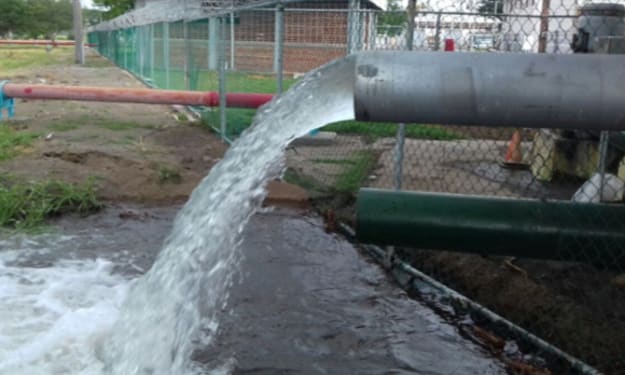
The average lifespan of a water well ranges from 25 to 40 years if it has carbon steel piping. Other steel alloys can increase the well's durability; however, a crucial point is sustainability. This means that over the years, the well continues to provide a constant and sustainable flow of water. To achieve this, it largely depends on the underground aquifers not being overexploited and on the recharge rate being greater than or equal to the extraction volume. However, today most aquifers are overexploited due to the large amount of water extracted each year. Another important factor that will ensure the sustainability of water wells is the periodic maintenance that the user must perform to keep them free of sediment and at their full depth. This includes minimizing corrosion of the steel casing pipe, thus extending its lifespan. Continuous monitoring of static and dynamic water levels in the well is also crucial, as is annual water quality analysis to identify any potential partial or total aquifer contamination.
By Ximena Ramirez4 days ago in FYI
A Transparent Look at Vocal Challenges and Top Stories
Almost three years ago, we shared a resource article that served as a place for people to suggest new challenge prompts. We thought it would be a good idea to refresh that thread, and take the opportunity to answer a few common questions about top stories, how challenges are judged and how submissions are reviewed.
By Vocal Curation Team4 days ago in Resources



Comments (1)
Bisa ajarin caranya gk bng bru gabung soalnya salam.