
5 Countries with the Most Congested Docks in the World
Docks in the World


The smooth flow of goods through a nation's ports is crucial for its economic health. However, several factors can contribute to port congestion, from outdated infrastructure and inefficient logistics to sheer volume of traffic and bureaucratic bottlenecks. These bottlenecks can lead to costly delays, impacting businesses and consumers alike. Here are five countries grappling with significant dock congestion:
1. China:
China's position as a global manufacturing powerhouse inevitably leads to immense pressure on its ports. Several Chinese ports consistently rank among the world's busiest, handling massive volumes of container traffic. This sheer volume, coupled with factors like rapid economic growth and increasing trade, contributes to significant congestion. Major ports like Shanghai, Ningbo-Zhoushan, and Shenzhen frequently experience delays, impacting global supply chains. The issue is further complicated by factors such as weather disruptions, particularly typhoons, which can temporarily shut down port operations. China has invested heavily in port infrastructure development, expanding capacity and implementing automation technologies to mitigate congestion. However, the continued growth of trade and the complexities of managing such massive volumes mean that congestion remains a persistent challenge. Furthermore, the intricate network of inland transportation, connecting ports to manufacturing centers, plays a critical role. Any disruptions or inefficiencies within this network can exacerbate port congestion. China's ongoing efforts to streamline logistics, improve intermodal connectivity, and optimize port operations are crucial for addressing this issue and ensuring the smooth flow of goods.
2. United States:
The United States, a major importer and exporter, also faces significant port congestion, particularly at its West Coast ports. Ports like Los Angeles and Long Beach handle a substantial portion of the nation's container traffic, and they have experienced significant backlogs in recent years. Several factors contribute to this congestion, including labor disputes, which can disrupt port operations for extended periods; capacity limitations, as some ports struggle to keep pace with increasing volumes; and inland transportation bottlenecks, particularly a shortage of truck drivers and limited rail capacity. The COVID-19 pandemic further exacerbated these issues, leading to unprecedented levels of port congestion and supply chain disruptions. The US government and port authorities are working to address these challenges through investments in infrastructure improvements, automation technologies, and improved logistics coordination. However, the complex interplay of factors contributing to congestion requires a multi-pronged approach. Enhancing intermodal connectivity, addressing labor issues, and improving communication and collaboration among stakeholders are all crucial for mitigating port congestion and ensuring the efficient movement of goods.
3. India:
India's rapidly growing economy and increasing trade have placed significant strain on its ports, leading to considerable congestion. Major ports like Jawaharlal Nehru Port Trust (JNPT) and Mundra Port face frequent delays, impacting both imports and exports. Outdated infrastructure, inefficient customs procedures, and a lack of automation contribute to the problem. Furthermore, the complex regulatory environment and bureaucratic hurdles can create bottlenecks in the clearance of goods. India has undertaken initiatives to modernize its ports, improve logistics, and streamline customs processes. Investments in port infrastructure, including expanding capacity and upgrading equipment, are underway. The development of dedicated freight corridors and improved connectivity with inland transportation networks are also crucial for alleviating congestion. Addressing the skills gap in the maritime sector and promoting digitalization of port operations are also important aspects of India's efforts to improve port efficiency and reduce congestion.
4. Vietnam:
Vietnam's emergence as a major manufacturing hub and its increasing participation in global trade have led to significant pressure on its ports, resulting in growing congestion. Ports like Cat Lai and Cai Mep handle a large volume of container traffic, and they have experienced increasing delays. Rapid economic growth, coupled with limited port infrastructure and logistical challenges, contributes to the problem. Vietnam is investing in port expansion and modernization, aiming to increase capacity and improve efficiency. However, the pace of infrastructure development needs to keep pace with the rapid growth of trade. Improving connectivity with inland transportation networks, streamlining customs procedures, and attracting investment in logistics services are also crucial for addressing port congestion. Furthermore, developing a skilled workforce in the maritime sector and promoting digitalization of port operations are essential for enhancing efficiency and competitiveness.
5. Indonesia:
Indonesia, an archipelago nation with a large and growing economy, faces unique challenges related to port congestion. The country's complex geography, with numerous islands and ports, requires efficient inter-island connectivity and logistics coordination. However, limited infrastructure, bureaucratic hurdles, and a lack of standardization contribute to congestion at major ports like Tanjung Priok. Indonesia is undertaking efforts to improve port infrastructure, streamline customs procedures, and enhance inter-island connectivity. Investments in port expansion, modernization, and digitalization are underway. Improving logistics coordination and promoting private sector participation in port development are also crucial for alleviating congestion. Furthermore, addressing the skills gap in the maritime sector and simplifying regulations are important steps for enhancing port efficiency and competitiveness. Indonesia's efforts to develop a robust and efficient port network are essential for supporting its economic growth and facilitating trade.
About the Creator
Moharif Yulianto
a freelance writer and thesis preparation in his country, youtube content creator, facebook
Keep reading
More stories from Moharif Yulianto and writers in FYI and other communities.
5 Necessities of Life That Cannot Be Eliminated in 2025
While 2025 promises advancements in technology and shifts in societal structures, some fundamental necessities of life will remain indispensable. These are the core elements that sustain human existence and wellbeing, regardless of the era.
By Moharif Yulianto11 months ago in FYI
Europe Commercial Greenhouse Market Size and Forecast 2025–2033
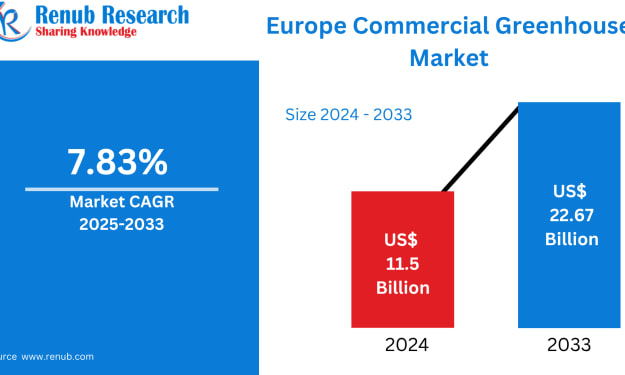
The Europe Commercial Greenhouse Market is set for dynamic expansion over the coming decade, reflecting the region’s accelerating transition toward sustainable, technology-driven agriculture. According to Renub Research, the market is projected to reach US$ 22.67 billion by 2033, rising from US$ 11.5 billion in 2024, at a robust CAGR of 7.83% during 2025–2033. This growth is being driven by increasing demand for year-round crop production, the rapid adoption of Controlled Environment Agriculture (CEA), and a strong policy push toward climate-resilient and resource-efficient farming.
By Renub Researcha day ago in FYI



Comments (1)
The congested docks need to take Claritin! Great work! Fascinating!