
5 Bodily Facts Ancient Humans Got Totally Wrong
The way our ancestors misunderstood the bodies of themselves.

As technology and science have advanced, our understanding of the human body has evolved over time. However, throughout history, humans have held many strange and false beliefs about how our bodies work. Here are five of the most bizarre ideas that we have had, from the Four Humors to Miasma Theory, and how our understanding has progressed over time.
The Four Humors were one of the earliest and most prominent ideas about the human body. The concept dates back to the 5th century BCE and attributes the human body to contain four different fluids: black bile, yellow bile, blood, and phlegm. Supposedly, each individual has their own unique balance of these fluids, and if that balance is disturbed, it could cause disease or an abnormal mental state. For instance, too much black bile was thought to cause depression, too much yellow bile to cause aggression, and too much phlegm to cause apathy. While this theory was popular for centuries, it was abandoned after the development of modern medical science, which introduced germ theory and pharmacology.
Another strange idea was Miasma Theory, which gained popularity during the Middle Ages and the Renaissance. The theory suggested that diseases were caused by bad air, which could come from various sources like decaying organic matter, exhalations from swamps, stagnant water, or even poisonous gases released during earthquakes. This theory was used to explain epidemics like the Black Death, malaria, and cholera outbreaks. City engineers and physicians even attempted to eliminate bad odors to improve health, leading to the creation of the infamous bird masks that plague doctors wore during outbreaks. However, it was later discovered that these measures were not effective, and the theory was eventually abandoned.
Bloodletting was another popular cure that was used for centuries, even though it was a terrible idea. This practice involved removing blood from a patient’s body, either by cutting or using leeches, to balance the Four Humors and cure illnesses. However, it led to severe dehydration, and the loss of blood could often be fatal. It is believed that George Washington may have been accidentally killed by his physicians, who bled him several times, made him vomit, and blistered his throat in an attempt to cure his cold. While bloodletting was widely used for centuries, it was eventually abandoned after modern medicine demonstrated its ineffectiveness.
The theory of spontaneous generation was another strange idea that we had about the human body. This theory suggested that living organisms could arise from non-living matter, like maggots from meat or mice from hay. This belief was prevalent for centuries until the 17th century when Francesco Redi conducted experiments that showed that maggots came from flies, not the meat itself. . In his experiments, Louis Pasteur established that the microorganisms do not arise spontaneously but rather as a result of contamination and paved the way for evolution in germ theory and modern medicine
The final bizarre idea was that the eyes worked using the theory of the “emission” of light. This theory suggested that the eyes emitted light that illuminated objects in front of them. However, this idea was disproved by Ibn al-Haytham, a Persian scientist, who conducted experiments that proved the opposite. He showed that light comes from objects and enters the eye, not the other way around.
In conclusion, while some of the ideas humans had about the human body were absurd, they were also products of their time and the available knowledge. Over time, advances in technology and science allowed us to improve our understanding of how our bodies work and correct these erroneous beliefs.
Thanks everybuddy.
About the Creator
Keep reading
More stories from Yogesh jindal and writers in FYI and other communities.
The Mind Blowing Science of Food: Amazing Facts You Didn't Know
Hello, friends! I'm anxious to show you some interesting scientific facts that will give you a great deal of pleasure. You're aware that you can prevent the browning of apple slices by drinking lemon juice? A polyphenol oxidase enzyme reacts to oxygen in the air when an apple is cut and turns brown. But it deactivates this enzyme and keeps the apples fresh and perfectly crisp, thanks to their acidity in lemon juice.
By Yogesh jindal3 years ago in Feast
A Planetary Alignment will coincide with Mercury Retrograde
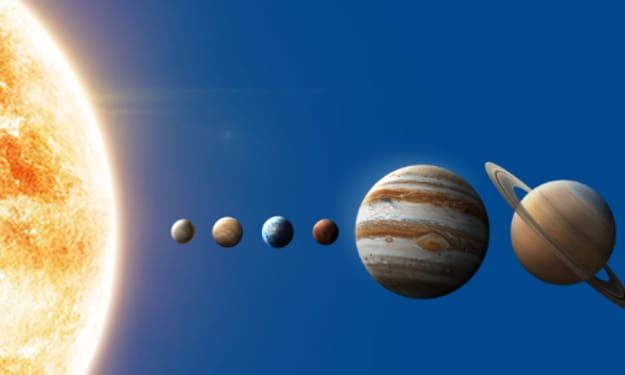
Double phenomena in the heavens Some people say in jest that the planets have aligned in their favor when life works the way they desire. Were you aware that there are seasons when things do line up in the heavens? There will be a planetary alignment AKA a planet parade, on February 28, 2026.
By Cheryl E Preston6 days ago in FYI
This Is What I Do When People Throw Rocks At Me
Rocks have been thrown at me for a greater part of my life. Some have been small and missed hitting me. When people don't get a reaction from me, they throw bigger rocks with a better aim. Many have been hurled at me with precision over the years. For a long time, I thought my only options were to dodge them or be crushed by them.
By Margaret Minnicks6 days ago in Confessions



Comments
There are no comments for this story
Be the first to respond and start the conversation.